Best Camera for Travel in 2026: What I’d Actually Buy
I get asked this a lot, and I always give the same annoying answer at first: it depends. But that’s a lazy answer, so here is the honest version.
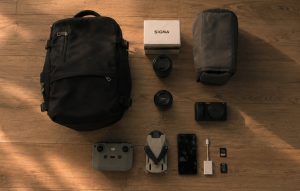
I follow the harvests. One hemisphere, then the other, season after season, with a backpack that is always slightly too heavy and a camera that has to survive dust, wine cellars, night buses and rain. My gear is not chosen because it wins comparison tests on YouTube. It’s chosen because I can carry it all day and still want to take it out at the end of that day.
So this is not a “top 10 best travel cameras” list. This is what is actually in my bag, what I paid for it, what I’d buy again in 2026, and what I’m saving up for.
Quick note before we start: all the prices here are from August 2026, in USD with a rough euro equivalent. Camera prices move fast right now (Fujifilm just raised a big part of its range because of semiconductor costs).
My travel camera: the Sony a6400
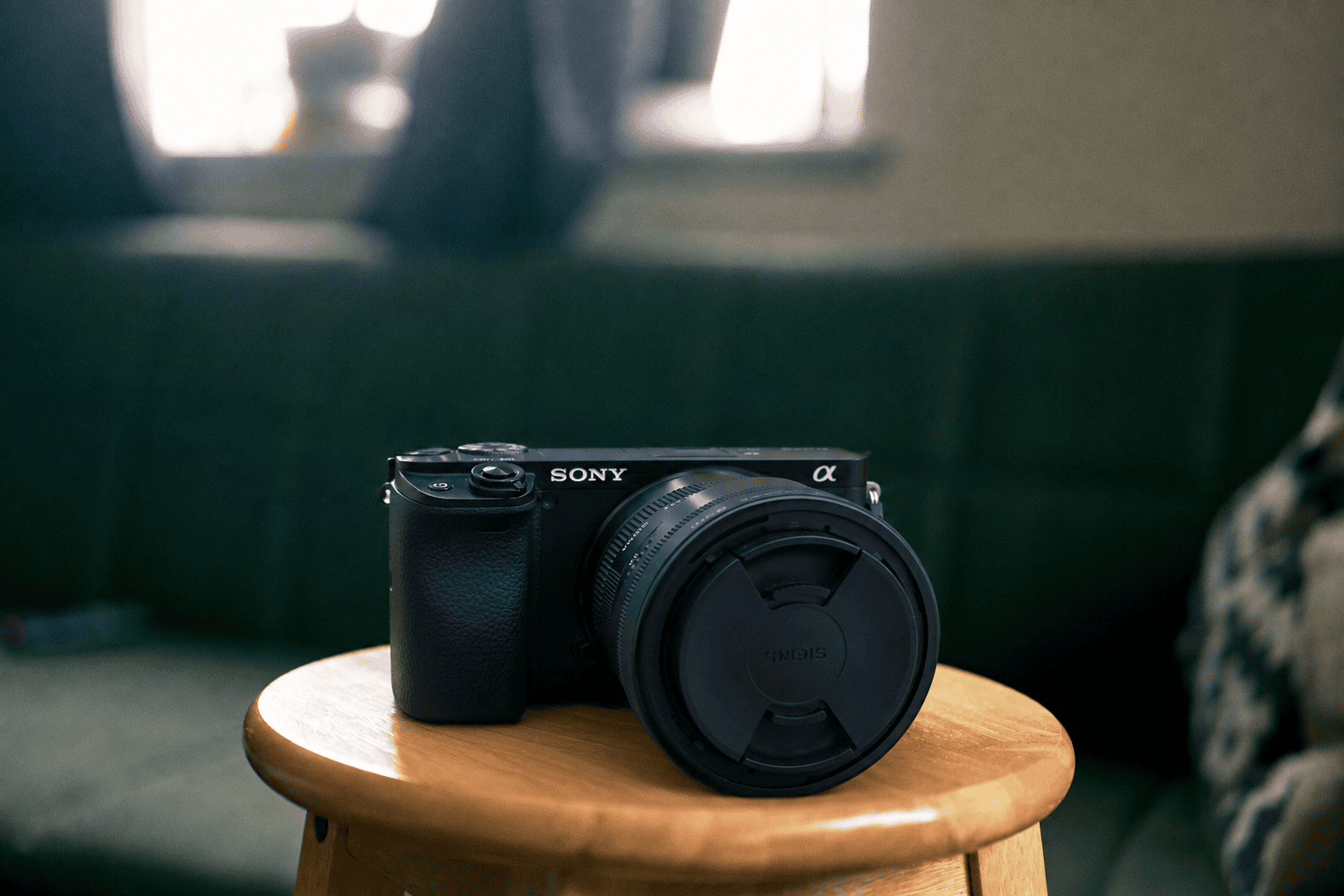
I shoot with a Sony a6400. I bought it about a year ago, and if I had to spend that same money again today, in that same price range, I would buy the exact same camera. No hesitation, no “but maybe I should look at”. Just the same one.
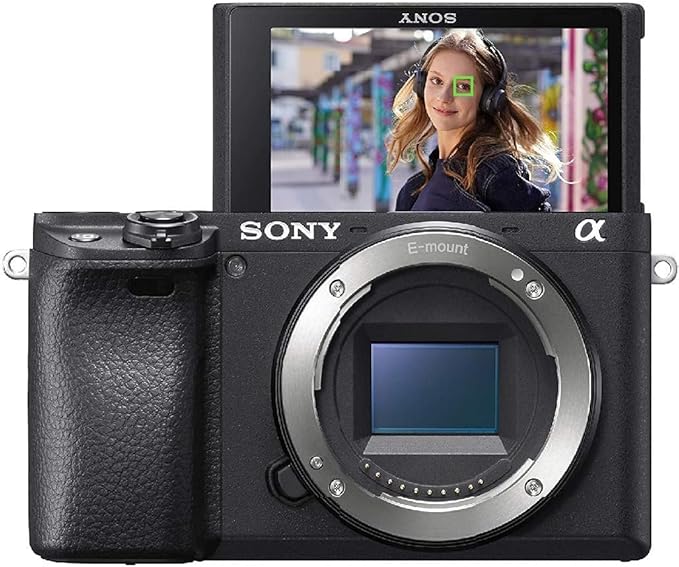
Which is a bit funny, because this camera is not new. Sony announced it in January 2019 and it started shipping in February 2019. In camera years that’s ancient. And yet it’s still one of the smartest things you can put in a travel backpack in 2026, because Sony kept it in the lineup and the price came down while the autofocus stayed genuinely excellent.
Here’s what matters about it, in plain words:
It has a 24.2 megapixel APS-C sensor, which is plenty. I sell my photos as fine art prints at 300 DPI and I have never once thought “I wish I had more megapixels”. More megapixels mostly means bigger files, fuller memory cards and a laptop that starts making airplane noises when you edit on a hostel bed.
The autofocus is the real reason to buy this camera. 425 phase detection points covering 84% of the frame, locking on in about 0.02 seconds, with Real-time Eye AF and Real-time Tracking. In practice: you point it at a person, it grabs the eye, it keeps the eye. Animal Eye AF too, which is how I get sharp photos of cats that clearly did not consent. When you travel alone and you have one second to catch a moment before it’s gone, autofocus is not a spec sheet detail, it’s the whole thing.
It shoots 4K video with full pixel readout and no pixel binning, which is a nerdy way of saying the video actually looks good and not soft and mushy.
The screen flips up 180 degrees, so yes, you can film yourself. I mostly use it to shoot from weird low angles without lying down in the mud.
It weighs 403g with the battery and the card. That number is the single most important spec in this whole article, and I’ll come back to it.
Now the honest part, because I’m not here to sell you a fairy tale. The a6400 has no in-body stabilisation. None. If you shoot a lot of handheld video while walking, you will feel it, and you’ll either want a stabilised lens, a small gimbal or very steady arms. The battery is the older NP-FW50, so plan on around 400 shots, still enough to spend the day shooting, at least for what I’m doing I never had an issue. There’s a single SD card slot, no headphone jack, and the menu system is the classic old Sony menu, which is to say it’s a labyrinth. You’ll get used to it. Sort of.
Current price, August 2026: around $898 new for the body only in the US, and roughly €700 in France depending on the retailer.
The Sony a6000 series explained: which one is right for you
The a6000 line is Sony’s APS-C family, and the naming is confusing on purpose I think. Here’s the short version so you don’t fall down the same rabbit hole I did.
The a6000 is the ancestor. Cheap, tiny, still takes lovely photos, but the autofocus and the video are dated now. Fine as a first camera if you find one for very little money.
The a6100 is the beginner one. Same 24.2MP sensor as the a6400, modern autofocus, plastic body, no weather sealing. It’s the sensible pick if your budget is tight and you’re not planning to shoot in the rain.
The a6400 is the sweet spot, and that’s why I own it. You get the same sensor and the same brilliant autofocus as the a6100, but in a magnesium alloy body with dust and moisture resistance. For someone who works outside in vineyards and gets caught in New Zealand weather regularly, that mattered.
The a6600 added in-body stabilisation and the bigger NP-FZ100 battery. It’s been mostly replaced by the a6700.
The a6700 is the current high end. New 26MP sensor, AI powered subject detection with 759 phase detection points, in-body stabilisation, 4K up to 120p, 10-bit colour, big battery. It’s genuinely better. It’s also a lot more expensive, and for the kind of photography I do, the extra money is better spent on a lens. That’s not me being humble, that’s just where the improvement actually shows up in the final image.
The best travel lens pairing: the Sigma 18-50mm f/2.8
I started with a Sony 50mm f/1.8 prime, and I still love that lens. It’s sharp, the background blur is gorgeous, it’s cheap, and shooting with a prime teaches you to move your feet instead of your zoom ring. Genuinely the best thing you can do for your composition when you’re starting out.
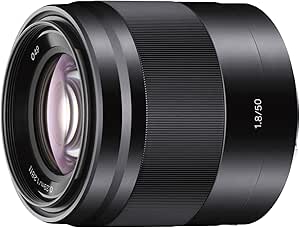
But then I went to New Zealand’s South Island and stood in front of a valley, and my 50mm gave me a nice tight crop of one third of it. On APS-C a 50mm behaves like a 75mm, so it’s basically a portrait lens. I love it for people. It’s useless for a mountain range. I wanted one lens that could do the landscape, the wine cellar, the plate of food and the friend laughing, without me changing glass in the middle of a dust storm.
So I bought the Sigma 18-50mm f/2.8 DC DN Contemporary, and it basically never comes off my camera anymore.
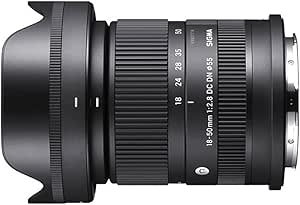
Why this one, specifically:
It’s an 18 to 50mm zoom, which on APS-C gives you a 27 to 75mm equivalent. That’s wide enough for landscapes and interiors, and long enough for portraits. It’s the classic walk around range and it covers maybe 90% of what I shoot.
It has a constant f/2.8. Constant means f/2.8 at 18mm and still f/2.8 at 50mm, which cheap kit zooms do not do. It means low light, harvest at 5am, candlelit dinners and blurry backgrounds all stay possible.
And here’s the killer: it weighs 290g. Two hundred and ninety grams, for a constant f/2.8 zoom. Put it on the a6400 and your whole setup is under 700g. That is less than most people’s water bottle. I can hike with it, sleep with it in a tent, put it in a tote bag, and I never leave it at the hostel because it’s “too much to carry”. A camera you actually bring is worth more than a better camera you leave behind.
Things to know before you buy it:
The minimum focus distance is 12.1cm, which is close enough for nice food and detail shots without being a real macro. The filter thread is 55mm, so buy your ND and polariser in that size. It has a dust and splash resistant mount, but it’s not a fully sealed lens, so don’t go swimming with it. It has no optical stabilisation, and remember the a6400 has no in-body stabilisation either, so for video you’ll want to be a bit careful or use a gimbal. And a small quirk that drove me mad for a week: the focus ring turns the opposite way to native Sony lenses. You get used to it.
Current price, August 2026: $659 new in the US, around €480 in France. Used it goes for roughly €370 to €400 on the French second hand market, which is a great deal, and I’ll come back to buying lenses used in a minute.
If I wanted an even more versatile lens
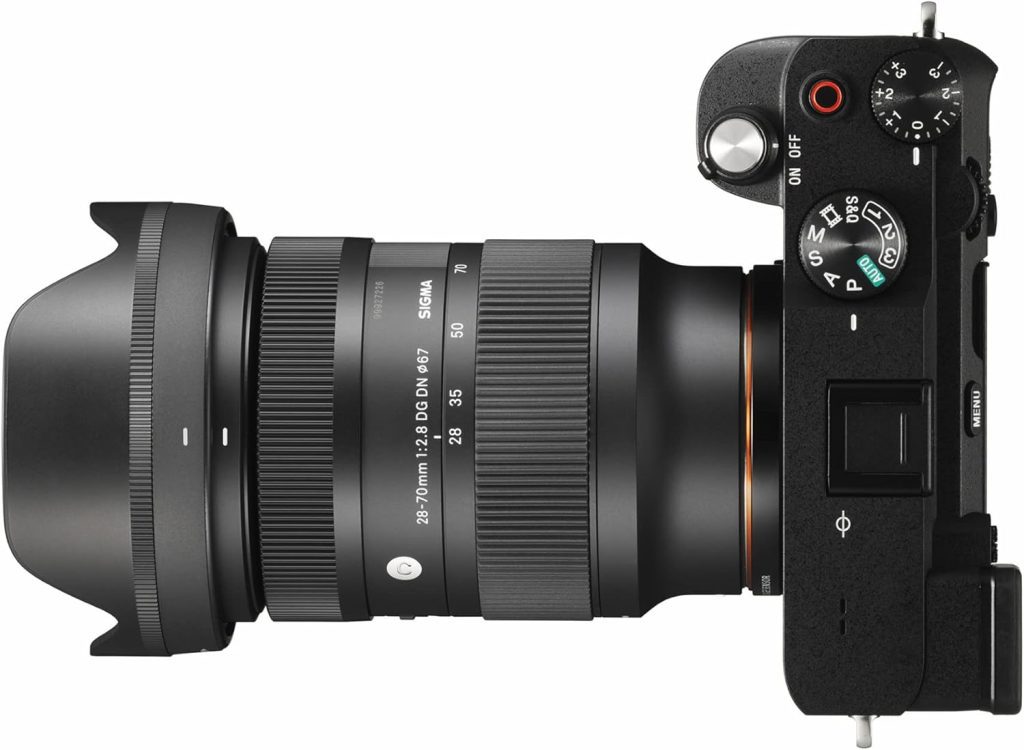
If I were buying a lens today with a bigger budget and a bit more ambition, I’d be looking at the Sigma 24-70mm f/2.8 DG DN II Art. It’s around $1,199, so roughly €1,150 to €1,250 depending where you shop. It’s the classic professional standard zoom, and the version II is sharper, faster and lighter than the first one.
One honest warning though, because I’d rather you hear it from me than find out after you’ve paid. The 24-70mm is a full frame lens. Mount it on an APS-C body like the a6400 and the crop turns it into a 36 to 105mm equivalent, so you gain reach at the long end but you lose the wide end, which is exactly the part I use most for landscapes. It’s also much heavier than the little Sigma 18-50mm.
So the 24-70mm is the right buy if you’re planning to move to full frame at some point and you want a lens that will follow you there. If you’re staying on APS-C, the 18-50mm is honestly the better travel companion, and I say that as someone who really wants an excuse to buy the 24-70mm.
What to look at when you buy a lens
Two things really, and everything else is detail.
- Go for the smallest f number you can afford. The f number is the aperture, and smaller number means the lens opens wider and lets in more light. f/2.8 lets in a lot more light than f/5.6. Two consequences: you can shoot in dark places without your photos turning into grainy soup, and you get that soft blurry background that makes a subject pop. This is also why constant aperture zooms cost more than kit zooms, and why they’re worth it. A kit lens that goes from f/3.5 to f/5.6 is basically telling you “in the evening, good luck”.
- Choose based on what you actually shoot, not what looks impressive in a shop. A wide lens, so something in the 16 to 24mm range on APS-C, is for landscapes, tight interiors and big skies. Around 35 to 50mm equivalent is the everyday street and documentary range, close to how your eye sees. Something like 50 to 85mm equivalent is your portrait range, flattering faces and creamy backgrounds. And if you want wildlife, birds or surfers from the beach, you need real reach, 200mm and beyond, which is a completely different lens and a completely different weight in your bag. Be honest with yourself about which of these you’ll actually do. I bought a portrait prime first because it was cheap and beautiful, then discovered I mostly shoot landscapes. Learn from my money.
My best money tip: new body, used lens
This is the tip I give everyone.
Buy the body new. Buy the lenses used.
Bodies are electronics. They have a shutter with a finite life, a sensor that can be scratched, firmware, a battery that ages, and a warranty that is genuinely useful. Also, and this is annoying but true right now, used bodies are barely cheaper than new ones. A used a6400 is currently going for around $690 to $860 in the US, and roughly €700 to €850 in France, when a new one is around $898 or €700. You’d be paying almost full price for someone else’s shutter count. No thanks.
Lenses are the opposite. They’re glass and metal, they barely age, and a well kept lens from five years ago performs exactly like a new one. This is where you save real money. Look on Back Market and on Facebook Marketplace, and if you can, meet the seller and test the lens before you pay. Mount it on your camera, check the autofocus actually moves and locks, turn the zoom and focus rings to feel if anything grinds or sticks, shoot a photo of a flat wall at f/2.8 and at f/8, and hold the lens up to a light to look for fungus, haze or dust inside the elements. A few dust specks inside are normal and won’t show in your photos. Fungus, which looks like tiny white spiderwebs, is a hard no, walk away.
Which camera brand should you go for?
I’m a Sony person, and it’s for four reasons: the autofocus, which I’ve already gone on about, the colours, the grain when you have to push the ISO, and the stabilisation on the bodies that have it. Sony files also hold up really well when you edit them, and I edit a lot.
That said, I think I’ll buy a Fujifilm one day as a second camera, and it’s purely because of the film simulations. I love editing my photos, I love the process, but the idea that on a lazy day you can just shoot and the image comes out already looking like something is honestly incredible. Not every day has to be a Lightroom day. Fuji cameras also just look and feel lovely, with actual dials instead of menus, and that changes how you shoot.
Canon and Nikon both make excellent cameras too, and I’m not going to pretend otherwise. The real thing to understand is that you’re not choosing a camera, you’re choosing a lens mount, and that’s a much longer commitment. Every lens you buy locks you in a bit more. So pick based on the lenses available and their prices, not just the body.
Full frame or APS-C for travel?
Honest disclaimer: I shoot APS-C and I have never used a full frame camera properly. I imagine that once you switch, you don’t want to go back. Bigger sensor, better low light, shallower depth of field, more resolution to crop into.
But here’s how I’d think about it if I were choosing today, and it comes down almost entirely to budget.
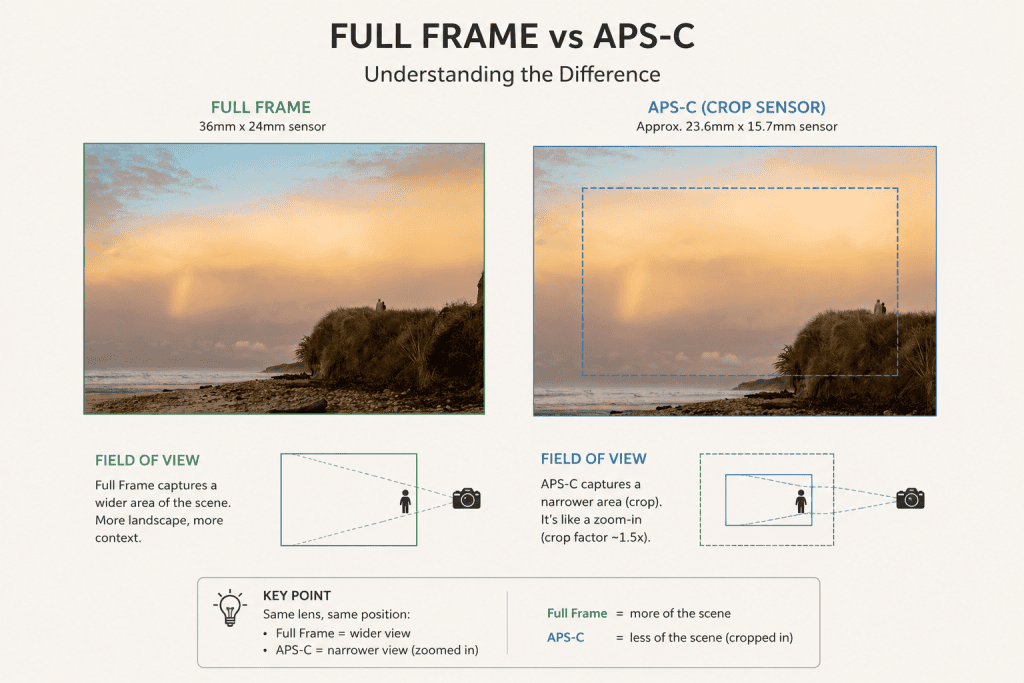
Full frame bodies cost a lot more. And if you buy one used for the same price as a new APS-C, you’re not getting a modern camera, you’re getting an old one, without the autofocus, the subject detection and the video features that exist now. Autofocus is the thing that has improved the most in the last ten years, and it’s the thing that actually changes whether you come home with a sharp photo. A 2016 full frame body with mediocre autofocus is not a better travel camera than a 2019 APS-C body with excellent autofocus. It’s just a heavier one.
And then there are the lenses, which is the part nobody mentions in the shop. Full frame lenses are bigger, heavier and more expensive, because the glass has to cover a bigger sensor. There is no full frame equivalent of my little 290g Sigma 18-50mm f/2.8. The full frame version of that lens, the 24-70mm f/2.8, weighs several times more and costs about double. So the body is more expensive, then every single lens after it is more expensive and heavier, and you’re the one carrying all of it up a hill.
My take: if you’re travelling, if you’re on a normal budget, and if you’re not shooting professionally in the dark, APS-C is not a compromise. It’s the right tool. Put the money you saved into a better lens and a plane ticket.
My camera wishlist for 2026
Two cameras live rent free in my head.
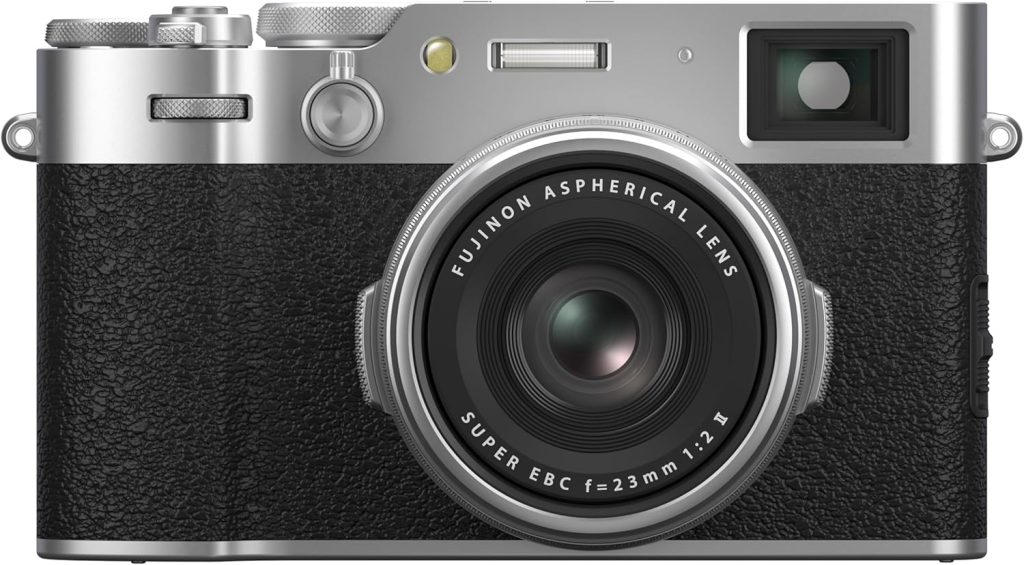
The compact I want: Fujifilm X100V
The Fujifilm X100V is the one I keep going back to look at. It’s a fixed lens compact, so no changing lenses, just a 23mm f/2 which gives a 35mm equivalent, the classic street photography focal length. Inside there’s a 26.1MP APS-C X-Trans sensor and the X-Processor 4. It has that hybrid viewfinder that lets you switch between an optical finder and an electronic one, which is a completely different feeling from shooting on a screen. And it has all the Fuji film simulations: Provia, Velvia, Astia, Classic Chrome, Classic Neg, Pro Neg, Eterna. It shoots 4K at 30fps and it has a small tilting touchscreen. It’s the camera you put in a jacket pocket and actually carry every day.
The problem is that it’s discontinued, and it became a viral cult object, so the used market is genuinely strange. In the US the used average is around $1,347, which is already more than it cost new. In Europe I’m seeing listings well above €2,000, and I’d treat those as collector pricing rather than a normal price, so please shop around and don’t panic buy the first listing you see. Prices on this one move a lot, so check before you commit.
Its replacement, the X100VI, adds in-body stabilisation and a 40MP sensor. It launched at $1,599, and Fujifilm raised its European price to around €1,999 from August 2026. So it’s not cheap either, and it’s still hard to find in stock.
The upgrade I dream about: Sony a7 V
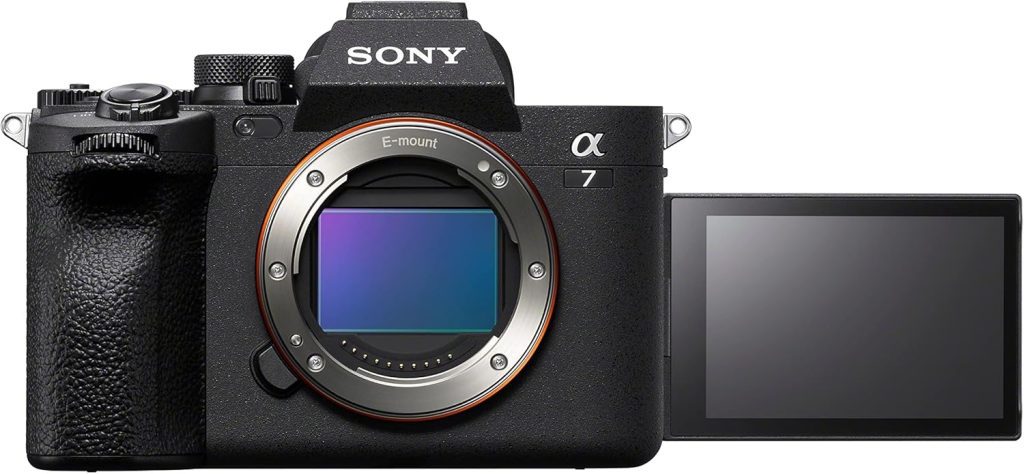
And if I ever upgrade my main camera, it’s the Sony Alpha 7 V. This is a completely different level, and I’m aware it’s more camera than I currently need. It launched on 2 December 2025 at $2,899, and around €2,999 for the body in France.
It has a 33MP partially stacked full frame sensor, which is a first for the a7 line, and the new BIONZ XR2 processor with a dedicated AI unit for subject recognition. 30fps blackout free with the electronic shutter, 759 phase detection points covering 94% of the frame, and up to 7.5 stops of in-body stabilisation. On the video side it does 7K oversampled 4K at 60p in full frame, 4K 120p in Super 35 crop, Full HD at 240fps, all 10-bit 4:2:2 internally.
Would it make my photos better? Honestly, not automatically. It would make the hard shots possible, the very low light, the fast action, the big prints. That’s a real difference, but it’s the difference you notice after a few years of shooting, not on day one.
So what is the best camera for travel in 2026?
The best travel camera in 2026 is the one you’ll actually carry, that focuses fast enough to catch the moment, and that leaves you enough money to keep travelling.
For most people that’s a Sony a6400 with a Sigma 18-50mm f/2.8. Around 693g together, roughly $1,550 or €1,180 new, and you can shave a lot off that by buying the lens used. It does landscapes, portraits, street, food, video, and it fits in a small bag.
If your budget is tighter, take the a6100 with the same Sigma lens, or the a6400 with a used 50mm f/1.8 prime and learn to move your feet. If you want the modern autofocus and stabilisation, look at the a6700. And if you want a camera that makes you want to shoot for the pleasure of it, look at Fuji.
Shop my full travel photography kit →
This post contains affiliate links. If you buy through them I earn a small commission at no extra cost to you, and it helps keep this site running between harvests. I only recommend gear I actually use or genuinely want.