Getting My PADI Open Water Certification in Bali: Is It Worth It
In this post, you’ll learn where to get your PADI Open Water Certification in Bali, which dive center to pick, how many days and dives the training takes, and how much it actually costs.
I’ve always wanted to dive. I’d already done two intro dives back home in France, in the Mediterranean, but I wanted an actual certification so I could do real dives instead of going back to square one every time with another shallow intro dive in a spot that wasn’t even that interesting.
I didn’t hesitate long between the French Niveau 1 and the PADI Open Water. I’m always abroad, so PADI is recognized everywhere in the world and it just made more sense to go with that one. I was waiting for the right moment to do the training, and it happened a few months later when my dad, who’s already a Level 2 diver in the French system (that lets him go down to 40 meters), came to join us in Indonesia for 10 days.
What Is PADI, Exactly
PADI stands for Professional Association of Diving Instructors. It’s the biggest scuba diving organization in the world, and honestly, it’s not that old. It was founded in 1966 by John Cronin and Ralph Erickson, who wanted to make diver training more professional and more accessible than what existed at the time.
The story goes that the whole thing started over a bottle of Johnnie Walker in an apartment in Illinois. A few years later, the Open Water Diver certification launched in 1972, and it’s still the entry level certification today, the one almost every diver starts with.
Since then PADI has grown into a massive network, with more than 6,600 dive centers and resorts in 186 countries. That’s exactly why it made sense for me. Wherever I end up traveling next, I’ll always find a PADI center nearby, and my certification will be recognized without any issue.
Where to Do It in Bali
There are several spots in Bali where you can dive, the main ones being Amed, Tulamben, Nusa Lembongan, Nusa Penida, and Pemuteran. Each one has its own thing going on.
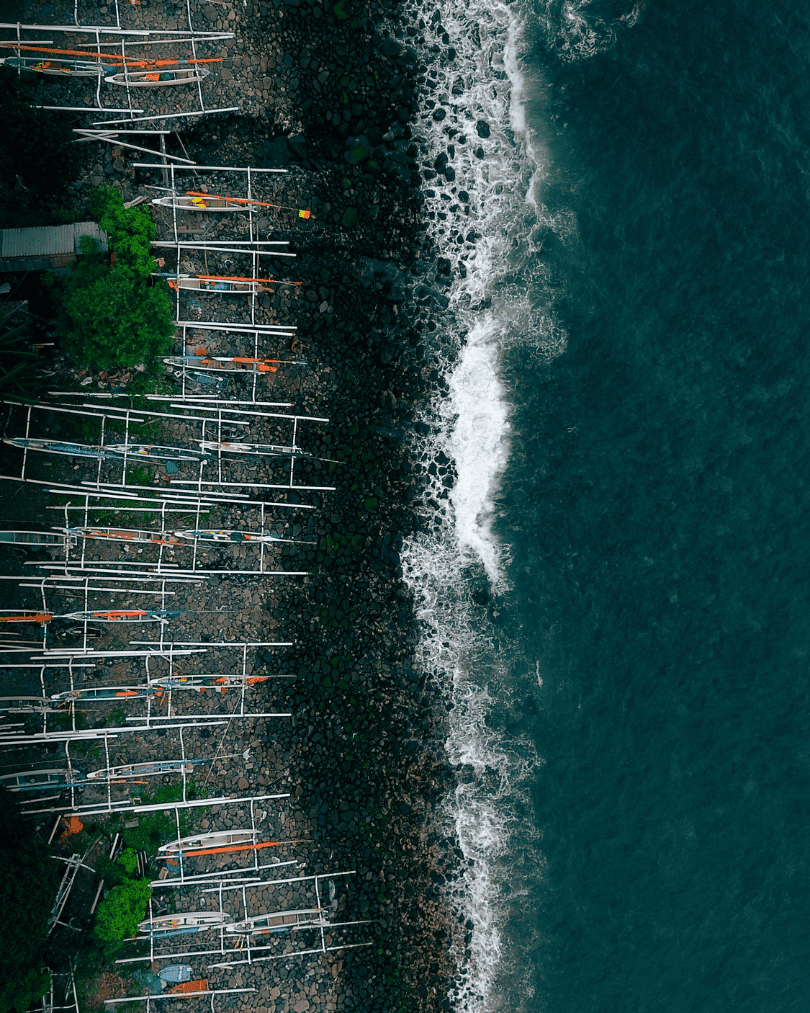
I’d read online that Amed was a small fishing village with a nice variety of dives close by, and since my dad is a Level 2 diver who can go down to 40 meters, we needed a spot that could work for every level. Amed and neighboring Tulamben turned out to be perfect for that, with dive sites ranging from easy shallow shore dives to deeper ones for more experienced divers, all a short walk or boat ride apart.
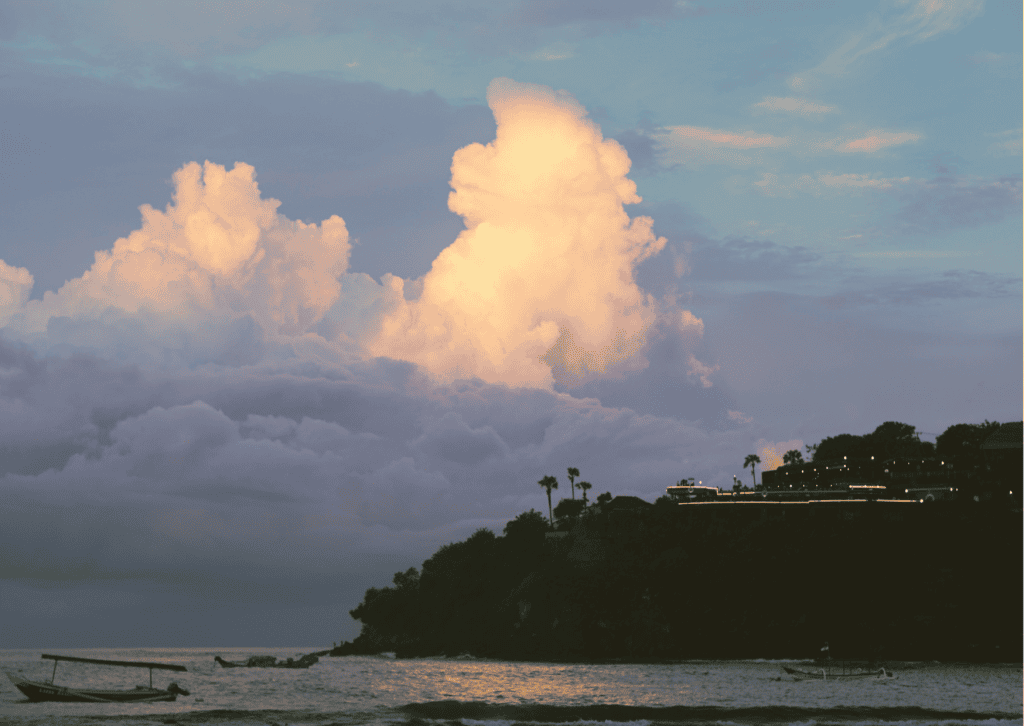
Nusa Lembongan and Nusa Penida are more known for drift dives and manta ray sightings, and Pemuteran up north has its own underwater temple garden, but that one’s a bit further to reach.
I contacted several dive centers through WhatsApp. They all speak English so communication isn’t a problem at all. After a bit of negotiating (which is pretty normal in Indonesia) I finally went with Ocean Tree Bali.
How Many Days Does the Training Take
The PADI usually takes 3 days, but some centers offer to do it in 2 days, which is what Ocean Tree Bali proposed and the reason we picked them. My dad only had 10 days on the island, so we preferred doing the PADI in 2 days to have more time left to see the rest of Bali.
How Many Dives
The training is made up of 5 dives in total. The first one isn’t a real dive as such, it’s a short shallow session close to the beach where you go through the basics and get comfortable breathing underwater before anything else.
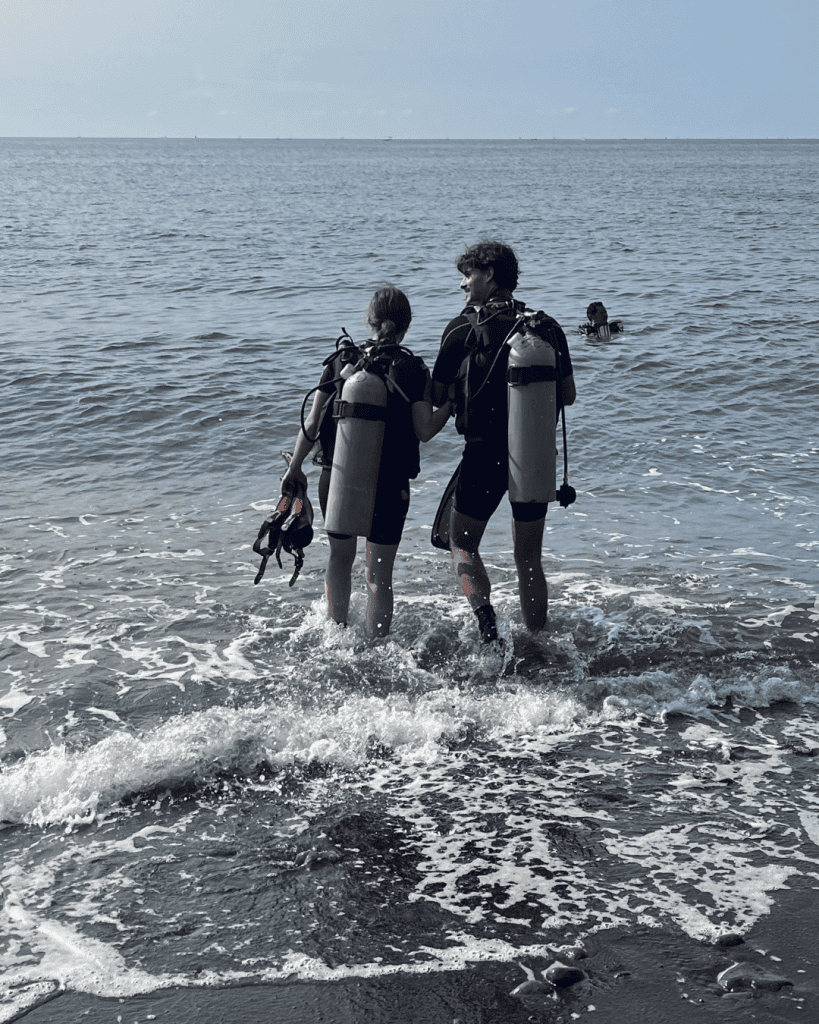
The 4 dives after that are the real ones, a bit deeper each time, where you do a few exercises first and then actually get to explore. By the end you’ve clocked enough time underwater to feel genuinely confident, not just on paper.
The Price of the Training
The training was included in one big package with:
- 5 dives
- theory training on site plus the PADI app
- lunch, snacks, and breakfast between dives
- transport from the hotel to the different dive spots
- towels
- water
- diving equipment
- dive watch
- GoPro
- the Open Water certificate
I paid 4.8 million IDR, which is around 267 USD.
For comparison, a PADI Open Water in France usually costs somewhere between 450 and 650 euros, and that’s often without meals, transport, or a GoPro included. So doing it in Bali isn’t just a nice excuse to combine it with a holiday, it’s genuinely a fraction of the price back home.
A Quick Note for My Fellow French Readers
If you’re wondering how the French Niveau 1 compares to the PADI Open Water, here’s the short version. Niveau 1 (FFESSM) lets you dive down to 20 meters, always with an instructor by your side.
PADI Open Water lets you dive down to 18 meters, but once you’re certified you can dive without an instructor, just with a buddy of the same level, as long as you stay within that depth. The skills you learn are pretty similar either way.
The real difference is that PADI is recognized absolutely everywhere in the world, so if you travel a lot like me, it just makes more sense to go with that one.
About Travel Insurance for Diving
One thing worth checking before you book your PADI: not every travel insurance covers diving, and some basic policies exclude scuba past a certain depth. Worth double checking your policy before you go, especially if you’re planning on diving deeper later on. I compared different travel insurances in this article if you want to have a look .
What Season to Go to Bali
This matters because you’re not just there to dive, you’re there to see the island too, and if you land in the middle of the rainy season it changes the experience quite a bit.
Bali really only has two seasons. Dry season runs roughly from April or May to October, and wet season from November to March. It’s not exactly a wall of rain the whole time in wet season though, showers usually come in short bursts, a couple of hours at a time, not the whole day.
| Month | Weather | Temperature | Rain |
|---|---|---|---|
| January | 🌧️ Wet season, rainiest month | ~26-31°C | High |
| February | 🌧️ Wet, hot and sticky | ~26-31°C | High |
| March | 🌦️ Transition, rain easing off | ~27-31°C | Medium |
| April | 🌦️ Dry season starts | ~26-32°C | Low-Medium |
| May | ☀️ Hottest month, sunny | ~27-33°C | Low |
| June | ☀️ Dry, cooler nights | ~26-31°C | Low |
| July | ☀️ Dry, coolest, busy | ~26-30°C | Low |
| August | ☀️ Driest and sunniest month | ~26-32°C | Very low |
| September | ☀️ Dry, great for diving | ~26-31°C | Low |
| October | 🌦️ Wet season begins, light rain | ~27-31°C | Low-Medium |
| November | 🌧️ Rain picks up | ~27-29°C | Medium-High |
| December | 🌧️ Regular showers, seas can be rougher | ~26-30°C | High |
If you want the best visibility underwater and the driest days on land, aim for somewhere between May and September.
What Exercises You’ll Do
Your instructor decides when you’ll demonstrate these skills, depending on logistics and dive conditions. We didn’t do every single one on our course, some are only shown if the situation calls for it.
- Cramp release
- Snorkel to regulator exchange (and back)
- Deploying a signal tube or delayed marker buoy
- Emergency weight drop (or in a controlled environment)
- Compass navigation at the surface
- Towing a tired diver
- Removing and putting the scuba unit back on (at the surface)
- Removing and putting the weight belt back on (at the surface)
- Controlled emergency swimming ascent
- Underwater navigation using a compass
How a Dive Actually Goes
Once you’re at the site, every dive follows more or less the same routine:
- Recognizing your dive signals, so you and your buddy can actually talk to each other underwater
- Gear prep, setting everything up and adjusting it
- A pre-dive safety check with your buddy, checking each other’s gear before getting in
- Getting in the water
- Checking your buoyancy and weighting feels right
- A controlled descent, no rushing to the bottom
- Checking your stability once you’re down there
- Partially flooding and clearing your mask, one of the exercises that freaks people out the most at first
- Recovering and clearing your regulator if it falls out
- The actual exploring part, which is obviously the fun bit
- Signaling when you’re getting low on air
- Staying close to your buddy the whole time
- A 3 minute safety stop at 3 meters before going back up to the surface, this one’s important, it gives your body time to slowly get rid of the extra nitrogen it absorbed during the dive, so you don’t end up with decompression sickness
- Heading back up and exiting
The Four Real Dives
Other than the very first one, which isn’t a real dive since there’s no exploring involved, just a shallow practice session on the main beach in Amed, we did 4 more dives. Each one starts with a few exercises, then we head off to explore.
Day 1
After the theory and the first practice dive, we ate and did a dive at Jemeluk, Amed, 12 meters deep for 40 minutes.
Day 2
It was a pretty intense day since we did 3 dives.
The first one was at Kubu Wreck, where we saw temple statues underwater at 16.5 meters for 45 minutes. This spot is actually known for its Buddha statues sitting on the seabed, part of an artificial reef project meant to give coral somewhere new to grow.
The second, and still to this day the most beautiful dive of my life, was at the USAT Liberty wreck, 18 meters deep for 45 minutes. My dad did this dive with us and it’s a memory I’ll never forget. The story behind the wreck is honestly wild.
The Liberty was a US cargo ship torpedoed by a Japanese submarine in the Lombok Strait in 1942, and since it was taking on too much water, it got beached on the shore in Tulamben instead of sinking right away.
It sat there on the beach for over 20 years, until Mount Agung, the volcano behind Tulamben, erupted in 1963 for the first time in 120 years, and the tremors pushed the ship off the beach and into the sea. Decades later it’s covered in coral and home to hundreds of fish species, which makes it feel less like a shipwreck and more like its own little underwater world.
And finally the last dive of our training was at Amed Pyramid, 17 meters for 40 minutes. Like all the dives we did around Amed, this one starts right from the shore and you follow the current until you reach artificial pyramids sunk underwater. Just like at the temple statues, life has completely taken over, coral everywhere, hundreds of fish, and we even saw sea turtles.
My Honest Opinion
I loved getting my PADI in Amed. My instructor Kadek was really clear and explained everything well. Thanks to this training I feel completely comfortable in the water now, and I don’t feel any apprehension at all when I dive. The training is complete and the whole team was incredibly kind.
I’ve already recommended this center to friends who did their PADI there too and had a great experience, so don’t hesitate to reach out to them if you ever want to get certified during your stay in Bali.
I also dove around Nusa Lembongan during that same trip, and it’s where I had one of my favorite underwater moments: a manta ray gliding right past me. I wrote about that whole experience in my Nusa Lembongan guide if you want to check it out.
Contact Ocean Tree
Jalan I Ketut Natih,
Amed, Bali 80852
IndonesiaPhone: +62 812 9292 9881