What to Eat in Mexico as a Vegetarian (It’s Easier Than You Think)
I’ll be honest, I was a little scared about spending a month in Mexico.
Not for any of the reasons people usually worry about. I was scared about the food. My only reference for Mexican food was what I’d eaten in California during a harvest season, and that version is huge portions, a lot of meat, and not much thought given to anyone who doesn’t eat it. I lived on quesadillas and chile relleno burritos for months. They’re delicious. They also sit in your stomach like a brick for the rest of the day.
So I landed in December 2025 with a month ahead of me, between a contract in the US and the next one in New Zealand, quietly expecting to eat cheese in various shapes for four weeks.
That is absolutely not what happened.
Is vegetarian food in Mexico actually easy to find?
Yes. Genuinely, and much more easily than the Tex Mex version of the country had led me to believe.
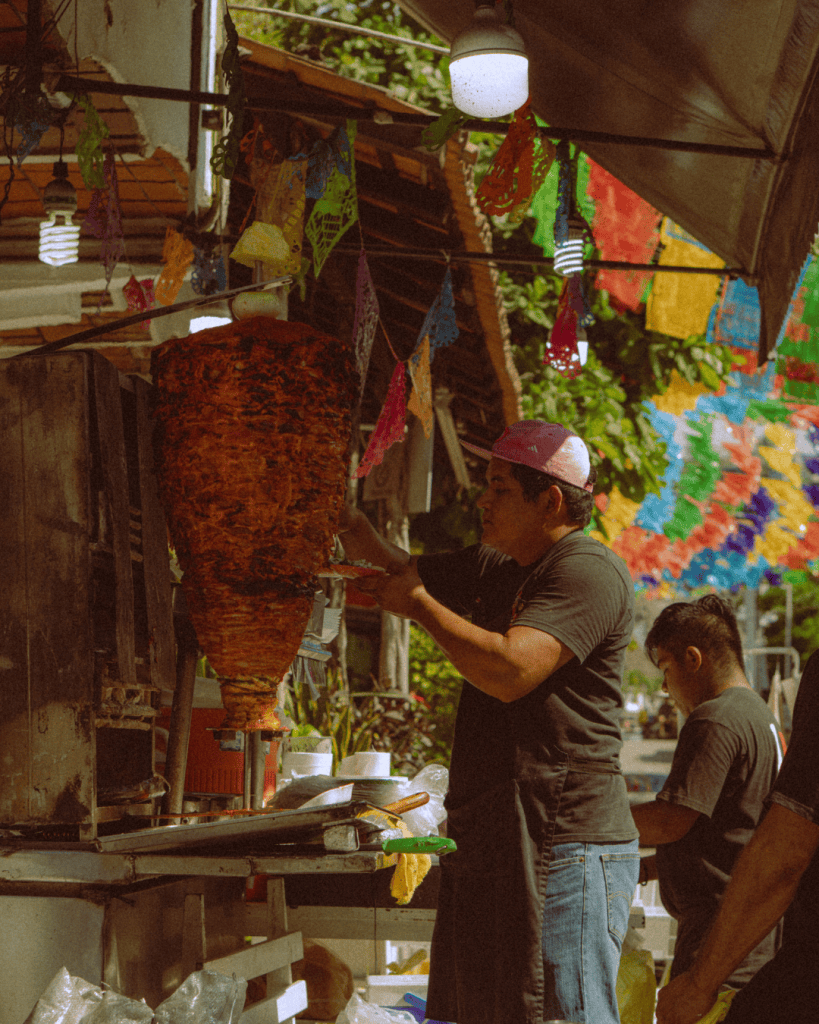
Real Mexican food is nothing like what gets exported. Portions are normal sized, so you can eat three times a day without needing a lie down. Everything is fresh. The tortillas are handmade about ninety percent of the time, and you can taste the difference immediately, they’re soft and slightly sweet and nothing like the one I’d been buying in supermarkets. And almost every taco stand has vegetables, beans, cheese and salsa sitting right there on the counter, so building something meat free is not a special request.
The other thing that surprised me is how normal it felt to ask. Nobody sighed at me. Nobody brought me a sad plate of rice. Several times someone actively rebuilt a dish so I could eat it, which I’ll get to.
The vegetarian tacos you’ll end up ordering twice
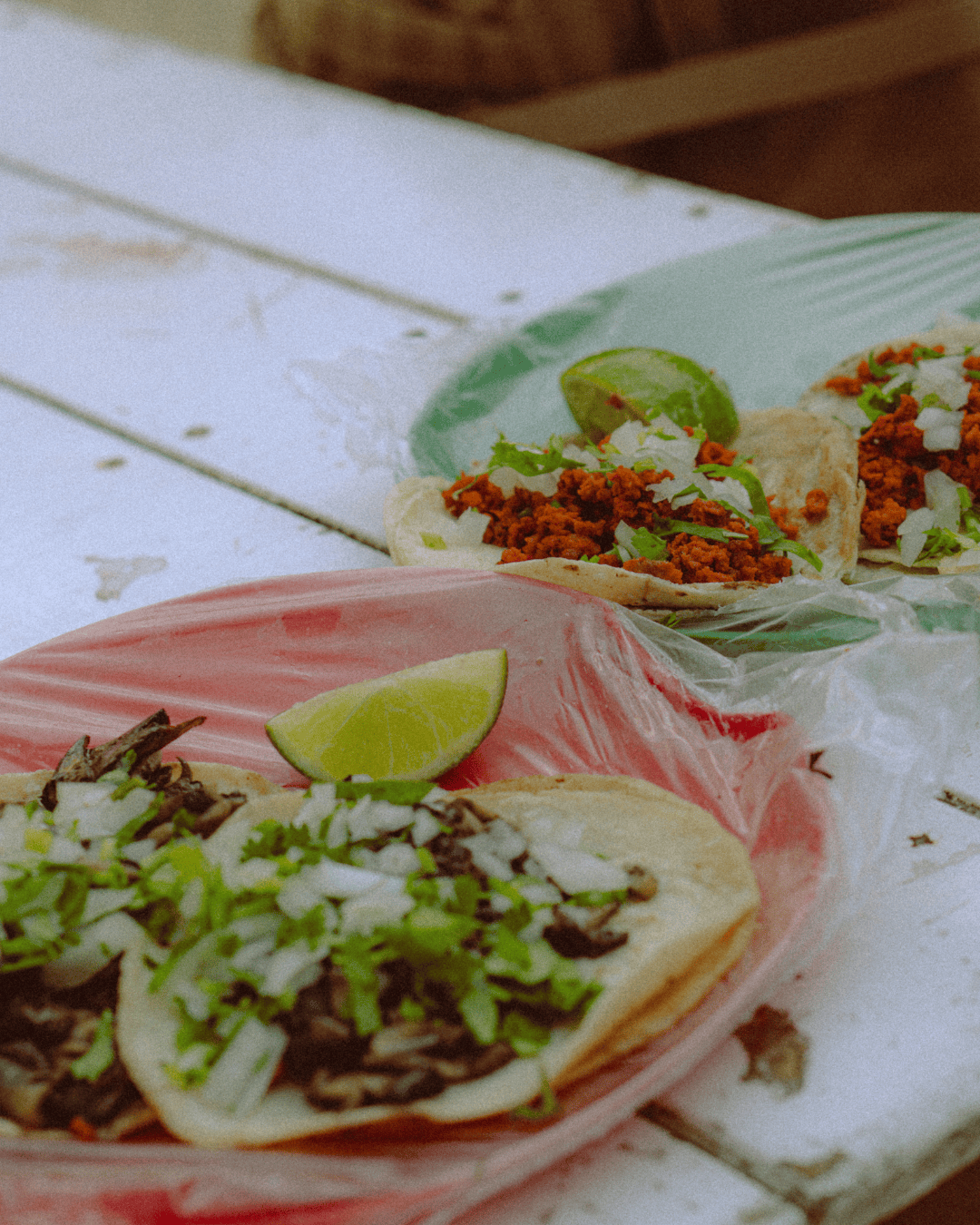
Tacos were most of my diet for a month and I never got bored, which still surprises me. The trick is that no two stands do it the same way. The filling might be similar but the toppings change everywhere you go, so you end up with a completely different taco three streets later.
Tacos de champiñones were my constant. Mushrooms cooked down with onion and peppers, and then whatever the place puts on top, which for me was often beans, cucumber, coriander, raw onion and a wedge of lime. Simple and so good.
Tacos de nopales are the one I’d push you towards if you want something you can’t easily get at home. Nopales are cactus paddles, cleaned of spines and grilled or stewed. It works beautifully in a taco with a bit of cheese and salsa. I had my best ones at dinner, in a dim little place where I ordered them mostly out of curiosity and then ordered them again.
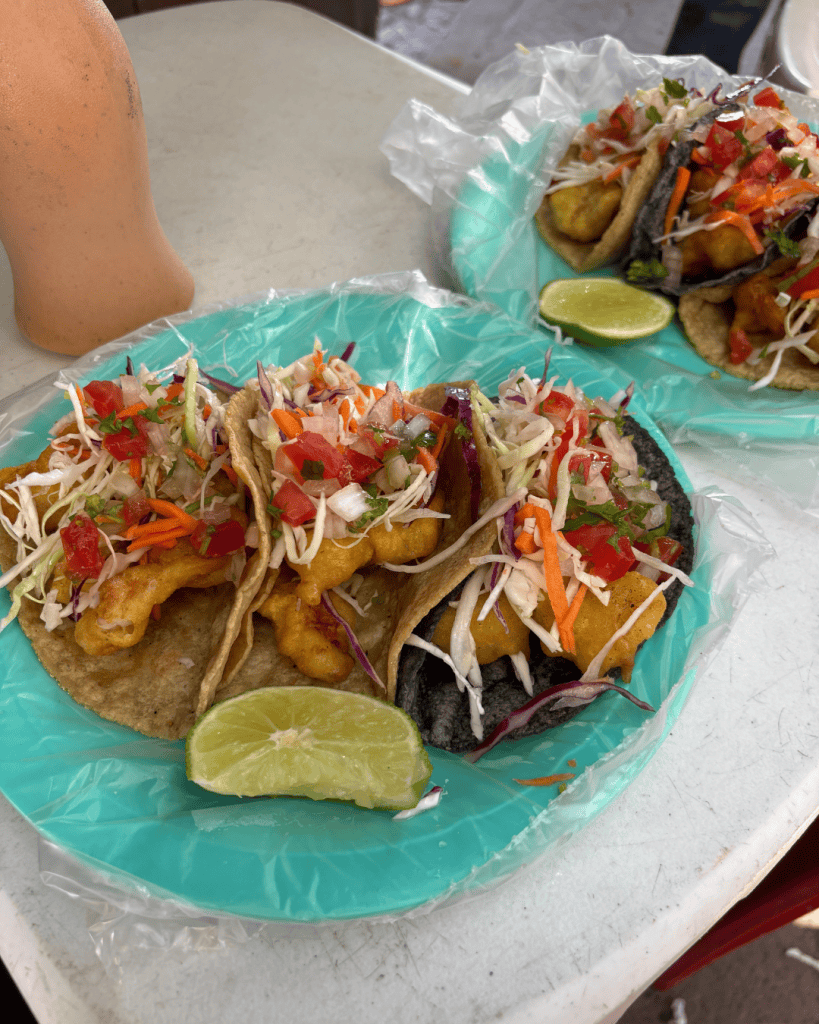
Beyond those two, the usual meat free fillings you’ll see are potato, beans, rajas (strips of roasted poblano pepper, usually with cream).
Beyond tacos: quesadillas, volcanes, enchiladas and chilaquiles
Quesadillas are the safe harbour, and they’re better than they sound because the tortilla is fresh and the cheese is proper. Mushroom quesadillas from a street stand in Sayulita are still something I think about at inconvenient moments.
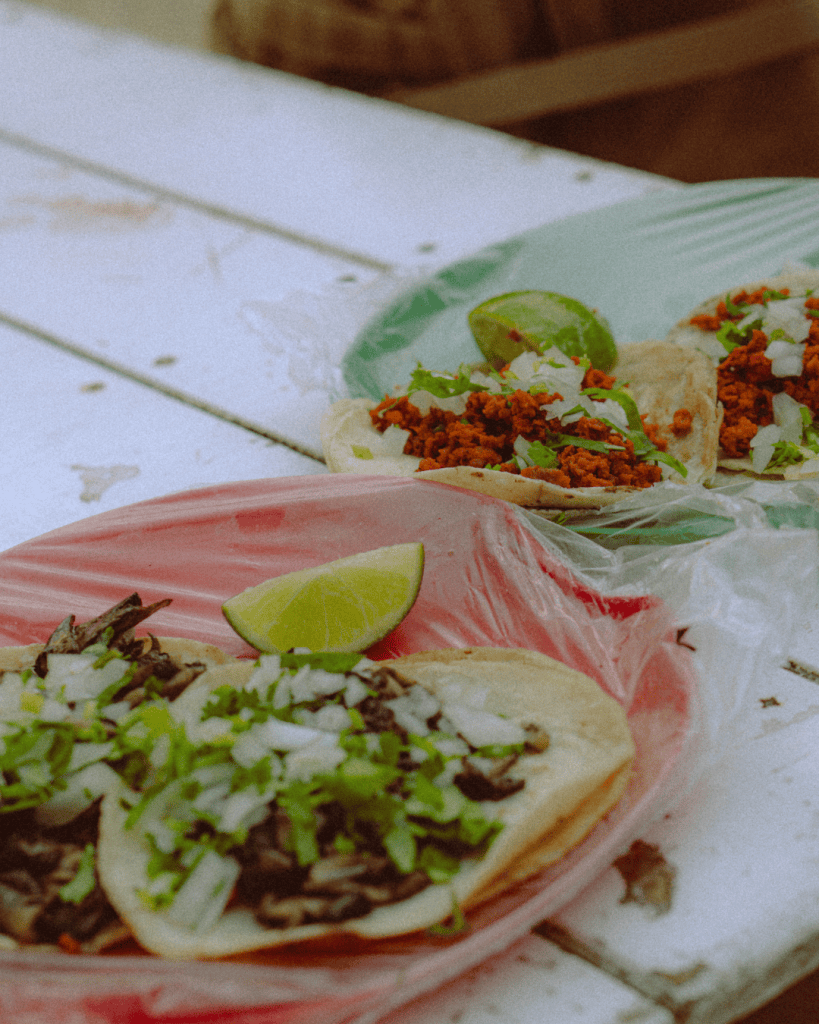
Volcanes were new to me. It’s a tortilla toasted hard and flat with cheese melted into it until it goes crisp at the edges, then piled with toppings. Normally it’s meat on top, but ask for vegetables or mushrooms and you get the same thing without. Crunchy, messy, excellent.
Enchiladas are rolled tortillas baked under sauce, and the cheese version is on most menus without you having to negotiate.
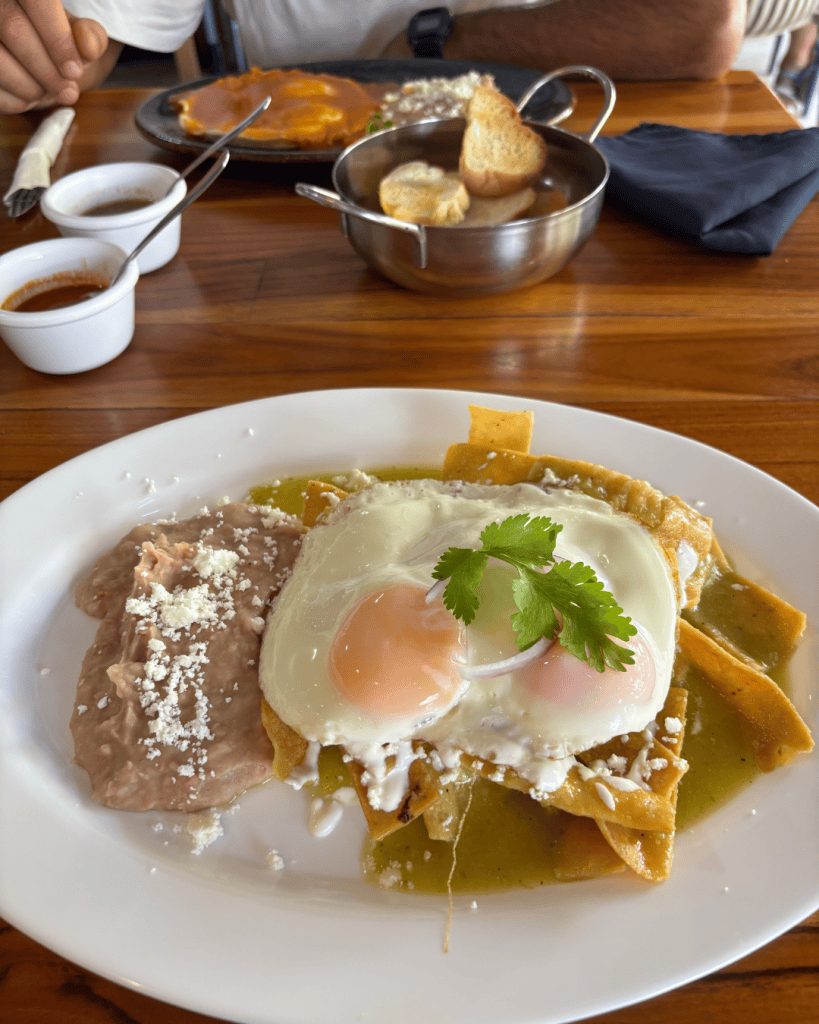
Chilaquiles deserve their own paragraph. Fried tortilla strips simmered in green or red salsa until they’re halfway between crisp and soft, topped with crumbled cheese, cream, onion and usually a fried egg. It’s breakfast, and it is the single most effective hangover food I have ever encountered. After a night on 50 peso margaritas, chilaquiles con huevos and a coffee will genuinely bring you back to life. Do check that the beans on the side are made without lard, which brings me to the section below.
Mole, the dish I didn’t expect to get to try
Mole is the one I’d written off before I arrived, because it’s almost always served over chicken.
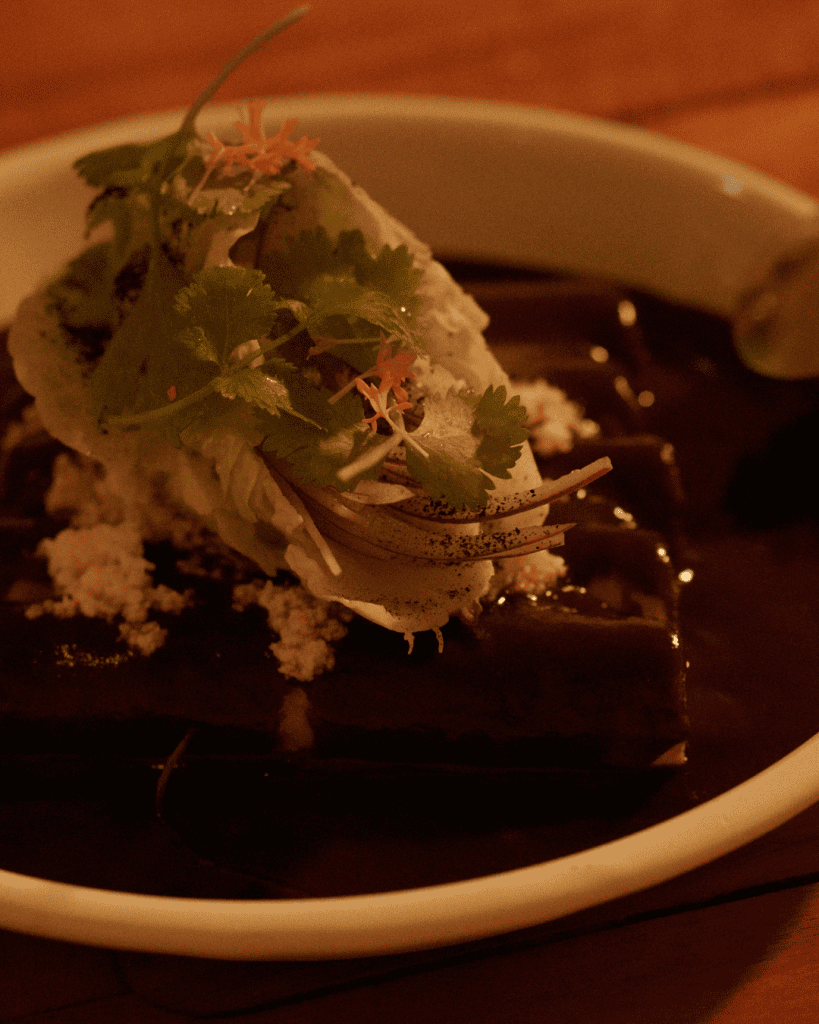
It’s a dark, complex sauce built from chillies, spices, nuts and seeds, and in the poblano style there’s a little chocolate in it too, which is what everyone latches onto, though it doesn’t taste like dessert at all. It tastes deep and smoky and slightly sweet, and it’s the sort of thing that takes hours to make.
I said out loud that it was a shame I couldn’t try it, and the kitchen simply made me enchiladas with mole and cheese instead of chicken. That small moment sums up my whole experience of eating in Mexico as a vegetarian.
Worth knowing: a lot of moles are finished with chicken broth even when the meat is left out, so if that matters to you, ask. Some places will tell you straight away, some won’t have thought about it.
The hidden meat: lard, broth and how to ask
This is the part I wish someone had told me on day one, because the things that catch vegetarians out in Mexico are almost never on the menu.
Refried beans are very often cooked with manteca, which is pork lard. Tamales are traditionally made with lard in the dough. Sopes sometimes get a smear of it before the toppings go on. Rice and soups are frequently made with chicken broth rather than water or vegetable stock. None of this is anyone hiding anything, it’s just how the food has always been made.
Saying “soy vegetariana” is a start, but it doesn’t always land the way you expect, because in a lot of places lard and broth aren’t thought of as meat. Being specific works much better.
| What you want to know | What to say |
|---|---|
| I don’t eat meat, chicken, fish or seafood | No como carne, pollo, pescado ni mariscos |
| Does it have lard in it? | ¿Tiene manteca? |
| Is it made with chicken broth? | ¿Está hecho con caldo de pollo? |
| Can you make it without meat? | ¿Lo puede preparar sin carne? |
| With mushrooms instead, please | Con champiñones, por favor |
Learn those five and you’ll eat well for a month. I did, and my Spanish is embarrassing.
Dessert: churros, and the marquesita situation
Churros, obviously. You’ll smell the cart before you see it, and in Sayulita the good ones are right by the aguas frescas stand before the bridge. Order them hot or don’t bother.
Then there are marquesitas, which I need a moment to explain because I did not believe it either.
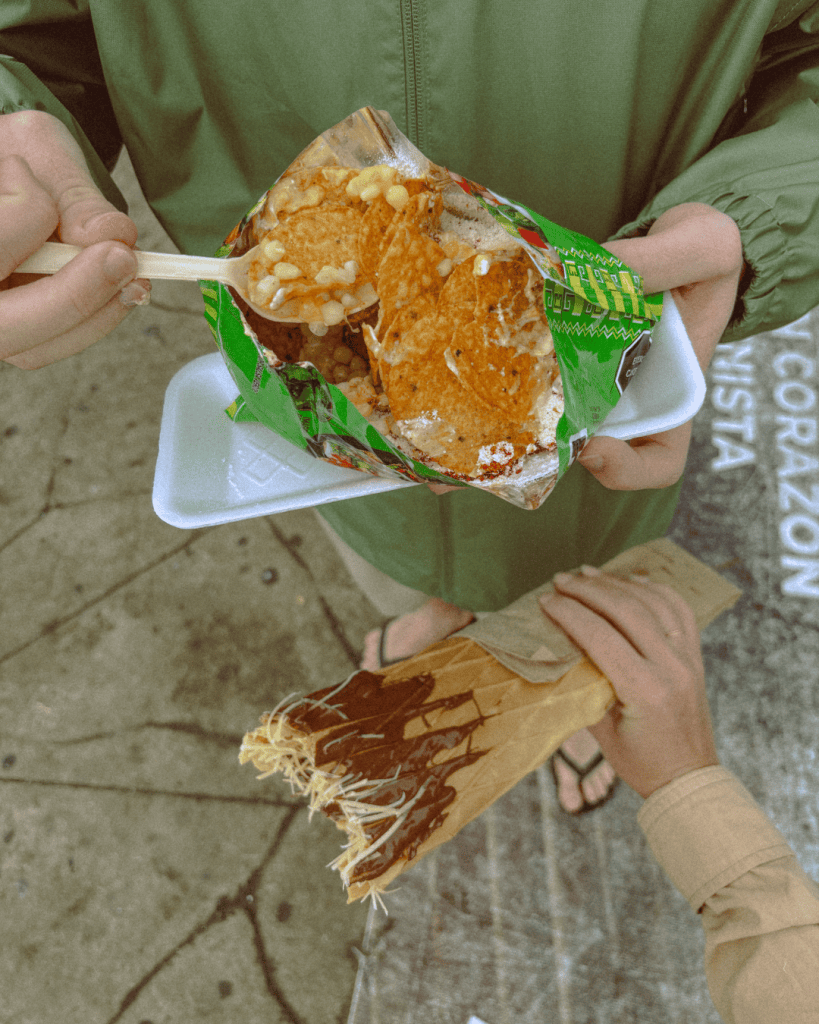
A marquesita is a very thin crepe made from flour, egg, milk and butter, pressed on a hot plate until it goes properly crisp, then filled and rolled into a tube while it’s still hot. The classic filling is Nutella or cajeta with shredded Edam cheese, the Dutch style queso de bola that’s been part of Yucatán cooking for generations. Yes, cheese. In a dessert. With chocolate.
It comes from Yucatán, where it was invented in the 1930s by an ice cream seller looking for something to sell in the cooler months, and it’s since spread across the country. I was suspicious for exactly one bite and then completely converted. Sweet, salty, crunchy, slightly ridiculous. Get one.
What to drink, including the one I regret
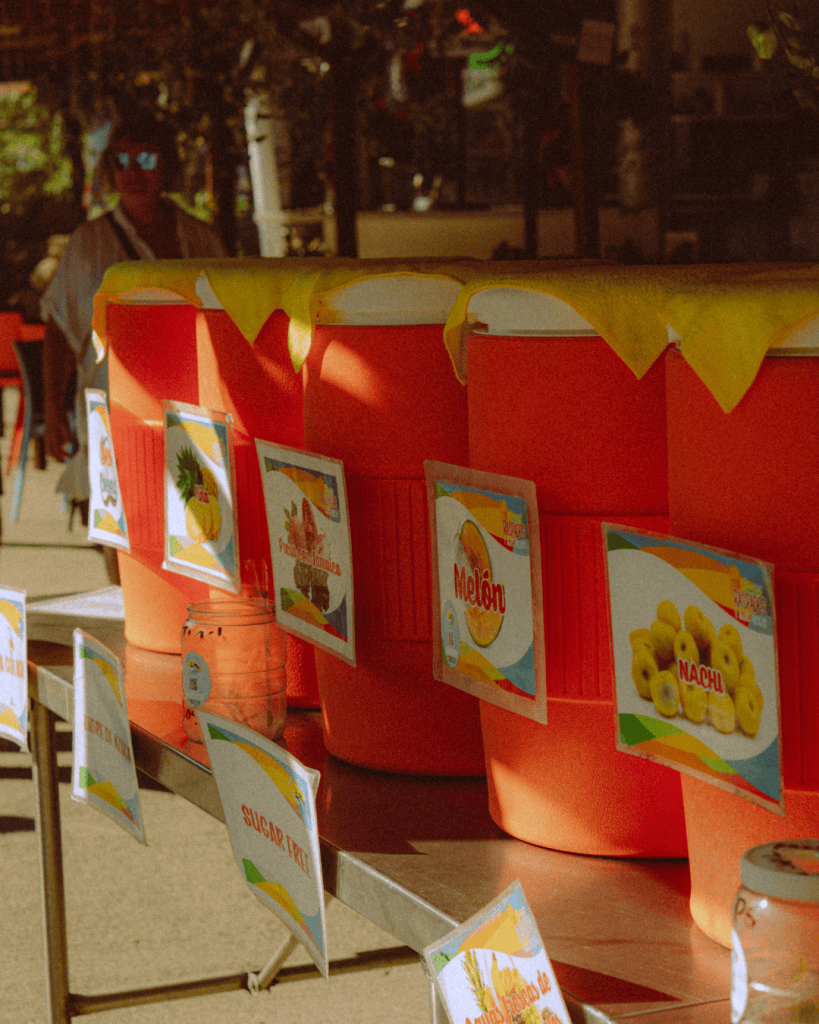
Aguas frescas are the everyday drink and I tried close to all of them. Horchata is my favourite by a distance, rice based, cinnamon heavy, cold and creamy without being heavy. Jamaica, made from dried hibiscus flowers, is the other one to order, sharp and deep red and incredibly refreshing when it’s 30 degrees.
Beer. We worked through the lineup fairly thoroughly, for research. Victoria and Pacífico were my favourites, and Modelo is very drinkable too, especially the dark one, which is the one I’d order again.
Margaritas. In Sayulita I found them at 50 pesos, fresh limes squeezed in front of me, which spoiled me completely for the rest of the trip. In Yucatán I was paying three times that.
And the michelada. Beer, tomato juice, salsa, lime, salt. People love this drink. I am not people. It tasted like someone had made a cocktail out of a fridge, and I had to drink two margaritas afterwards to get rid of the memory. Try it once so you can have an opinion, and if you love it, please don’t tell me.
What it all costs
Eating vegetarian in Mexico is cheap, and it’s cheapest exactly where the food is best, which is on the street.
Street tacos are the budget option almost everywhere, and sit down places charge more. For a reference point, in Sayulita I was paying around 45 to 50 pesos a taco in a small restaurant and about 50 pesos for a margarita, which is roughly two and a half euros for the taco and the same for the drink. Prices climb a lot in the Yucatán tourist towns, where the same margarita was 150 pesos and up.
Two practical things. Bring cash, in small notes, because street stands and market kitchens are cash only and nobody can break a 500 peso bill. And if there’s a queue of people in work clothes at a stand, join it, that’s the whole review.
What to sort out before you go
Data. I use an eSIM rather than hunting for a SIM card at the airport, mostly because I once landed at 11pm with no Spanish and no way of finding my hotel and learned that lesson the hard way. It also means you can pull up your phrases and translate a menu on the spot, which is genuinely useful when you’re trying to work out whether the beans have lard in them.
Get your Mexico eSIM → (code SKYVINE15 for 15% off your first purchase)
So, is Mexico good for vegetarians?
Much better than I expected, and I say that as someone who arrived braced for a month of quesadillas.
You will eat mushrooms and cactus and beans and potatoes and cheese, in about forty different arrangements, on tortillas made an hour ago, for a couple of euros a time. You’ll get the odd plate that turns out to have been cooked in lard, and you’ll learn to ask. And every so often a kitchen will quietly rebuild a dish for you, the way someone did with my mole, and that’s the bit I actually remember.
Come hungry, learn five phrases, carry cash, and skip the michelada.