Provence Without the Instagram Filter: What It’s Really Like
I hadn’t set foot in France for almost two years. Nine-ish harvests, four countries, a lot of airports, and somehow never a summer at home. So this year I finally came back to see my family and my friends, and because my boyfriend isn’t from my region and had a few days with me, I ended up playing tour guide in my own backyard.
Here’s the thing nobody warns you about. When you’ve always lived somewhere, you stop looking. You never do the hikes, you never try the new beach, you never bother with the town two valleys over, because you’re convinced you already know everything. That was exactly me with Provence. Total local’s laziness.
Except after two years away you’re not really a local anymore, you’re basically a tourist with a good accent. So I did the touristy thing. I redid my own region with fresh eyes, and honestly, some of it floored me.
This is my non-exhaustive list of things to do in Provence, mostly in the Var, with a few detours east and west. Not the lavender-field, Peter Mayle version. The one I actually did this summer, sunburn and parking drama included.
The best things to do in Provence, from someone who grew up here
Quick geography, because “Provence” is a word people throw around for anything between Marseille and the Italian border. Most of what’s below sits in the Var, which is the department between Marseille and Nice. It’s the part with the red rocks, the rosé, the calanques and the terrible summer parking. I’ve stretched it a bit at both ends, Nice on one side, Marseille on the other, because both are close enough for a day out and both deserve it.
None of this needs a big budget. Most of it needs an early alarm, which in July on this coast is worth roughly ten times more than money.
A day in Nice, touristy and worth it anyway
I’ll admit it straight away, a day in Nice is a cliché. It’s also completely justified if you’ve never been.
You’ve got the buildings in those Provence colours, ochre and dusty pink and that faded orange that photographs beautifully in the late afternoon. You’ve got the little pedestrian streets of Vieux Nice, which you should get lost in on purpose. Avenue Jean Médecin if you want to shop. And the happy hours on Cours Saleya, still five euros, exactly the same as when I was a student here ten years ago. I don’t know how they’ve managed that. Nothing else in France has held its price like that.
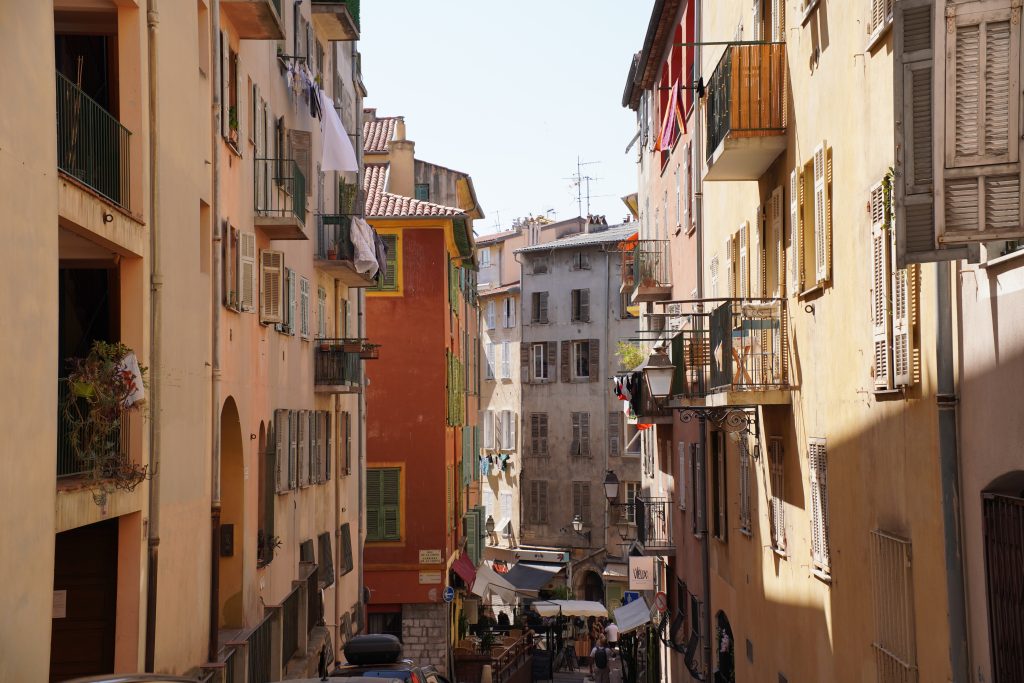
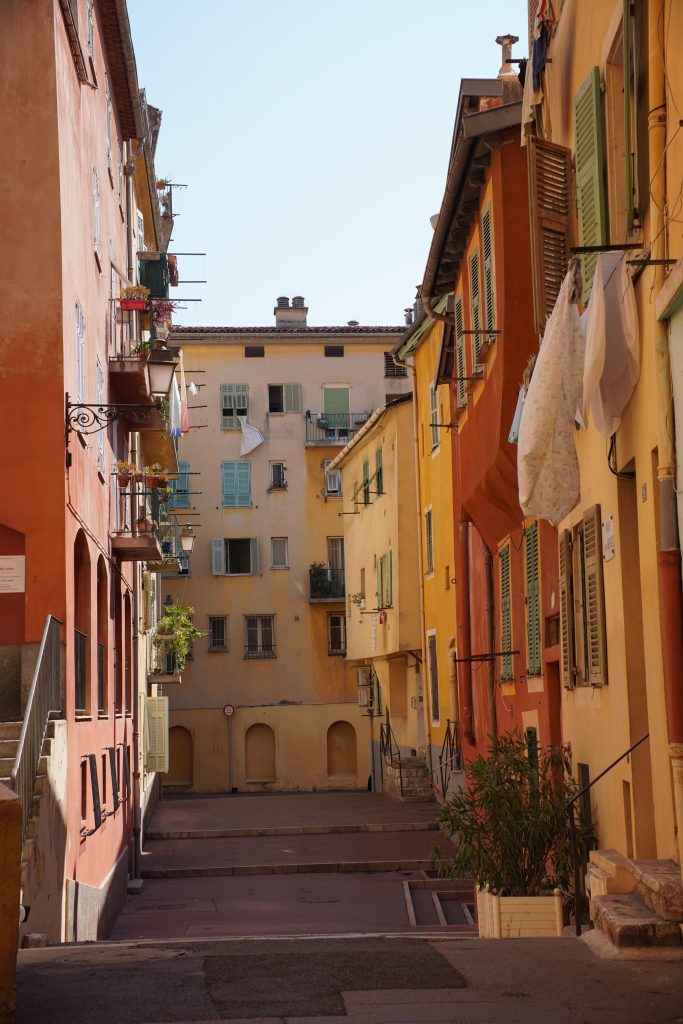
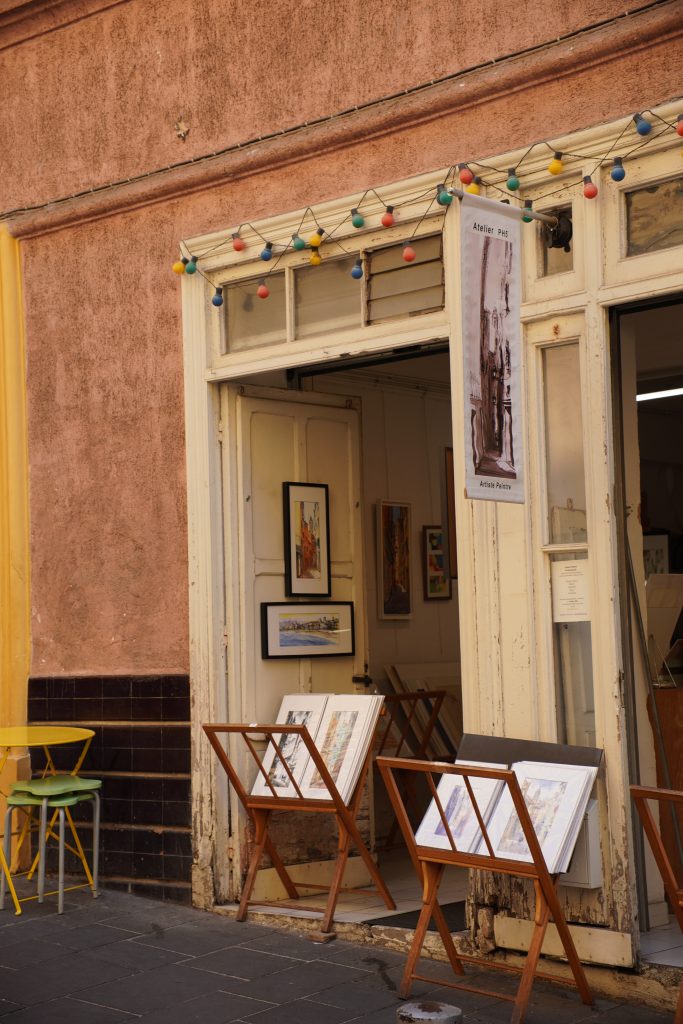
Then take some height with the Colline du Château. It’s free, there’s a lift at 1 rue des Ponchettes if your legs are done, and it’s open from 8:30 to 20:00 from April to September, 18:00 the rest of the year. The view over the Baie des Anges from up there is the one you’ve seen a thousand times, and it still gets you.
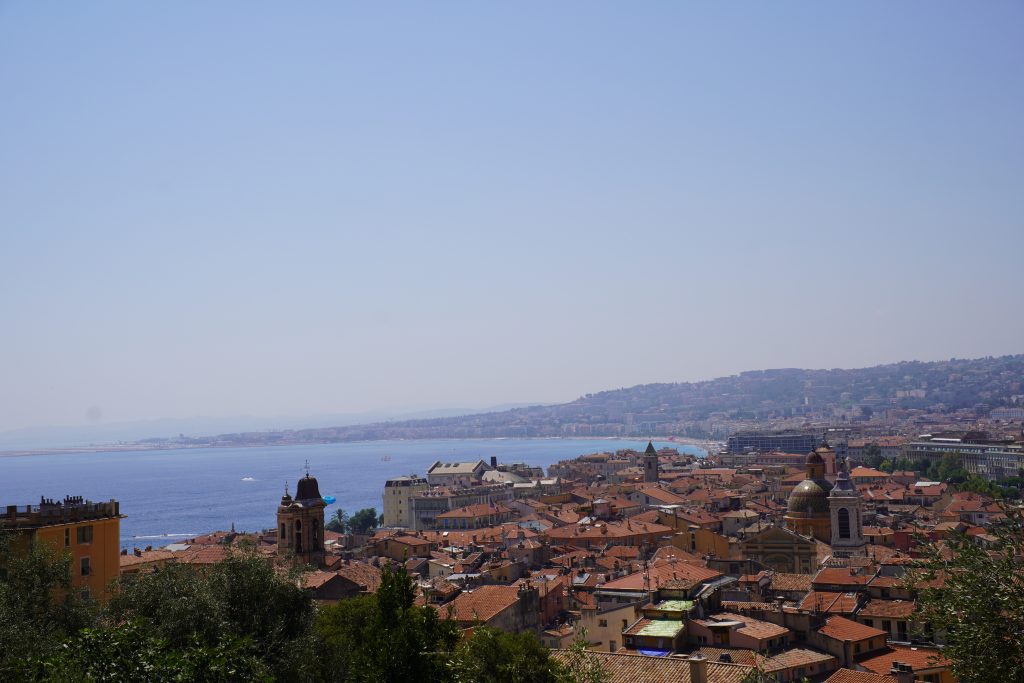
Finish on the beach for sunset. Yes, the pebbles will hurt. Bring something to sit on.
My practical tip, and this one will save your entire day: don’t try to park in the centre. Leave the car at the Henri Sappia park and ride on the northern edge of the city, then take tram line 1 down into town. It’s one of the big Parcazur car parks, around 765 spaces, and parking is free on the day you do a return trip on the network. Way cheaper and way less stressful than circling the old town for forty minutes.
Marseille and the walk to Calanque de Marseilleveyre
I’m going to be honest, I’m not a huge Marseille fan. I know, I know. But there are spots that make the trip worth it anyway, and Les Goudes is the big one.
Drive right to the end, past Les Goudes to Callelongue, where the road literally stops and the city gives up. From there you walk to the Calanque de Marseilleveyre. It’s the beginning of the Calanques proper and it is stunning, that white limestone dropping into water so blue it looks edited.
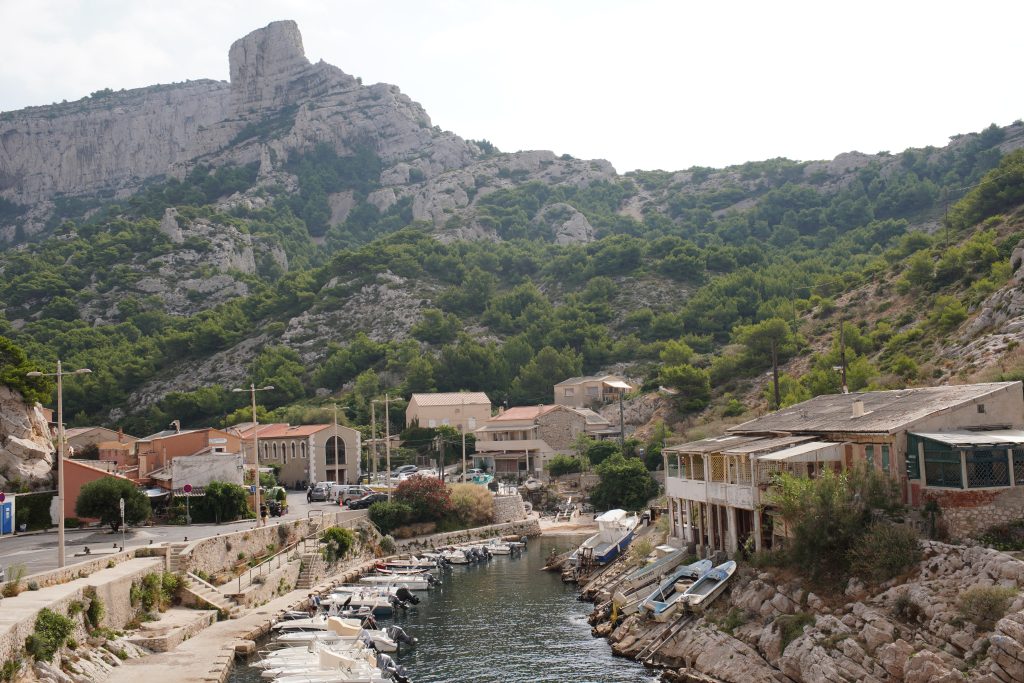
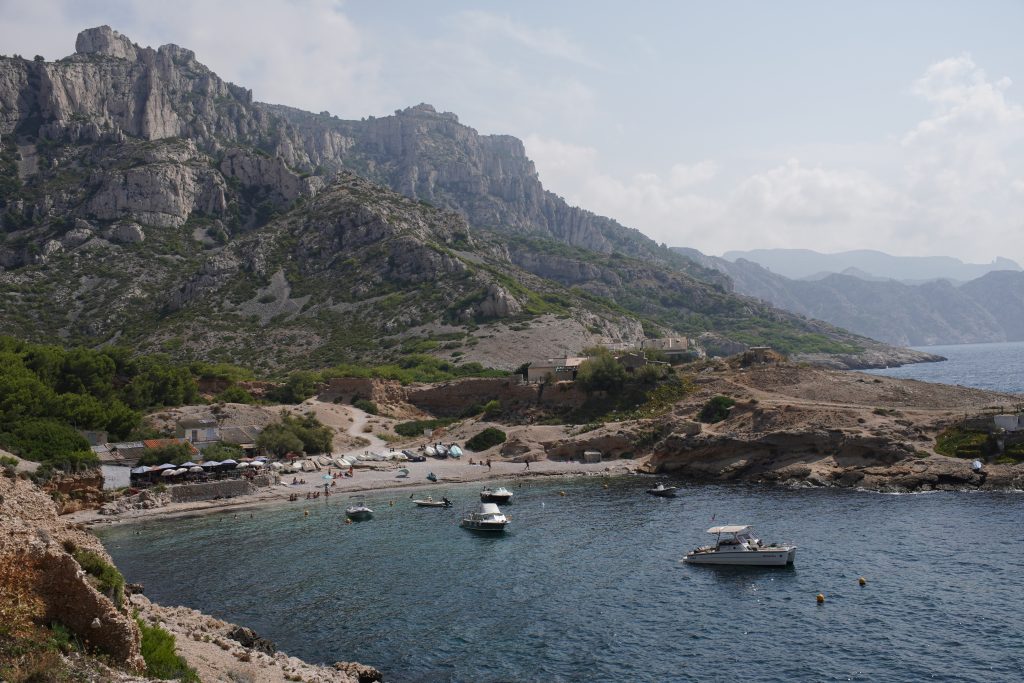
The walk is short, roughly 2 km each way, about 50 minutes, and it’s rated easy. The one thing to know is that the rock has been polished smooth by thousands of hikers, so it gets genuinely slippery in places. Wear something with grip, not your holiday sandals.
At the end you come out on a small beach with a little shack where you can get a drink or something to eat. Bring cash, because that’s what it runs on.
And arrive early. I cannot stress this enough. Parking spots down there are worth their weight in gold in summer, and once they’re gone they’re gone. The good news is that it’s free, even in high season.
Here’s the route I did: Callelongue to Marseilleveyre on AllTrails
Presqu’île de Giens, my favourite place on earth
I’m biased. I don’t care. The Giens peninsula, right next to Hyères and the famous Almanarre beach, is my favourite place in the world and I’ve now seen a decent chunk of it.
It’s a peninsula attached to the mainland by two thin strips of sand with salt flats in between, which already tells you it’s a strange and beautiful bit of geography. The west tip is where it gets really good. Cliffs, tiny coves, that impossible turquoise, and viewpoints around Escampo-Bariou and the Pointe des Salis where one of the scenes from the 2024 Comte de Monte-Cristo was filmed, the one where he finds the cave. Since the film came out the site has got a lot busier, and local authorities have flagged both the erosion and the fact that the terrain is genuinely steep. So go, but go carefully and stay on the paths.
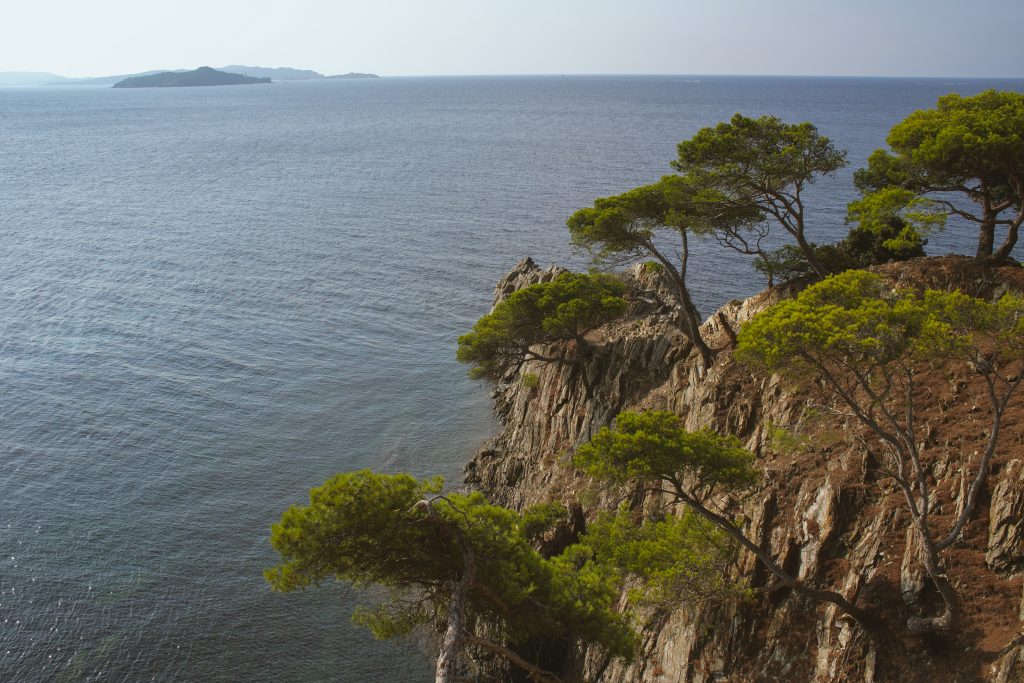
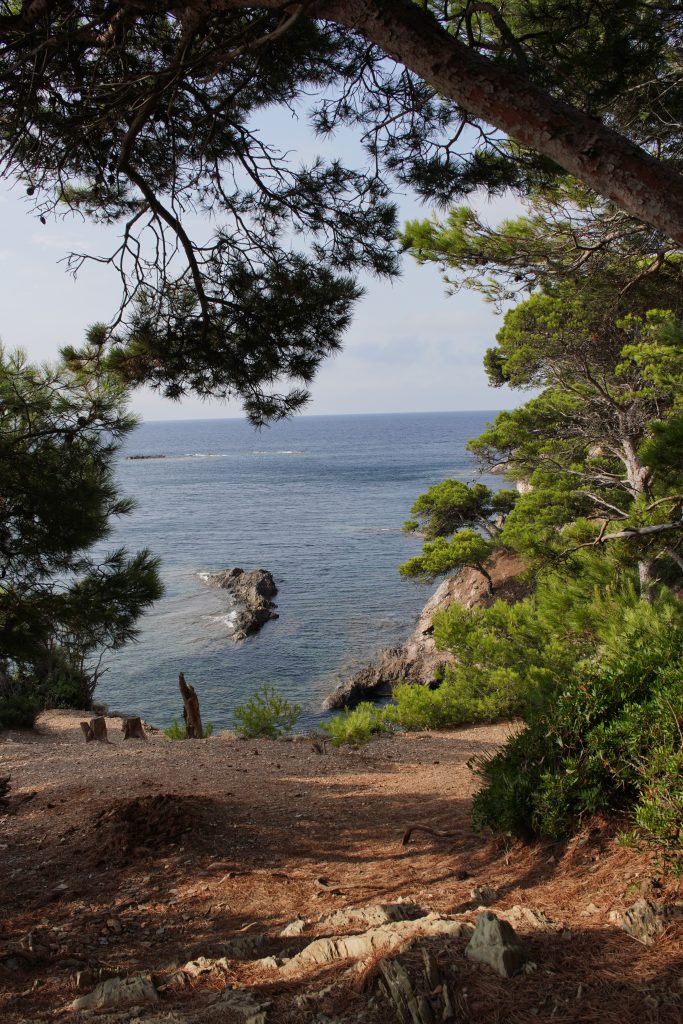
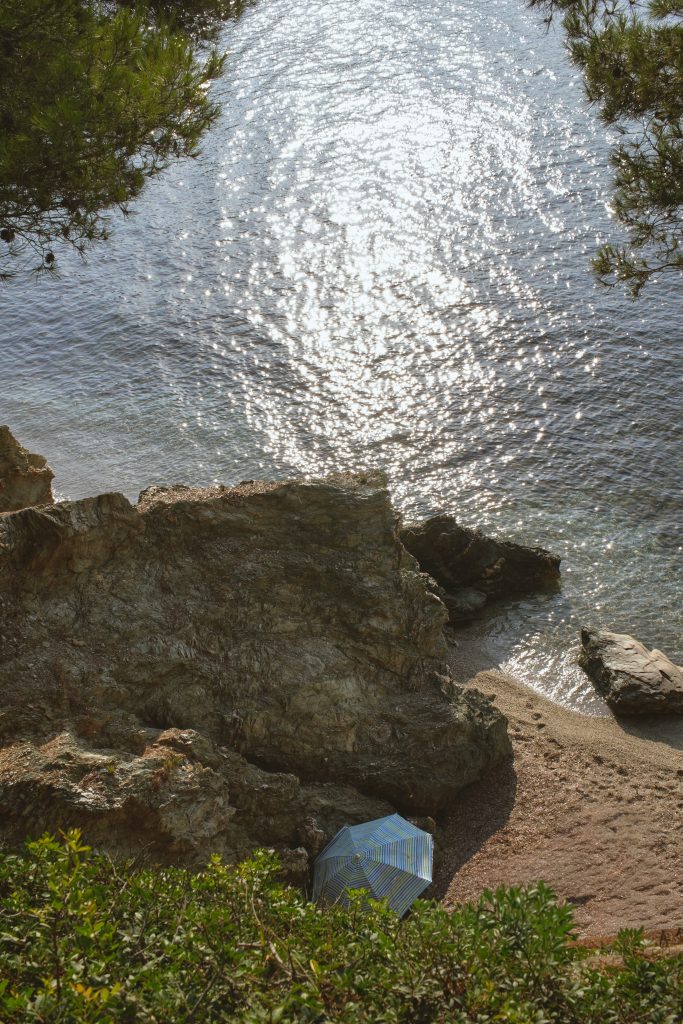
Do the small loop. It’s around 6 to 7 km with roughly 250 m of climbing, count two and a half to three hours with stops, and it’s the prettiest section of the whole peninsula. Start from the free car park near the Olbia campsite. In summer you need to be there very early, and I mean early, not “early for a holiday”.
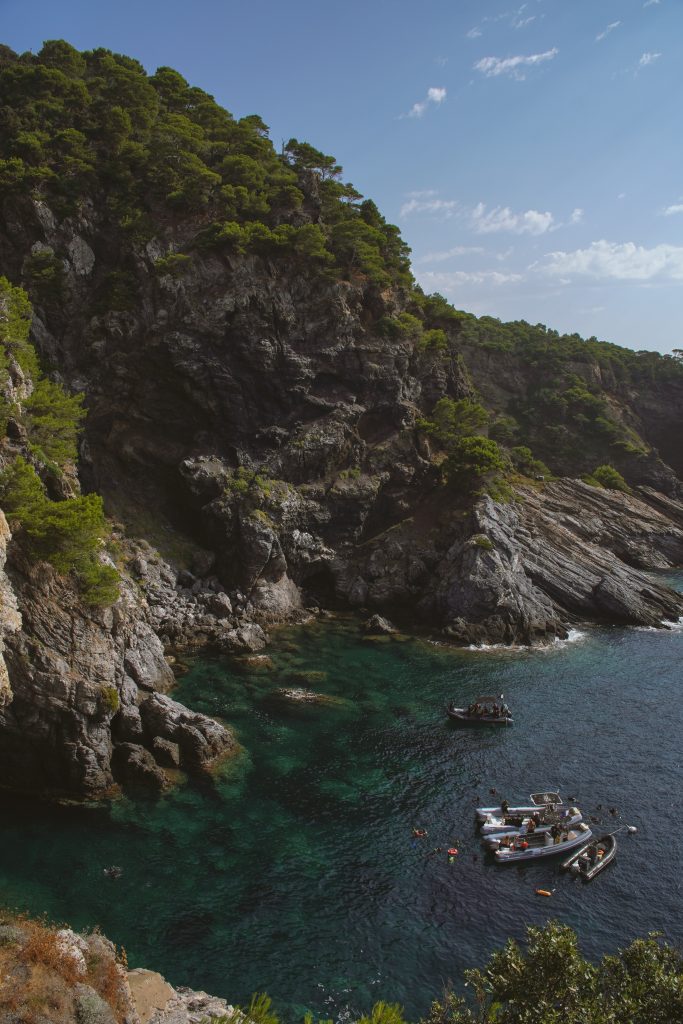
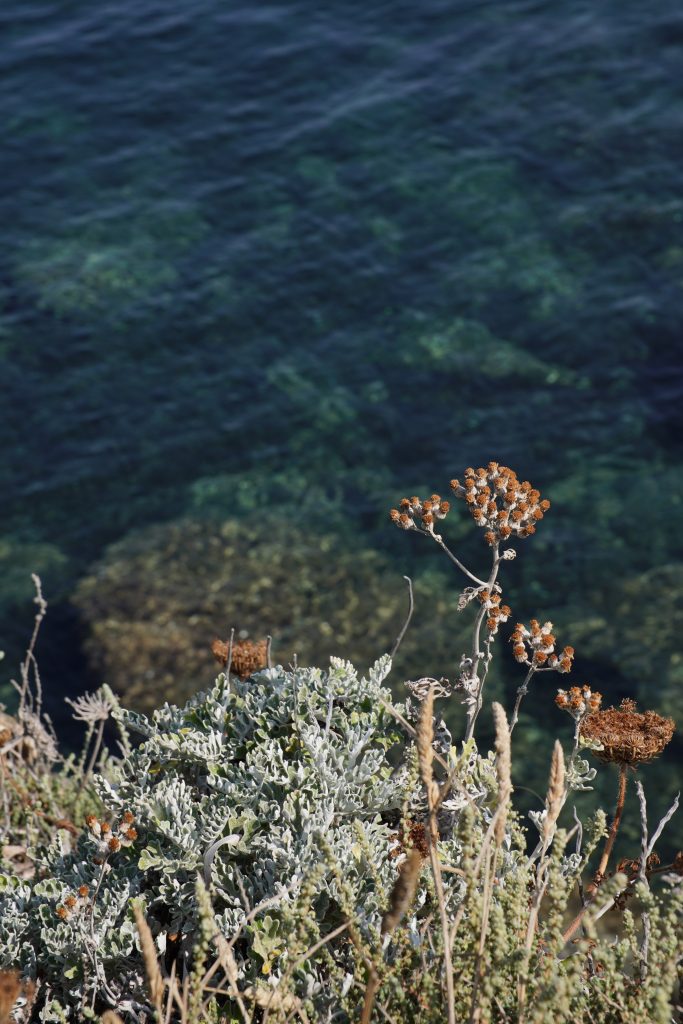
There’s also a big 20 km loop around the whole peninsula. I’d skip it. A decent chunk of it runs along the road, and the best part is already in the small loop I just sent you.
Here’s the loop: Pointe des Chevaliers circuit on AllTrails
Gorges du Verdon, hike it or float it
The Verdon isn’t as far as people think. If you’re based on the Var coast it’s an easy day trip, and it’s even better if you stay the night up there.
Two ways to do it, and they’re completely different days.
On foot, the big one is the Sentier Blanc-Martel. It’s the famous walk through the gorge, 15 km one way from the Chalet de la Maline to Point Sublime, about 5h30 of actual walking and around 600 m of climbing. It’s not a loop, so you take the shuttle to get back to your car. Bring a headlamp, there are tunnels, and there are ladders and a steep climb at the end. It’s a proper hike, not a stroll. Check the trail status before you commit, part of the route has been affected by a rockslide and there’s currently a signed alternative.
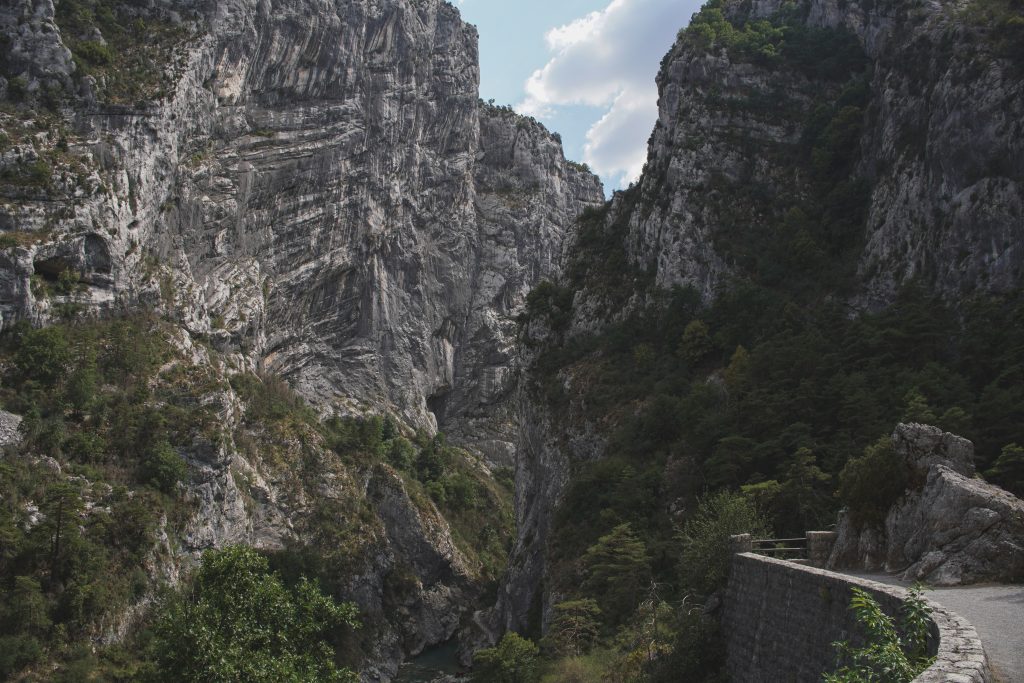
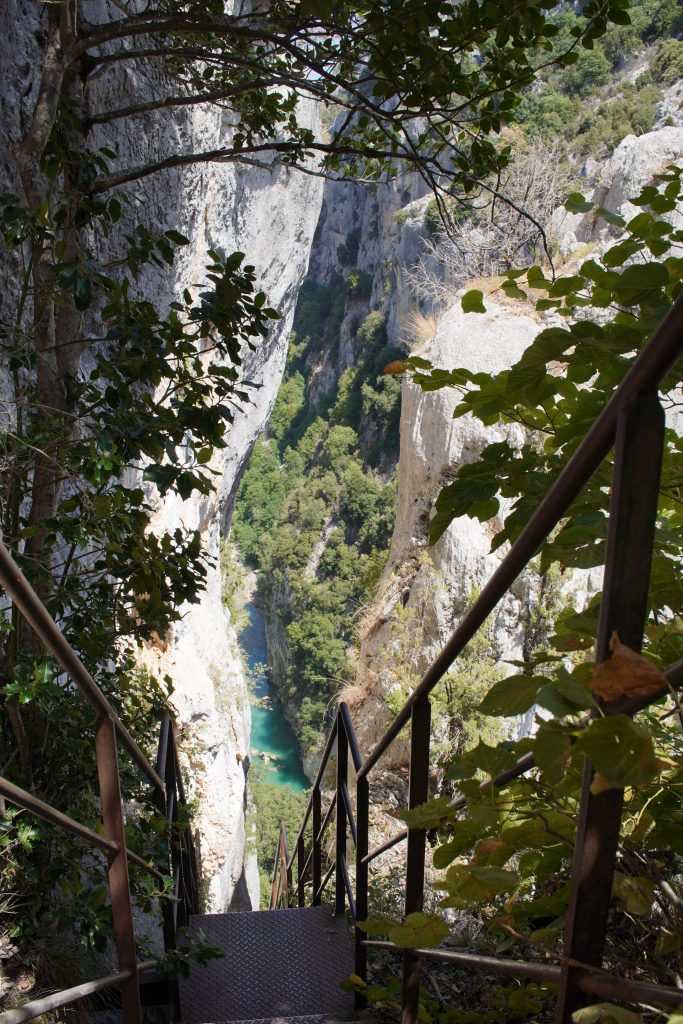
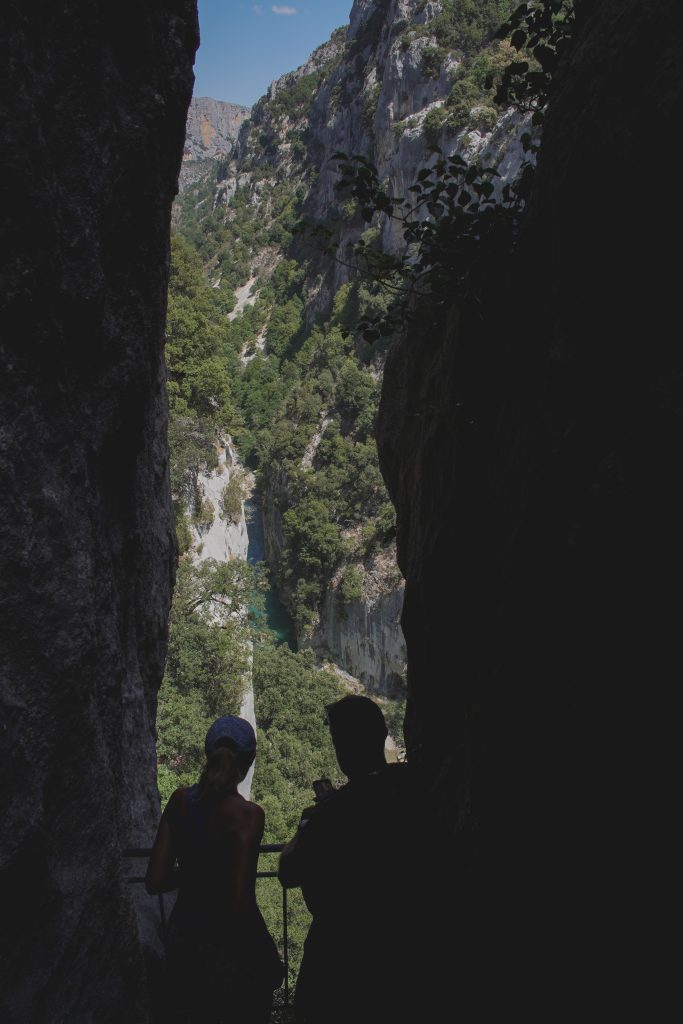
On the water, rent a canoe or a little electric boat and follow the river into the gorge. No licence needed for the electric boats, and prices sit around 55 euros an hour or 180 for a half day for a boat that takes up to seven people, so it splits well between a group. Prices vary between operators and seasons, so check before you go.
Whatever you pick, July is a nightmare. The place is heaving. Go in June or September if you can, or properly out of season if your life allows it.
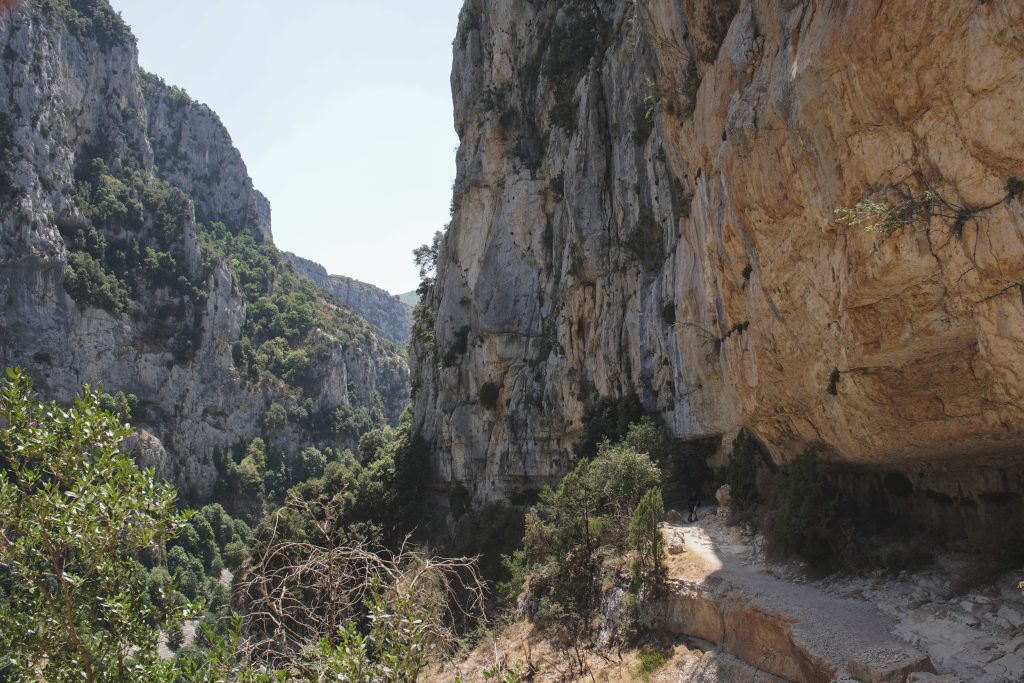
On sleeping there: I loved my night out in the Verdon, but be aware that wild camping is banned in the gorge, and bivouac is only tolerated in certain spots under specific conditions. Rules change and they’re taken seriously, so check with the Castellane or Moustiers-Sainte-Marie tourist office rather than trusting a blog post, mine included. There are also proper campsites around Castellane and Lac de Sainte-Croix if you’d rather not gamble.
The Estérel, red rocks straight off the road
The Estérel is the massif between Saint-Raphaël and Cannes, and the coast road that runs along it, the Corniche d’Or, is one of the great drives in France. Red volcanic rock going straight into blue water. It doesn’t look real, and it doesn’t need a filter.
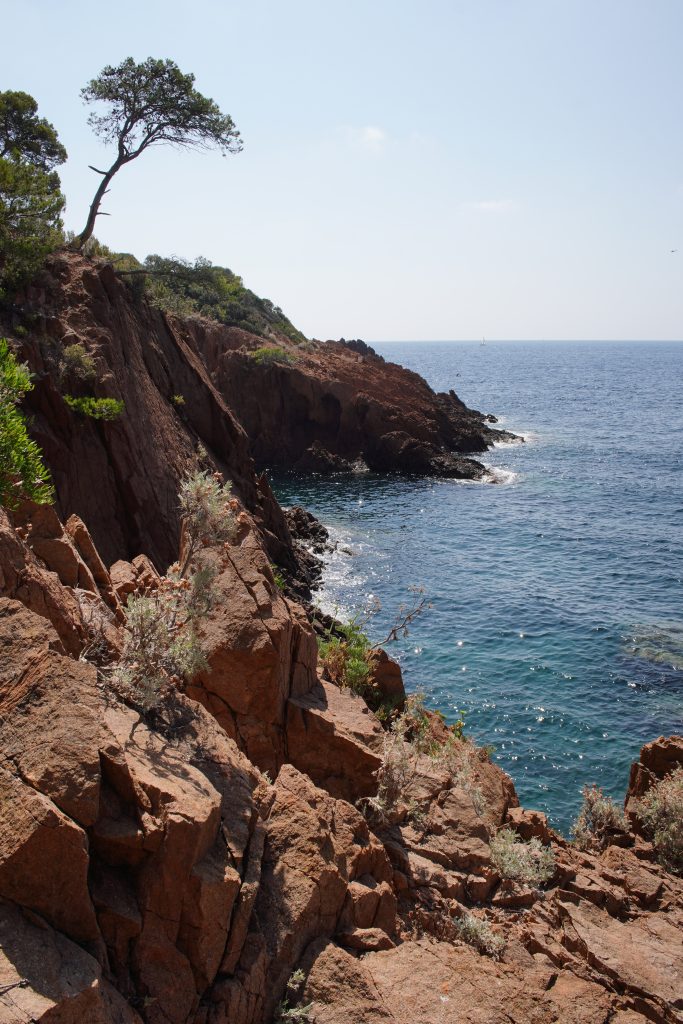
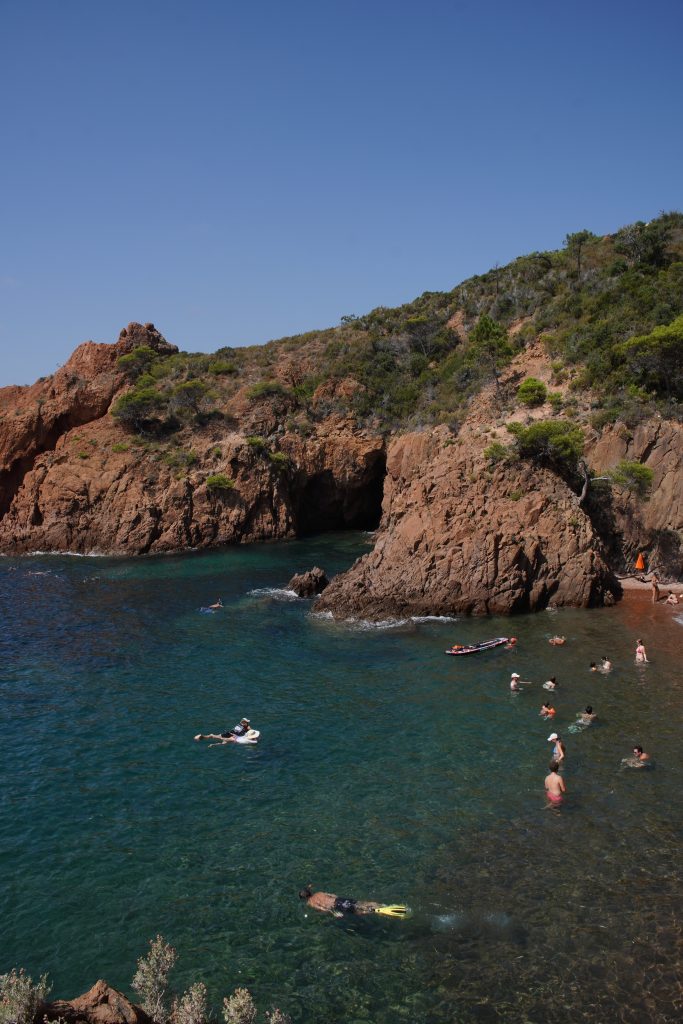
The bit I want to tell you about is a beach right off the road. You park, you walk about five minutes, and you’re standing in the middle of these red rocks with the sea in front of you. That’s it. That’s the whole effort.
The catch, and you’ll have guessed it by now, is the parking. We’re talking a few dozen spaces, not a car park. Tens of cars, not hundreds. So same advice as everywhere else on this list: get there early or don’t bother.
The coastal path from Le Mourillon to Anse Magaud
The sentier du littoral in Toulon is one of my favourites, especially heading towards Anse Magaud. You start at the Mourillon beaches and just keep walking east until you find a cove to swim in. Anse Méjean is gorgeous too, and you pass little fishing hamlets on the way that feel like they belong to another decade.
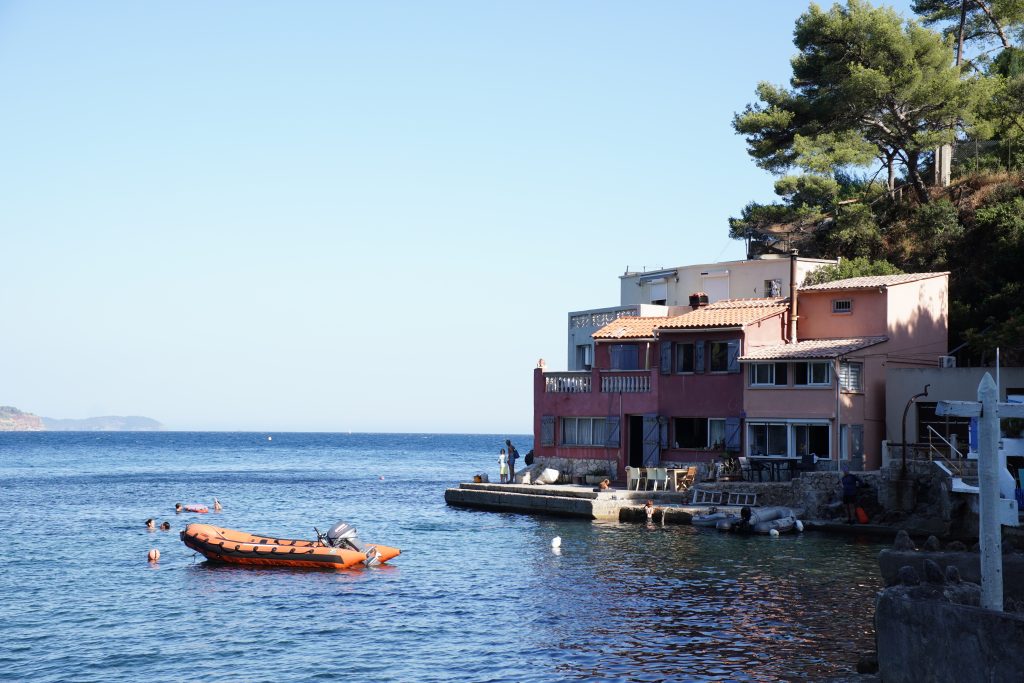
It’s easy, count roughly an hour to an hour and a half return depending on how many swims you stop for. Worth knowing that the Cap Brun section only reopened in 2025 after seventeen years closed for rockfalls, so check it’s open before you go.
I’m not going to say more here because this one deserves its own article, and it’s coming soon.
Provence Verte, vineyards and green in the Haut Var
This is the part of Provence people forget exists, and as a winemaker I’ll happily die on this hill. Go twenty minutes inland from the coast and everything changes. It gets green, actually green, with forest and rivers and villages that aren’t full of people photographing each other.
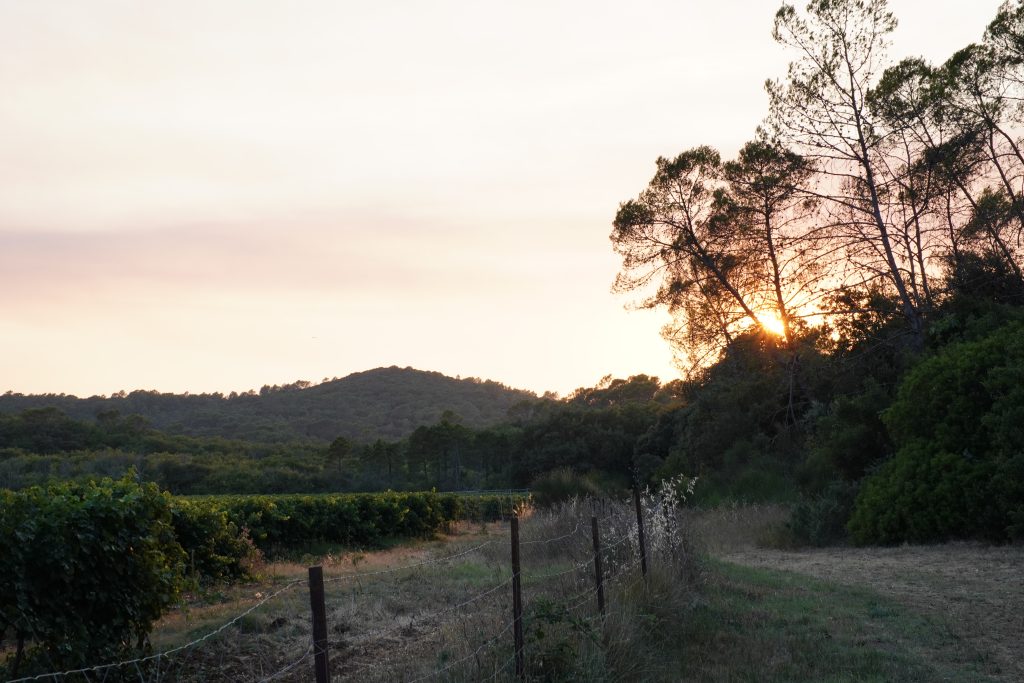
The Provence Verte in the Haut Var is where you come to taste. Two I’d point you towards:
Domaine Fontainebleau en Provence, at Le Val on the road to Cotignac. Organic, in a quiet little valley, and the cellar door is open Friday to Monday from 10:00 to 18:00.
Château Mouresse, over at Vidauban, AOP Côtes de Provence. It’s a bit further south, more on the plain than in the green hills, but the visits are private and you’ll want to call ahead rather than turn up.
A word from the other side of the counter: if you’re tasting in Provence in September, remember the whole region is in the middle of harvest. Everyone is exhausted, everyone is covered in juice, and the person pouring your rosé has probably been up since five. Be nice, buy a bottle, don’t ask for a two-hour tour.
A few things I’d tell you before you go
The real currency here in summer is the early alarm. Almost every spot on this list has a parking problem, not a crowd problem, and the two hours between seven and nine in the morning are the difference between a perfect day and driving home annoyed.
June and September are better than July and August in every single way. Same sea temperature in September, a third of the people.
And if you live here, go be a tourist in your own region for a week. I put it off for years out of pure laziness and it turns out my own backyard was hiding hikes I’d never done, beaches I’d never seen and a whole green half of the Var I’d basically ignored. Two years away was a stupid way to learn that. You can just decide to do it instead.