Isthmus Peak Hike Guide: Wanaka’s Quieter Alternative to Roys Peak
This is everything I wish I’d known before the Isthmus Peak hike near Wanaka, starting with what time to actually leave the car park.
Isthmus Peak sits between Lake Wanaka and Lake Hawea, and it is basically Roys Peak’s quieter, less Instagrammed sibling. Same kind of climb, same kind of view over two lakes at once, way fewer people. We started at 5pm, because why not and ended up finishing the descent by phone light. Would I do it again exactly like that? No. Would I still tell you to do this hike? Absolutely.
The Basics
It’s a 16 km return trail, about 1,130 m of elevation gain, out and back the same way both times. Access is from the Stewart Creek car park only, on SH6 between Lake Hawea and the Haast Pass turnoff.
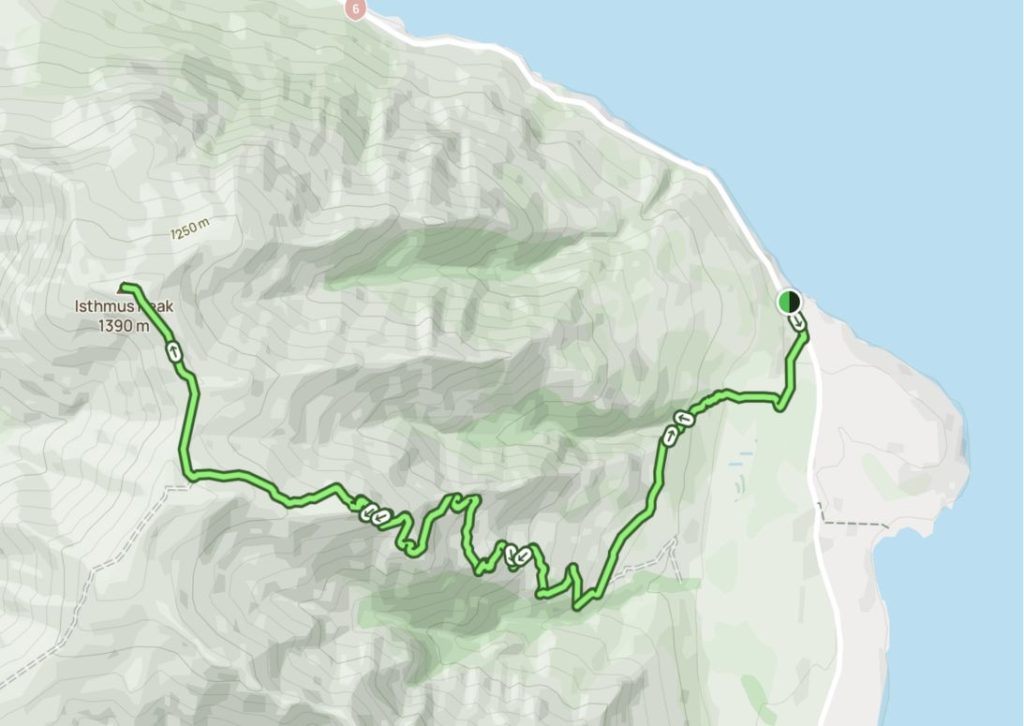
GPS for the car park: 44°27’59.0″S 169°14’51.8″E.
A few things worth knowing before you even lace up your shoes. The track crosses private farmland, so dogs aren’t allowed and you’re expected to stay on the marked path.
It’s closed every year from November 20 to December 20 for fawning season, so double check with DOC if you’re planning a trip around then.
Between March and May there’s also a hunting operation running on the station, nothing that should stop you from going, just something to be aware of and a good reason to stay visible on the trail.
And there’s no water source once you’re on the climb, so bring more than we did. One liter for two people was, in hindsight, a genuinely bad call.
Getting There
From the car park you cross the road to the true right of Stewart Creek and start climbing through a small patch of forest before the real elevation begins. It’s a good 30 minute drive from Wanaka, so it’s an easy add on if you’re already staying in the area.
The Climb
The first stretch follows the creek through the trees, then opens up onto farmland as you gain height. At some point you’ll walk alongside a large enclosure full of deer, which looks lovely until you realize it’s actually there for the hunting operation next door, the animals get released each season for hunters coming through. As a vegetarian, my heart is bleeding, when i went i was thinking they were wild, not at all.
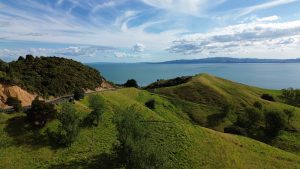
From there the trail keeps climbing, weaving through paddocks full of sheep, and honestly this is where it starts to feel like you’re somewhere properly wild, caught between two lakes with nothing but grazing animals for company.
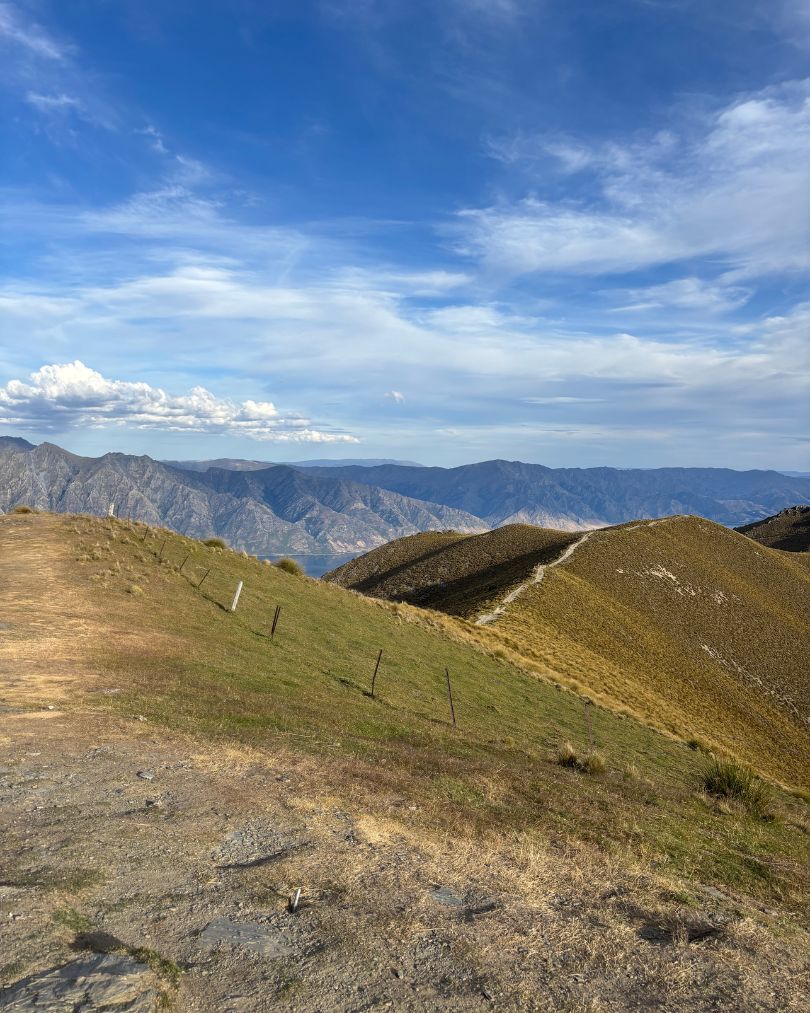
Eventually the ground flattens a little near a set of toilets by the track, and from here the climb gets noticeably gentler, alternating short rises with flat sections. Not long after, you’ll hit a junction, straight ahead keeps you on the Isthmus Peak track, while a sign to the left points toward Glen Dene Ridge Track, a 37 km route that eventually connects back to Wanaka along the ridge line. Tempting, but that’s a trip for another day with a lot more planning behind it.
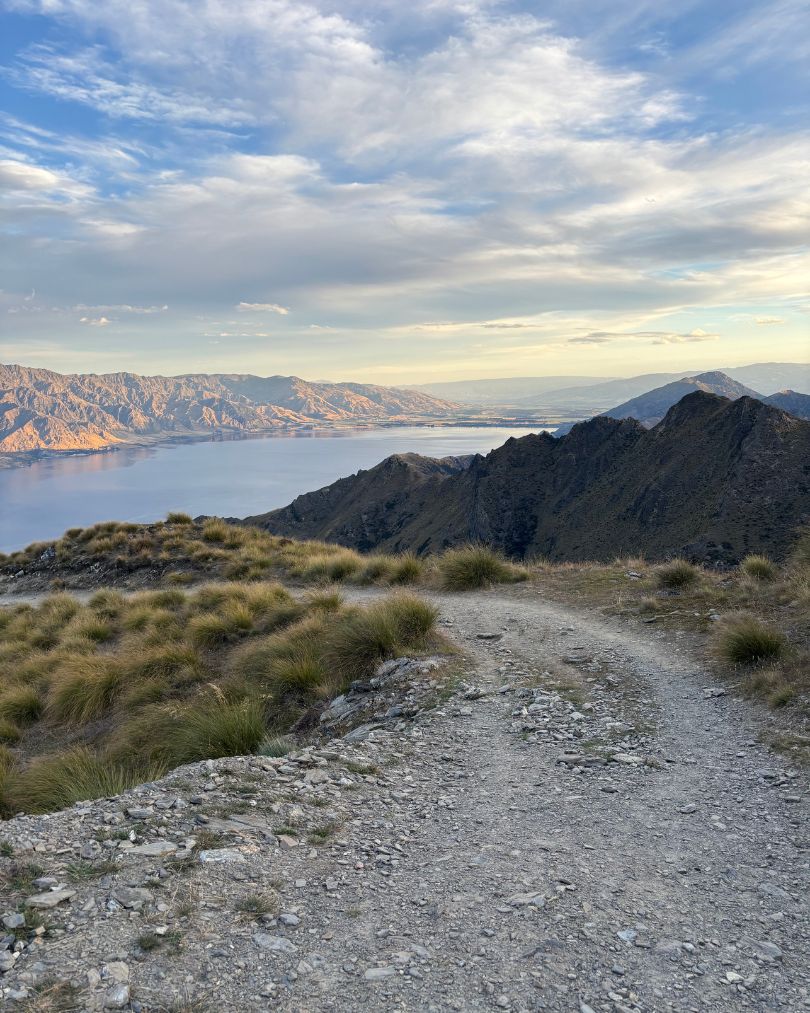
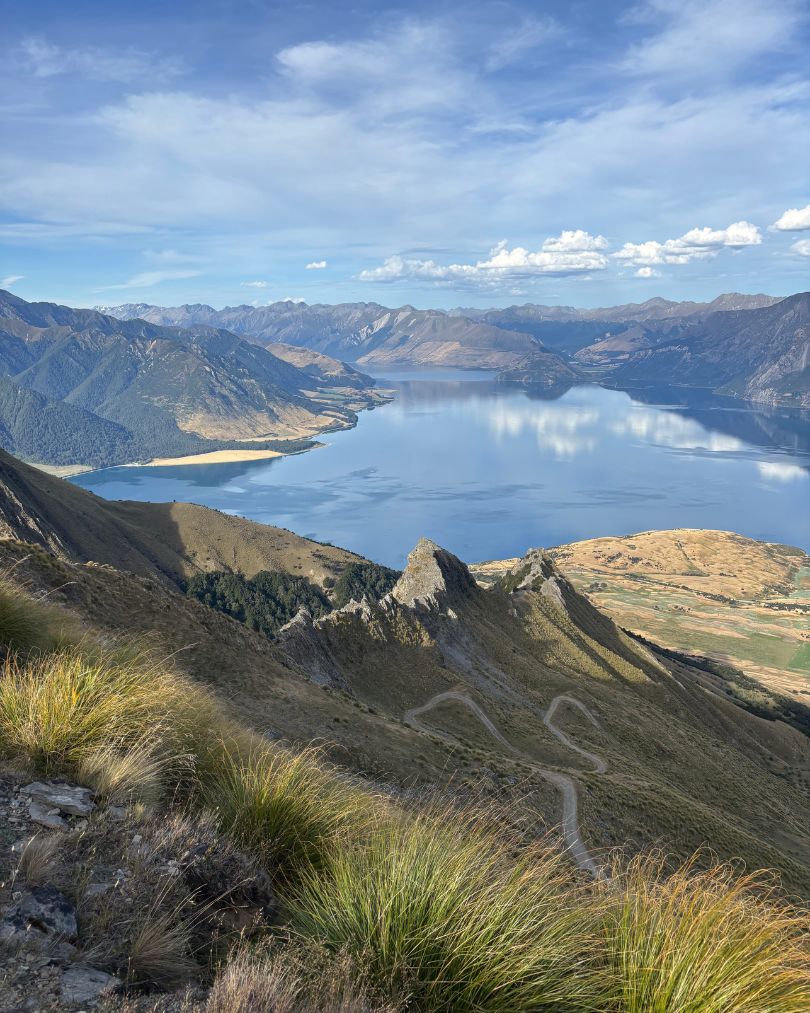
Stay right, and Lake Wanaka slowly reveals itself as you round the last few curves, until you reach the small antenna marking the summit.
The View From The Top
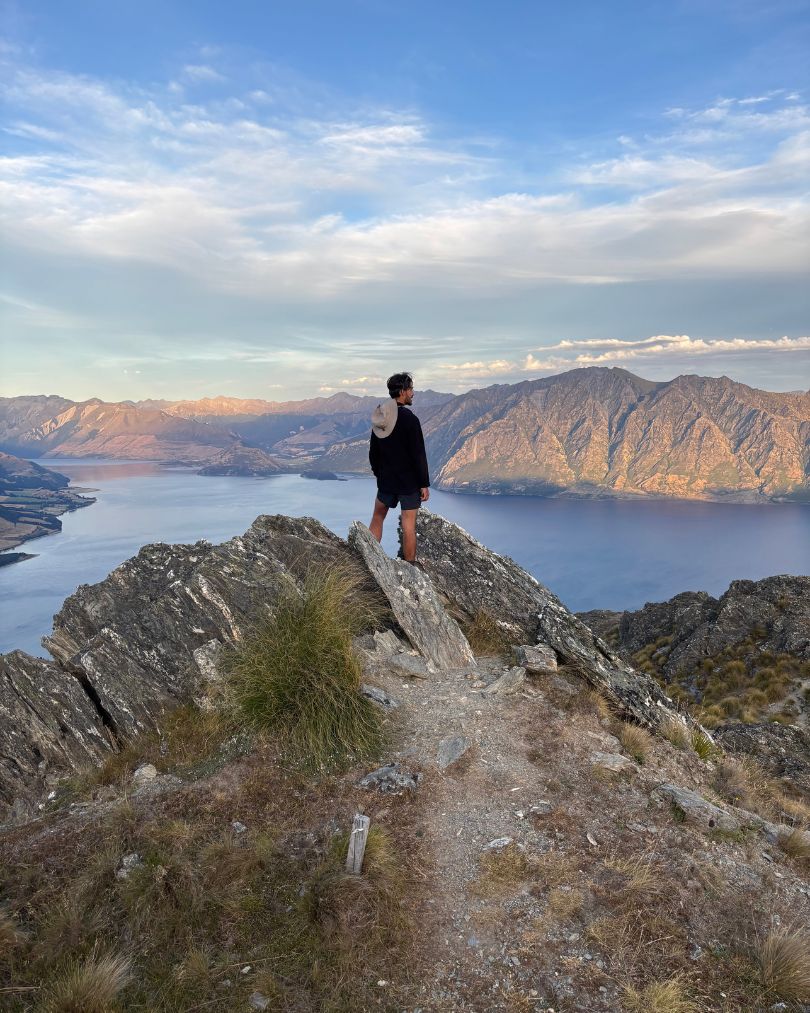
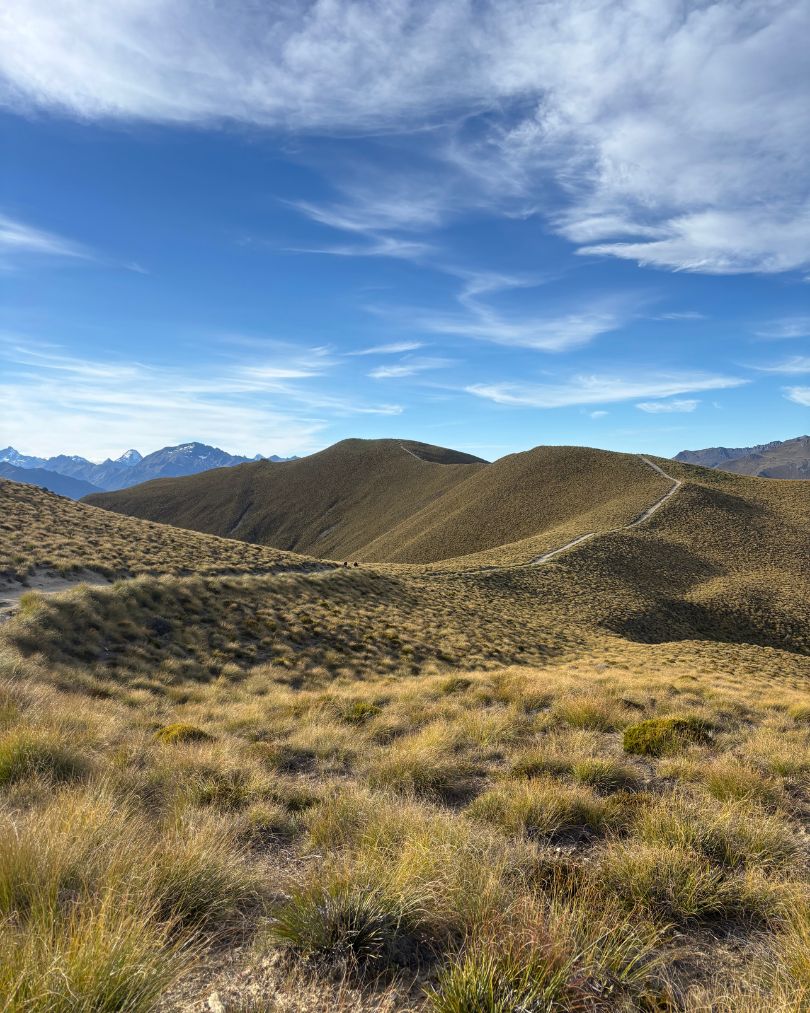
This is the part that makes the 1,130 m of climbing worth it. Both lakes spread out below you, Wanaka on one side, Hawea on the other, with the Southern Alps lined up in the background. Sentinel Peak, at 1,814 m, dominates the skyline across from you, and on a clear day you can pick out the snow capped peaks of Mount Aspiring National Park in the distance.
Where We Went Wrong (So You Don’t Have To)
We started at 5pm, convinced we had plenty of daylight since sunset in a New Zealand summer (remember summer there is in January) doesn’t happen until around 10pm. We were the only ones going up at that hour, and every single hiker coming down gave us the same look, somewhere between concerned and judgmental, muttering to each other about what on earth we thought we were doing starting so late. Funniest part, most of these comments came from fellow French tourists.
We set off completely overconfident, one liter of water between the two of us, sure we had it all figured out. Spoiler, we did not make it back before dark. Not because the hike itself took that long, but because the light kept doing something incredible to the landscape as the afternoon turned into evening, and we physically could not stop taking photos every five minutes. Every bend in the trail changed the colors completely. If you’re wondering what’s actually in my camera bag, I’ve got a full breakdown here.
Compared to Roys Peak, which gets seriously crowded, this felt like having the mountains to ourselves. We passed maybe ten people heading down and two others going up the whole time. That kind of solitude on a hike like this is rare.
On the way down, in the last bit of usable daylight, we spotted a deer standing completely still on the hillside, just watching us. One of those moments that sticks with you long after the trip is over. And trust me it was 2 years ago and I still have goosebumps writing these lines.
The last thirty minutes were done entirely by phone light, stumbling over roots and crossing streams in the pitch dark, which is not a situation I’d recommend putting yourselves in on purpose. If there’s one piece of advice I can actually give you here, it’s to be on the trail no later than 4pm, so you’ve got a proper buffer before the light goes.
Where To Sleep
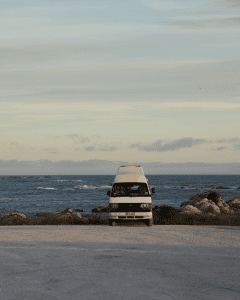
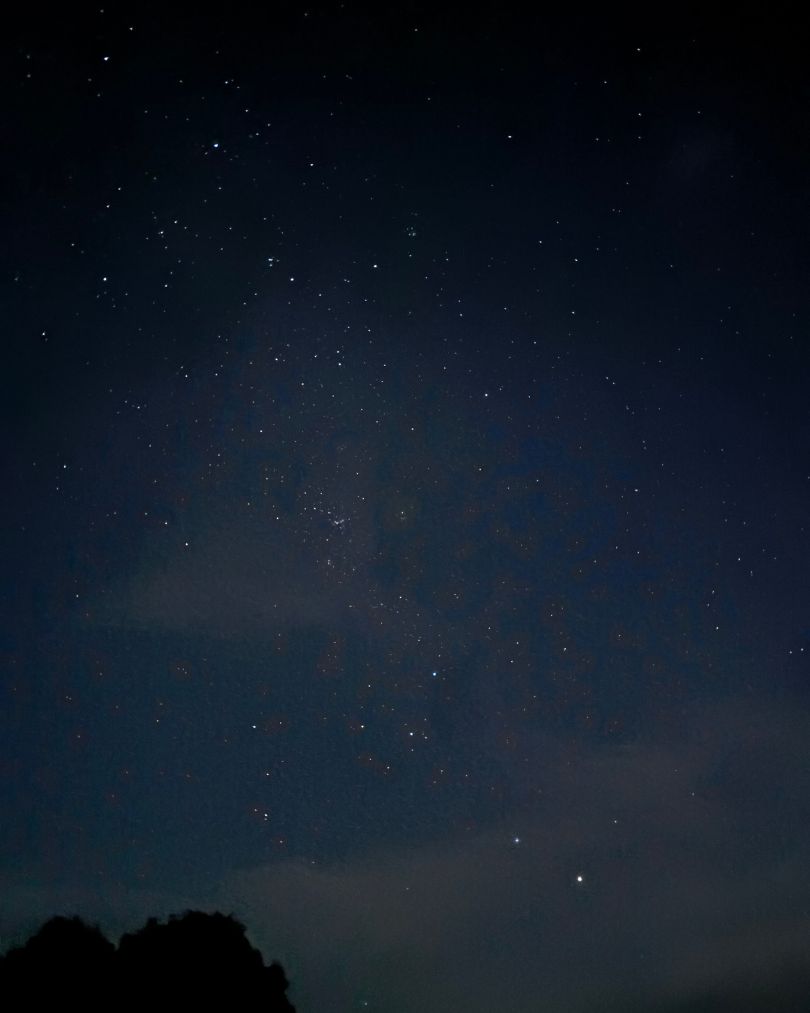
New Zealand is built for road trips and van life, so we slept in the back of our car at Kidds Bush Reserve Campsite, a DOC site right on the shore of Lake Hawea, about 10 minutes from the trailhead. It’s a large grassy area shaded by trees, with portable toilets and space for around 40 tent sites, no bookings drama, just turn up and pay on site or in advance through DOC. Access is via a narrow, unsealed road, so don’t expect to fly down it, but it’s manageable for a normal car or campervan. Budget somewhere around 20 NZD a night.
If you’d rather have an actual bed, Lake Hawea township and Wanaka both work as bases, Wanaka being the bigger option with more restaurants and services, Lake Hawea being smaller and closer to the trailhead. Albert Town, just outside Wanaka, is another solid option if you want something quieter but still close to everything.
For context on how our day actually went, we’d hiked to Rob Roy Glacier that same morning and slept in Albert Town the night before that. A big day all around, but that’s kind of the rhythm of a New Zealand road trip, you end up packing a lot in because everything is so close together and so worth seeing.
My Take
Isthmus Peak gives you the same kind of payoff as Roys Peak, two lakes, endless ridgelines, that huge open sky, but without the crowds. It’s the kind of hike where you can actually hear yourself think, where you’re not shuffling along a line of people for photos at the top. The climb is real, don’t underestimate it, but the quiet you get in return is rare for a viewpoint this good. And a sunset up there, assuming you time it better than we did, is not something you forget.