Big Island Itinerary: 7 Days Where Hawaii Still Feels Like a Volcano
We landed on the Big Island after Kauai, with a rental car, a cooler, and the naive confidence of two people who thought they had Hawaii figured out. Seven days later we had watched lava fountain out of the ground at night, swim with turtles at a black sand beach with nobody else in the water, and slept in a car twice because the only campground we could find made us want to leave before we’d unpacked.
This island is not like the others. Kauai is green and soft and feels like a garden. Oahu is a city with beaches attached. The Big Island is still being built. You drive across lava fields that are younger than your parents, the ground steams by the side of the road, and there’s a volcano at the south end that has been erupting on and off since December 2024. It’s the only place I’ve been where the landscape feels genuinely unfinished.
Here’s exactly what we did, what it cost, and the parts I’d do differently.
What our 7 day Big Island itinerary actually cost
Two people, 7 days, 6 nights, one rental car. Like my other Hawaii guides, I track my own spending in euros because that’s how I keep my accounts. Anything I quote further down for accommodation, park fees and so on is in US dollars, since that’s what you’ll actually be paying on the island.
| Category | Total (2 people) | Per person | What that covers |
|---|---|---|---|
| Accommodation | 217.46 | 108.73 | One Airbnb refunded, one cabin, two nights in the car |
| Rental car | 475 | 237.50 | 7 days |
| Gas | 70 | 35 | Kona to Hilo to Volcano and back again |
| Food | 243.50 | 121.75 | Supermarket, cooked almost everything |
| Drinks | 27 | 13.50 | |
| Activities | 42 | 21 | Volcano park entry, Akaka Falls, souvenirs |
| Total | 1,074.96 | 537.48 | About 77 per person per day |
A few honest notes on those numbers.
The rental car is the single biggest line, and it’s more than we paid on either Kauai or Oahu. That’s the Big Island tax. It’s the largest island in the chain by a huge margin and you cannot do it without driving a lot.
The accommodation line looks unrealistically low for Hawaii, and it is. It’s low because our first Airbnb was so bad that we got refunded almost the whole thing, and because two of our six nights were spent sleeping in the car. If you want to sleep in an actual bed every night, plan on adding a lot to that line.
The activities line is genuinely small because the best things on this island are free. Lava, beaches, black sand, turtles, cliffs. None of it has a ticket booth. The only things we paid for were the national park entrance, the parking and entry at Akaka Falls, and some gifts.
Not included: the interisland flight to get here, our camping gear, or travel insurance.
When to visit the Big Island, and which side to base yourself on
The Big Island has a split personality, and it’s geographic rather than seasonal. The Kona side, on the west, is the dry sunny one. The Hilo side, on the east, is the wet green one. Hilo is one of the rainiest cities in the United States and Kona sits in the rain shadow of two enormous mountains, so you can have a genuinely different day depending on which side of the island you’re standing on. That’s not a seasonal thing, that’s a Tuesday thing.
Broadly, April to October is the drier, calmer half of the year, and November to March is wetter with bigger surf on the north facing coasts. Whale season runs roughly December to April. Prices peak in December, January and the summer holidays.
The other variable that only exists on this island is vog, the volcanic haze that drifts off Kilauea. When the trade winds are blowing normally it gets pushed down the west coast and can make the Kona side hazy. It’s usually a photography annoyance rather than a health problem, but if you’re sensitive to air quality, look it up before you go.
My honest advice on where to base yourself: don’t pick a side, do a loop. We did Kohala, then Puna and Hilo, then back up the Hamakua coast. The island is big enough that basing yourself in one spot means driving three hours to see anything.
Getting around the Big Island: Kona, Hilo and the drive between them
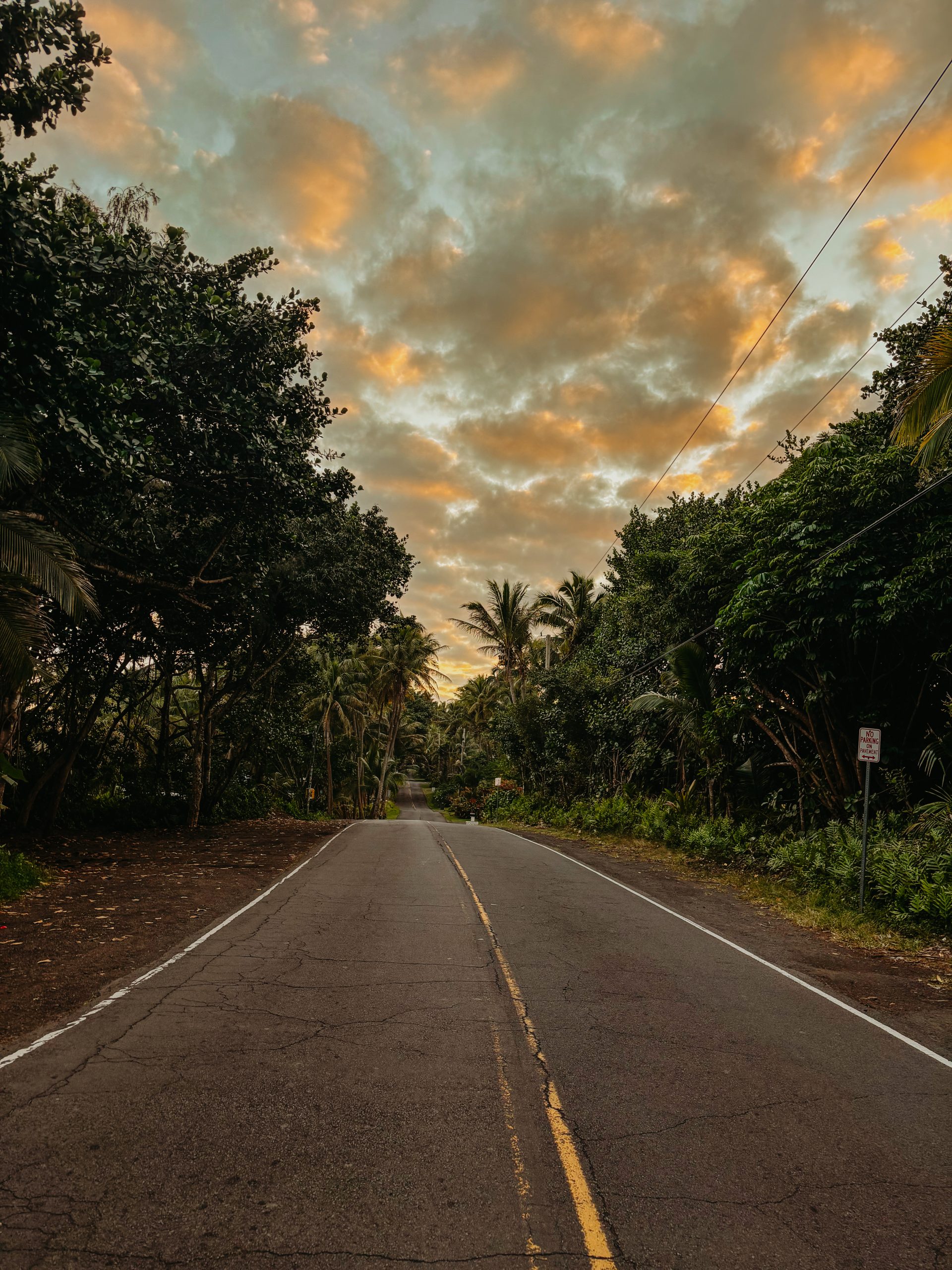
You need a car. There is no version of this trip that works without one. There is essentially no useful public transport for visitors, and the distances are real. Kona to Hilo across the middle is around two hours. Kona to Volcanoes National Park is closer to two and a half. Going the long way round the south point takes longer and is much prettier.
Two airports, Kona on the west and Hilo on the east, so check both when you’re booking flights. Flying into one and out of the other is worth pricing up, because it saves you a long backtrack.
For the rental itself I used the same trick as on Kauai and Oahu. Book with a company that doesn’t take payment upfront and lets you cancel for free, then check prices every week and rebook whenever the rate drops. It takes five minutes and it has saved me a few hundred dollars every single time.
Check Big Island rental car prices →
A couple of practical things. Gas cost us 70 for the week, so budget around 10 a day. And there’s a whole category of road on this island, unpaved tracks out to remote beaches and the road down into Waipi’o Valley, that most rental contracts specifically forbid. Read your contract before you get creative.
Where we slept, including the Airbnb disaster and two nights in the car
This is the messiest part of the trip and I’m not going to pretend otherwise.
Nights 1 and 2: the farmhouse suite I would not send my worst enemy to
We booked a suite in a farmhouse for 234 dollars, and it was a disaster from the moment we walked in. The toilets were blocked, and had clearly been blocked before we arrived. We contacted the owner, who told us he’d come and deal with it on the Thursday, which was helpful information for someone leaving on the Wednesday.
Nothing was ever done. We spent two days driving to a supermarket every time we needed a toilet. On top of that, the property turned out to have about twenty separate units on it, a proper little business rather than someone’s spare room, and it was dirty and didn’t feel safe.
We contacted Airbnb, explained the situation, and got almost the entire booking refunded. Which is the one piece of good news in this story, and also the reason my accommodation line looks so cheap.
I’m not linking that place. Instead, if you want to be in that area, here’s a hostel on the Hamakua coast near Waipi’o that I’d point you to instead.
Nights 3 and 4: the hobbit cabin in the jungle
This one saved the trip. 178 dollars for two nights in a tiny cabin in the middle of the jungle, with huge windows all the way around, so you’re basically showering in the forest. It runs off a generator and collects rainwater. It felt like the most Big Island place we could possibly have stayed.
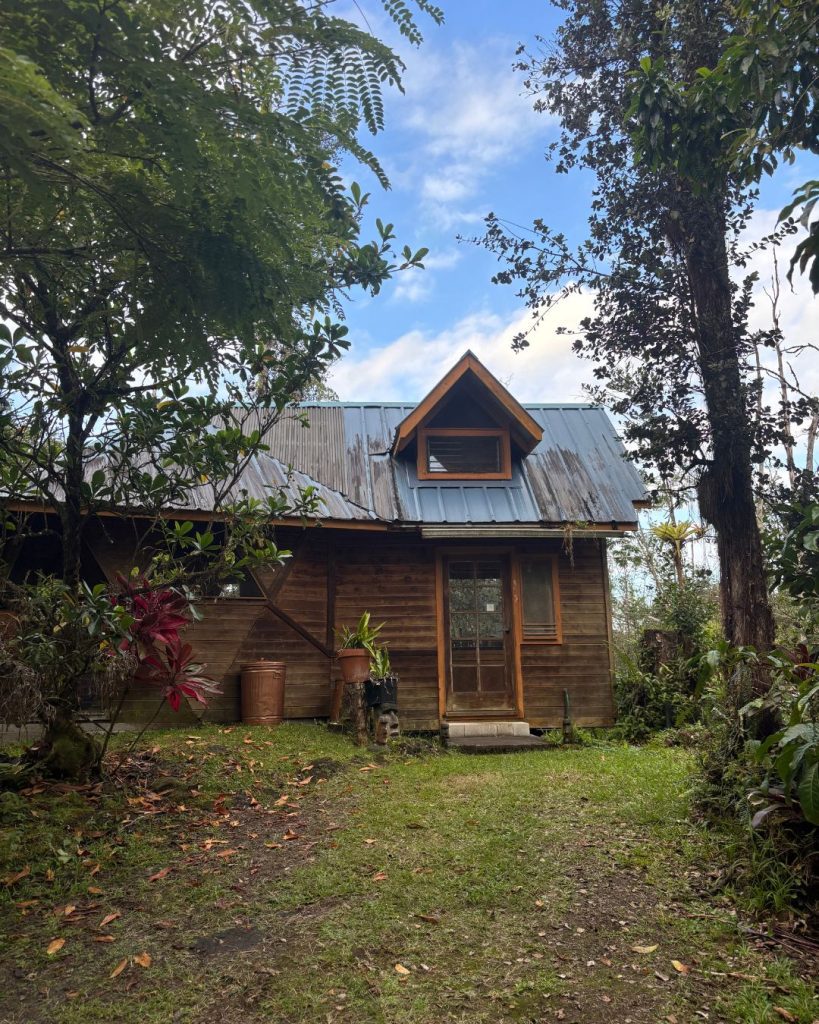
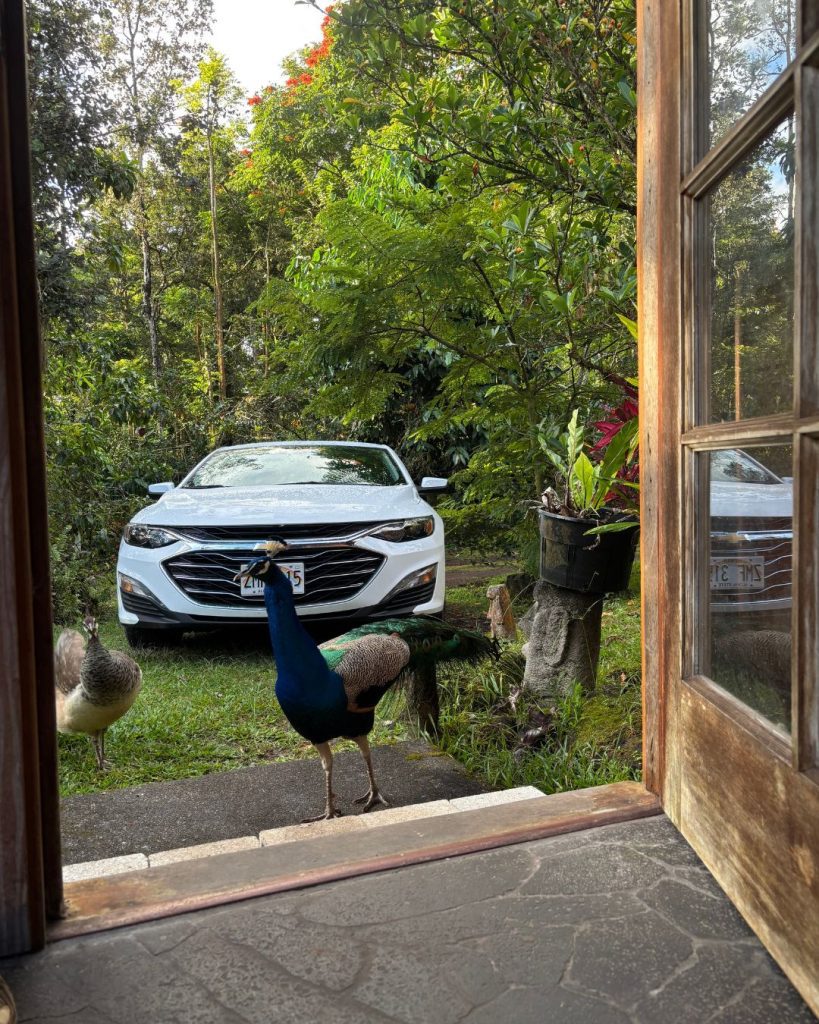
One thing to check before you book. In the listing photos there was a fridge, but by the time we got there she’d taken it out and was providing a cooler instead. So have a look at the current listing, and if there’s still no fridge, factor in buying ice.
Nights 5 and 6: the car
Two nights in a row we couldn’t find a campground. On the first of them we actually had one booked, drove up to it, and turned straight around. I’ll be honest, I only had to look at the photos and the setup to know I wasn’t sleeping there. Two other tents, people shouting, and nothing about it felt safe. We got back in the car and left.
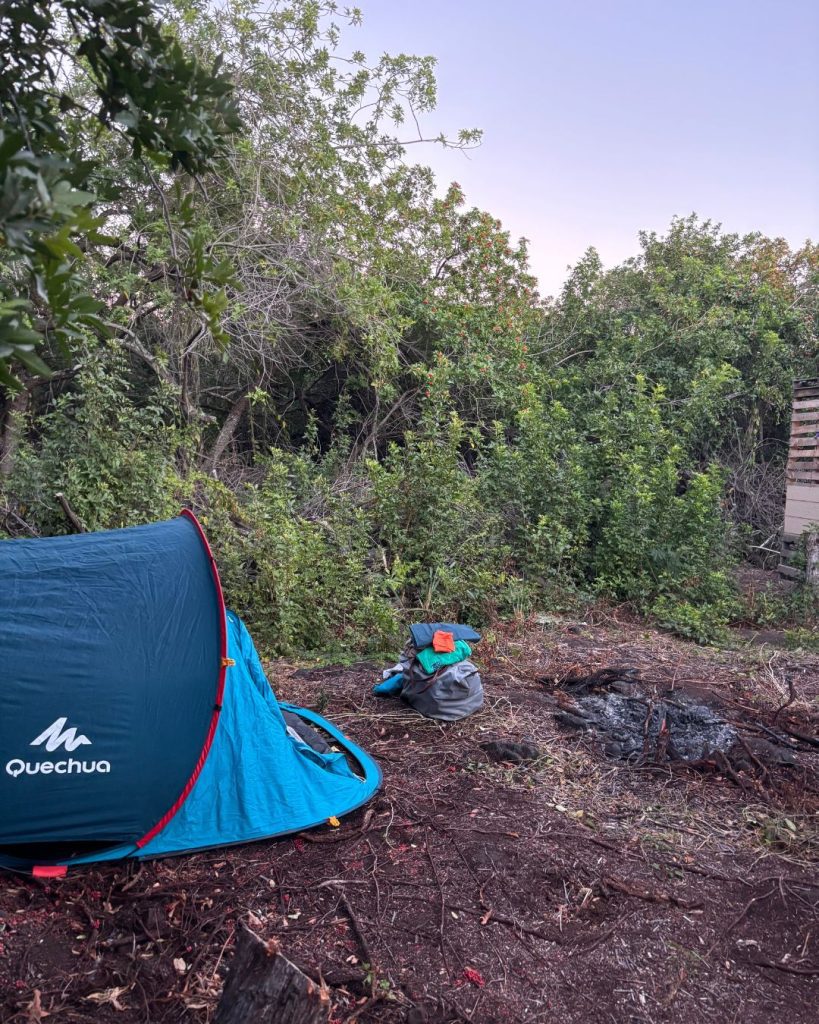
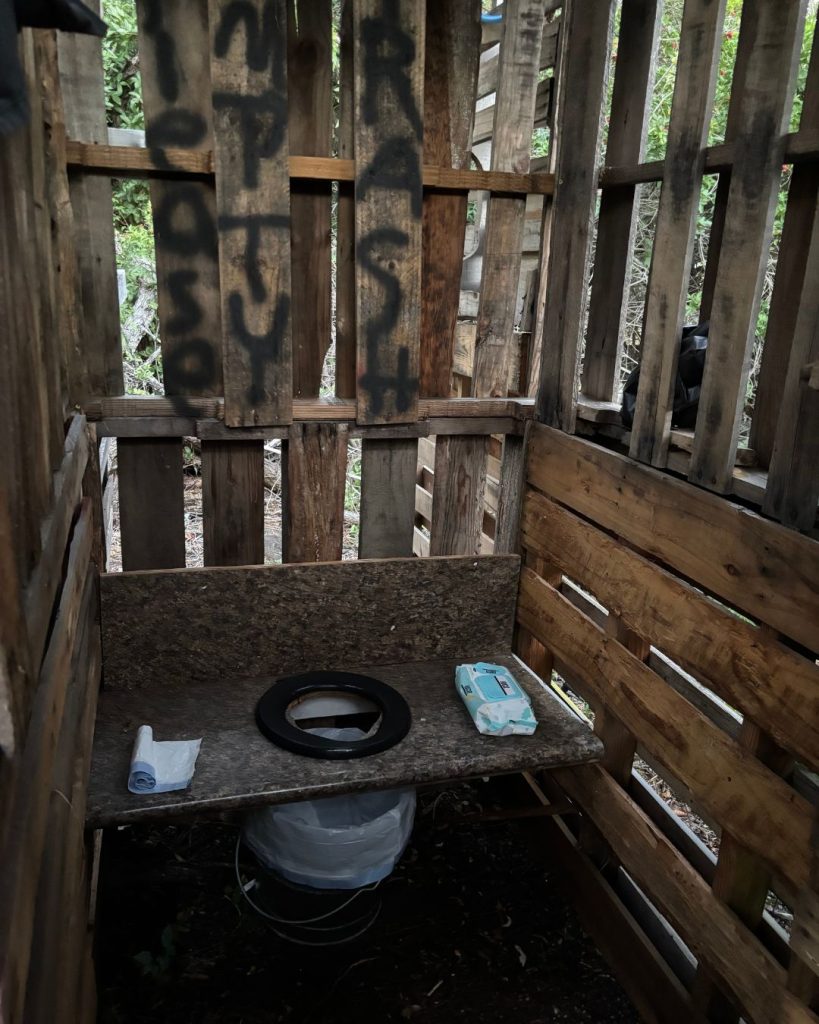
Where we went instead was Hawaii Volcanoes National Park, which is open 24 hours a day, 7 days a week. Our logic was that if anyone spotted us in the car, we could just say we were waiting to see the eruption. Which, as it turned out, was not even a lie. That’s the rat tip of the century, friends.
The last night was the same story. The only campground under 100 dollars was fully booked, so we parked in a quiet residential street and slept there. Not glamorous. But that’s what happened.
Now the honest bit, because I’d rather you know than get a knock on the window. Sleeping in your vehicle overnight on public land in Hawaii is restricted by state law between 6pm and 6am, with designated campgrounds being the exception. Camping or sleeping overnight in the national park outside its official campgrounds is not something the park allows either. We got away with it. That is not the same thing as it being fine, and I’m not going to pretend it is.
The legal cheap options, which I should have booked in advance. The two campgrounds inside Hawaii Volcanoes National Park are the best value on the island. Kulanaokuaiki is around 10 dollars a night and Namakanipaio is around 15, both first come first served with no permit needed, on top of the park entrance fee. Hawaii County beach parks run about 21 dollars per adult per night for non residents, and state parks are around 30 dollars per campsite. Book those and you avoid the entire mess we walked into.
One warning about the volcano campgrounds: you’re at about 4,000 feet up there and the nights get genuinely cold, down into the low 50s Fahrenheit, around 10 to 12 degrees, even in summer. Bring more than you think.
Hawaii Volcanoes National Park, and seeing lava with our own eyes
This is why you come to this island, and it’s the reason the article is called what it’s called.
Entry is 30 dollars per vehicle, valid for 7 days, or 15 dollars per person if you’re walking or cycling in. If you’re also doing Pu’uhonua o Honaunau, the Hawaii Tri-Park annual pass at 55 dollars covers Volcanoes, Haleakala and Pu’uhonua and pays for itself fast. The park doesn’t take cash, cards only. And it’s open 24 hours a day, every day of the year, which matters enormously for what comes next.
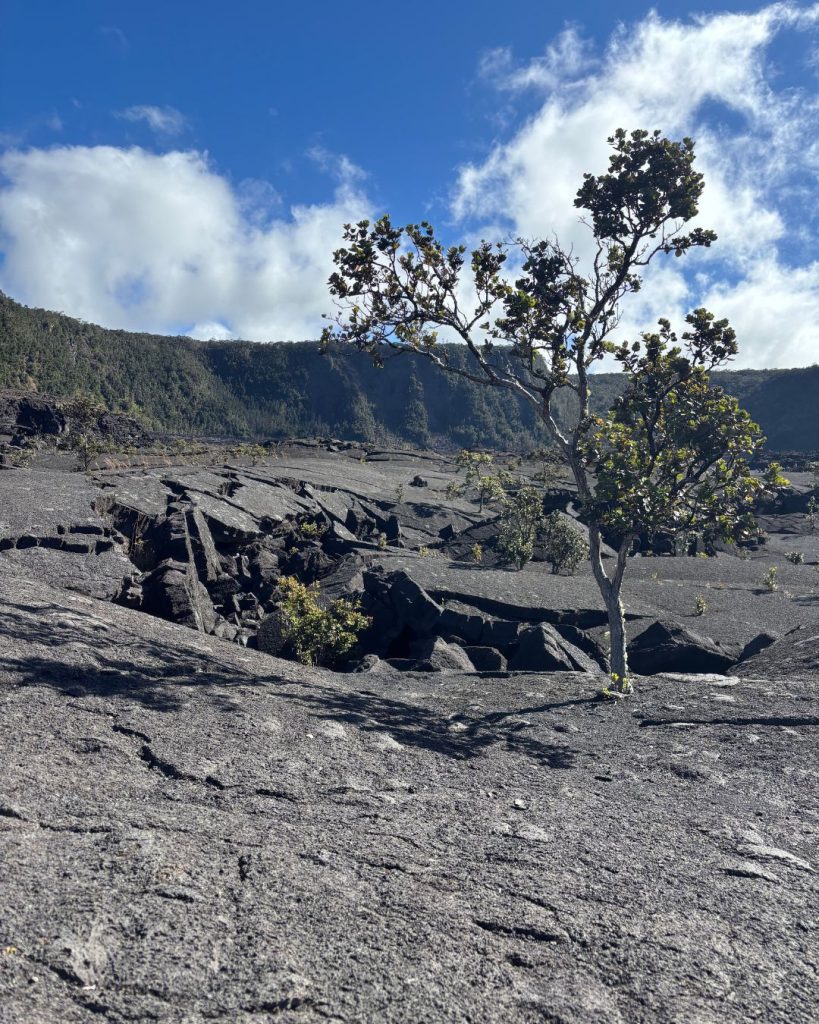
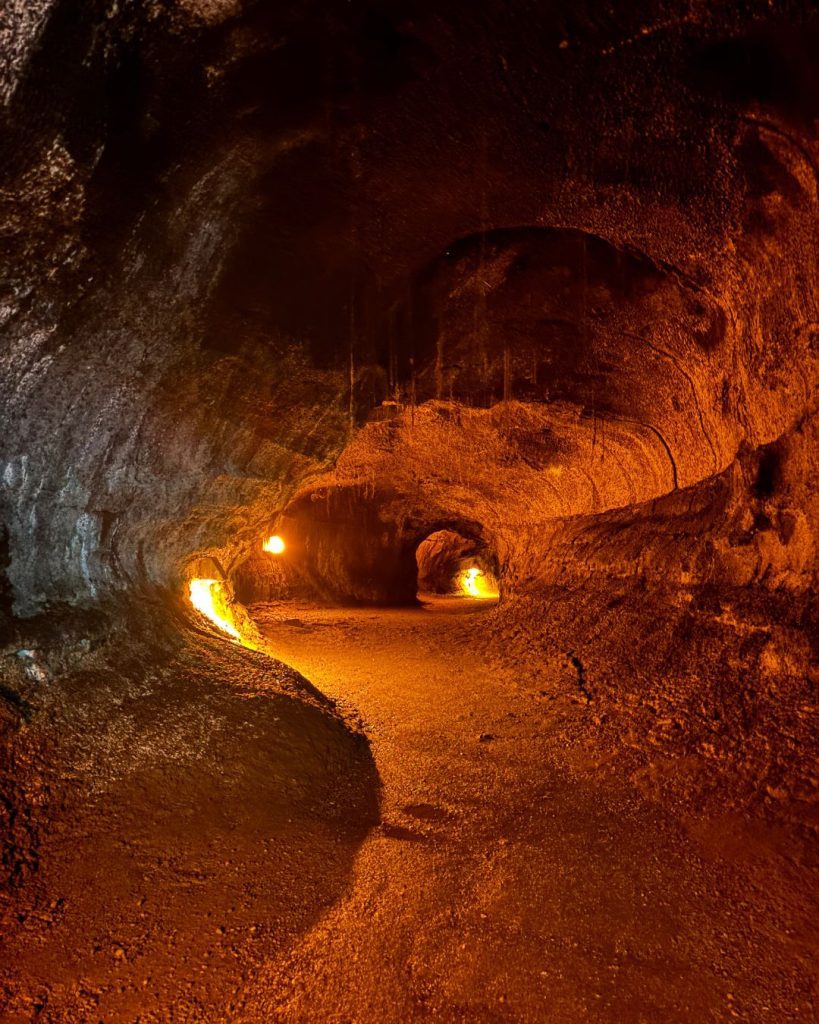
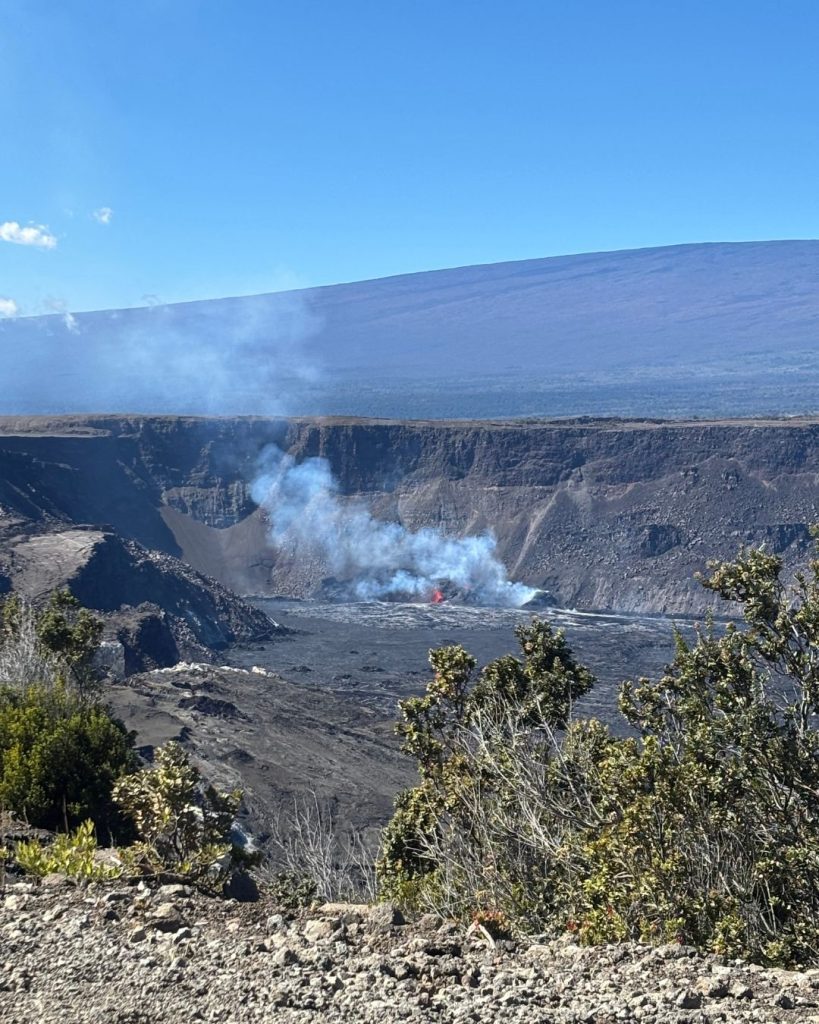
We were lucky. Kilauea was erupting while we were there, so we saw it in daylight first, from a distance, which was already one of the most impressive things I’ve ever looked at. Steam, glow, the whole crater alive.
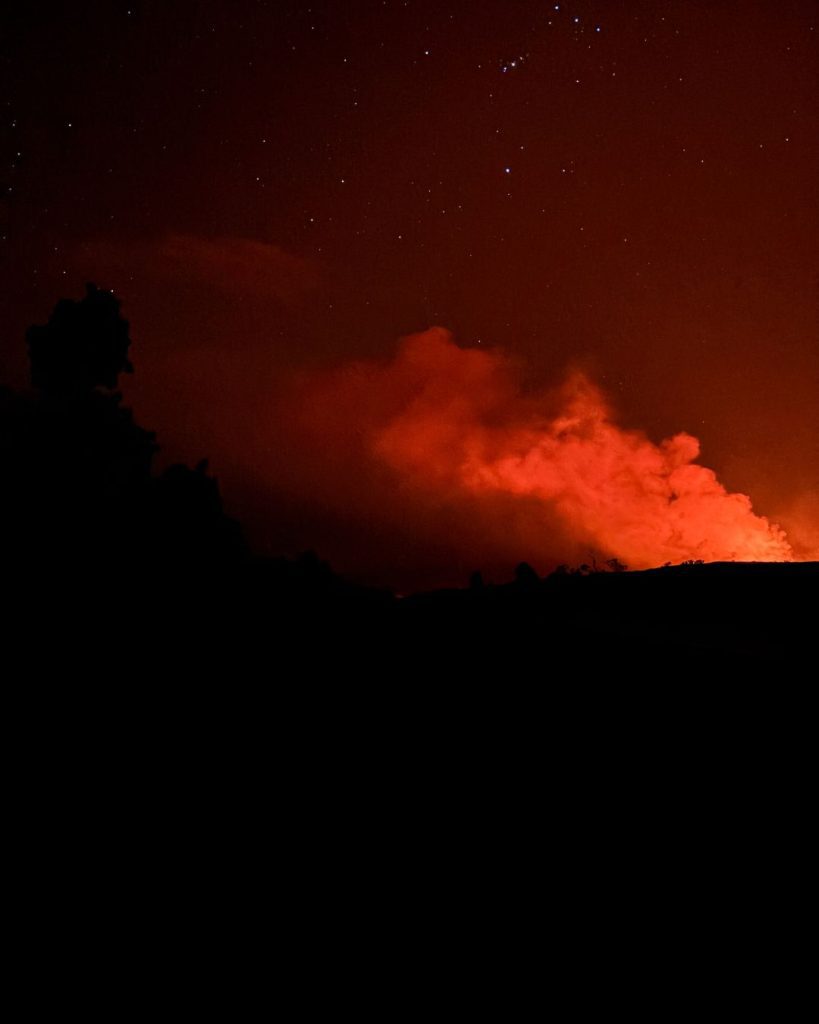
And then, because our murder campground got cancelled and we ended up back inside the park at night, we saw it in the dark.
It is a completely different show. In daylight you see a volcano. At night you see the actual colour of the earth’s insides, orange against a black sky, and everything around you goes quiet. Then we slept, peacefully, in a car, in a national park, next to an erupting volcano. I have never had a better night in a passenger seat.
How to actually plan this, because we got lucky and you can do better
Kilauea has been in an episodic eruption at its summit since December 2024, inside Halemaumau crater. Episodic means exactly what it sounds like: it fountains hard for a few hours to a day, then stops, then does it again days or weeks later. As I write this in late August 2026, it’s on episode 54.
So it’s not a matter of turning up and hoping. Check the USGS Hawaiian Volcano Observatory updates before you go and again the day of, because they publish when an episode starts and forecast roughly when the next one is due. And be aware that this could all stop at any point. Volcanoes are not obliged to keep a schedule.
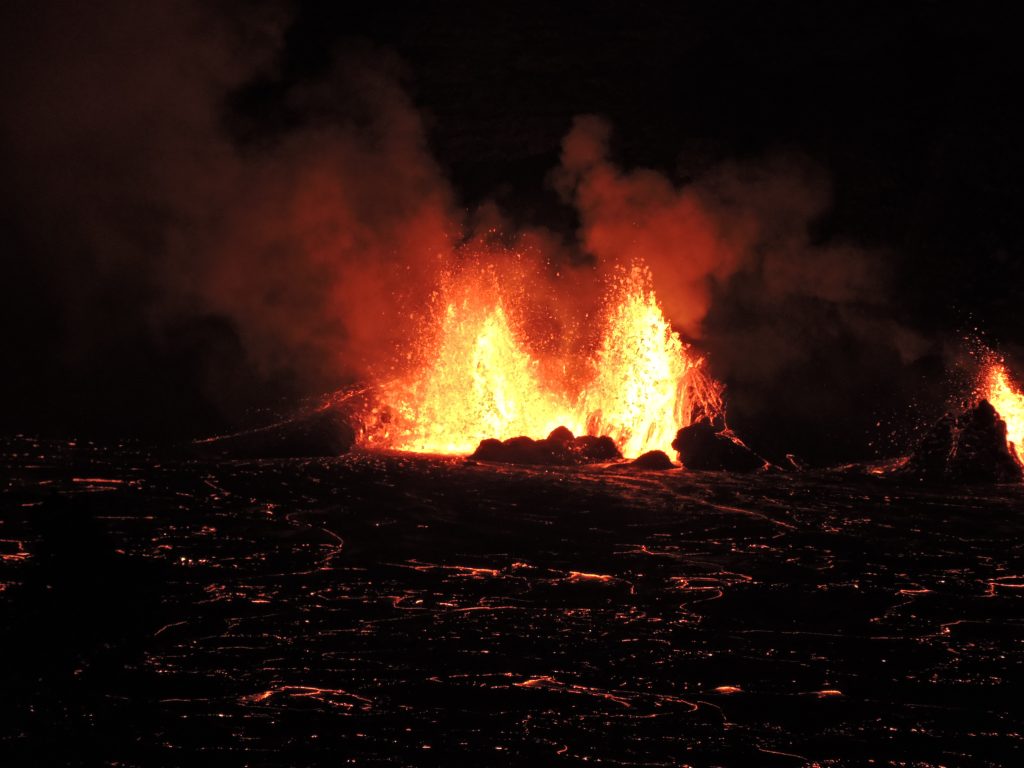
When there is activity, the viewing points along Crater Rim Drive are Uekahuna, which has the biggest parking area, Kilauea Overlook, Kupinai Pali, Wahinekapu, and Keanakakoi, which is closest but needs about a half mile walk. Go at night or very early. Everyone shows up between 6 and 9pm, so either get there before that or come at 4am like a lunatic and have it to yourself.
Bring layers. It’s 4,000 feet up, it drops to 50 to 55 Fahrenheit at night.
Chain of Craters Road
The other half of the park, and don’t skip it. It’s a 19 mile road that drops from 3,700 feet down to sea level, past crater after crater and across enormous fields of old lava flows, ending at the coast where a flow crossed the road and just stopped it. There’s the Holei Sea Arch down there, about 90 feet of cliff carved out by the surf, and pit toilets and a car park and nothing else.
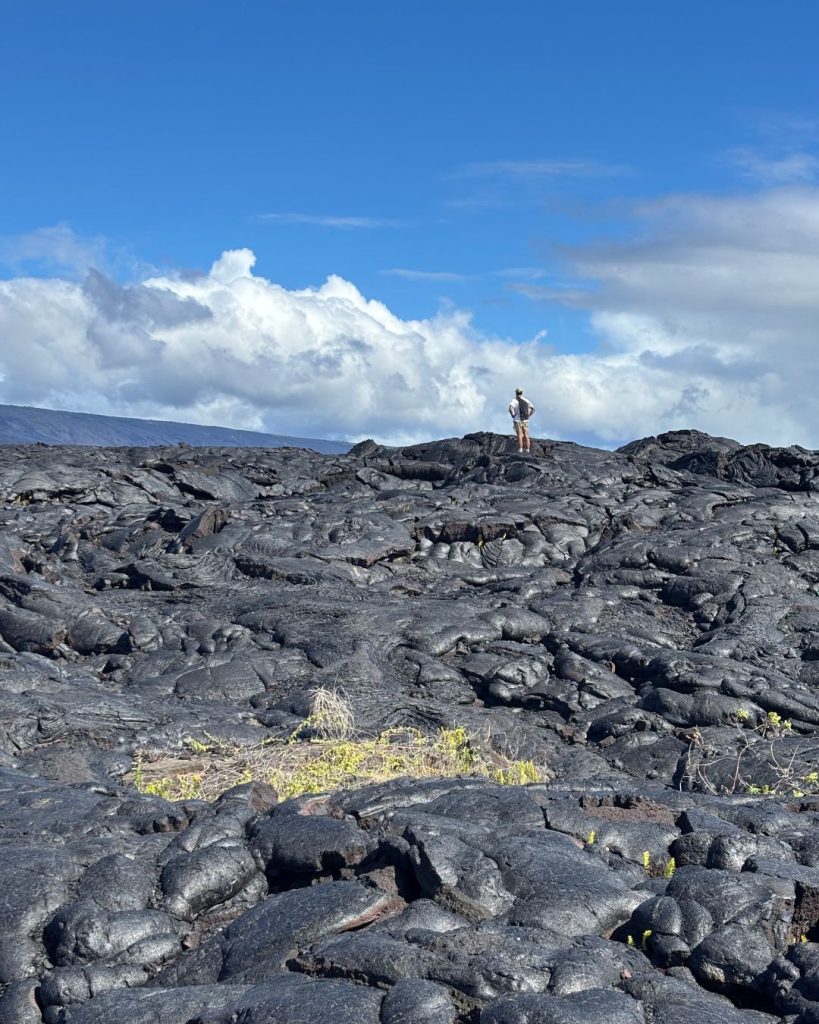
Give it a couple of hours each way with stops. There’s no gas, no food and no water down there, so sort that out at the top.
Quick note if you fly a drone: drones are not allowed in national parks, so leave it in the bag for the whole of Volcanoes.
The best hikes on the Big Island
Three that I’d actually send you on.
Kilauea Iki Trail
3.3 miles as a loop from the Kilauea Iki Overlook, about 400 feet down and back up again, 2 to 3 hours.
This is the one. You walk down through rainforest, and then the trail dumps you out onto the floor of a crater that was a lava lake in 1959, and you cross the whole thing on foot. Steaming vents, cracked black ground, walls rising up around you. It genuinely does not feel like earth.
Parking at the Kilauea Iki Overlook is tiny and fills up early. If it’s full you can start from the Kilauea Visitor Center instead, which makes it 5.3 miles round trip, or from the Devastation Trailhead, which makes it 6 miles. Go early and take the short version.
Pololu Valley Trail
About 0.6 miles down, 420 feet of descent, 20 to 25 minutes down and rather more coming back up.
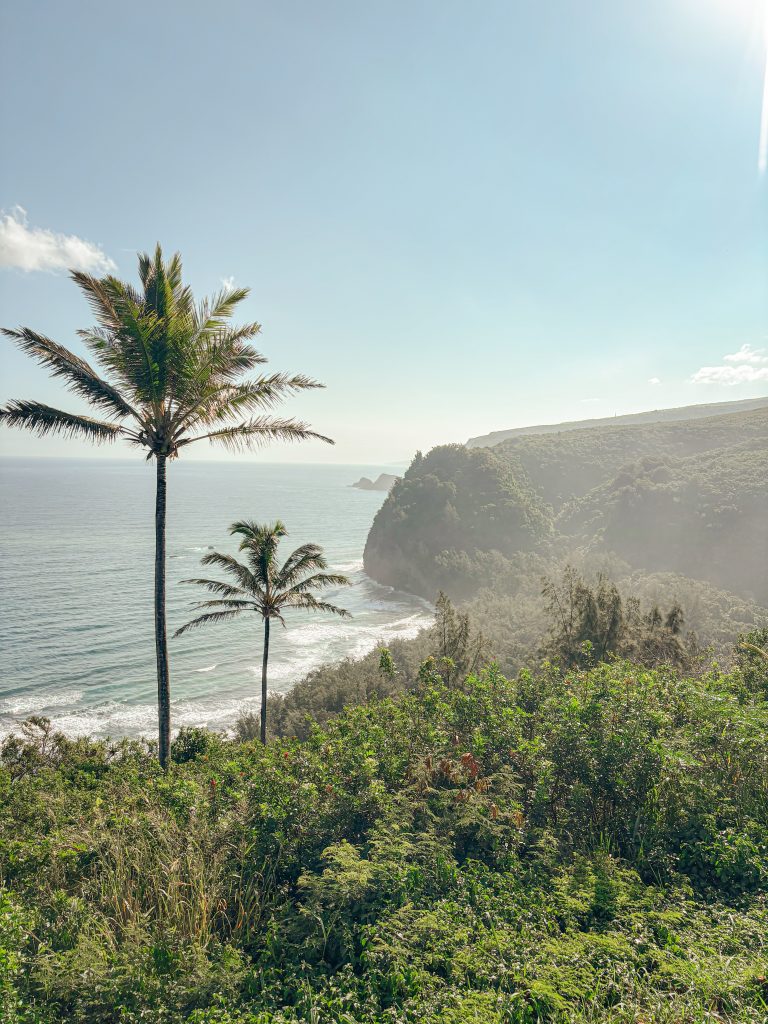
Right at the north end of the island, at the end of Highway 270. The lookout at the top is worth the drive on its own, green cliffs stacked into the distance, and then the trail switchbacks down to a black sand beach at the bottom.
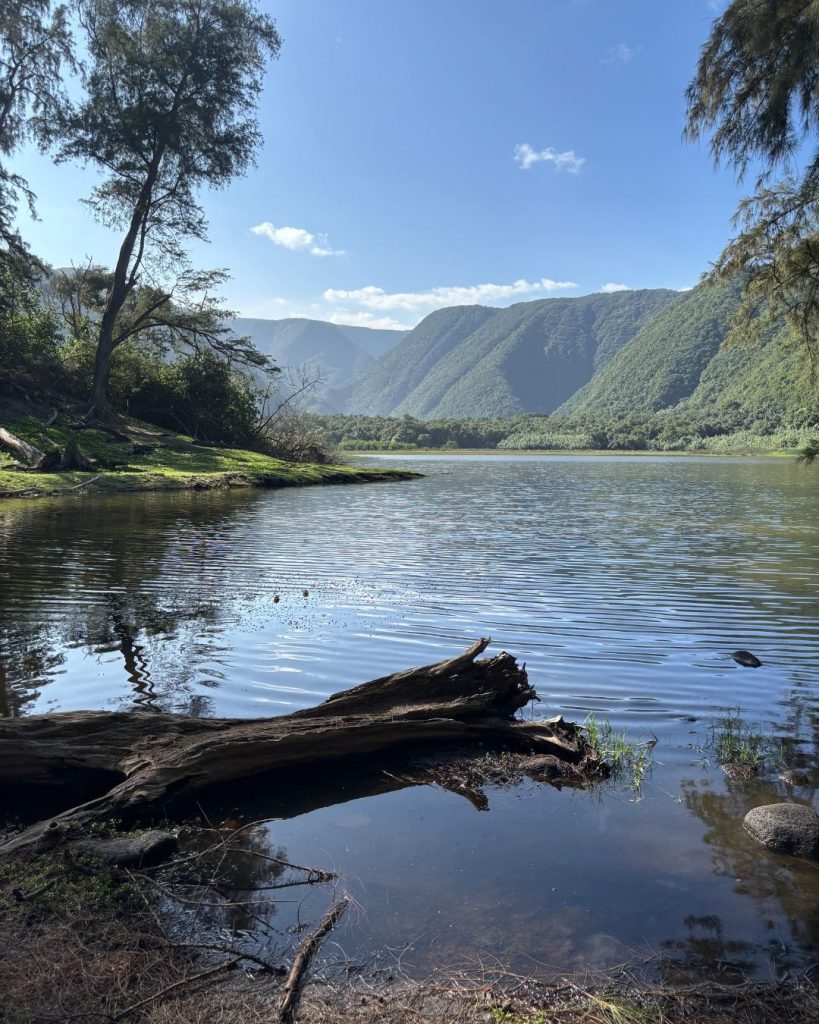
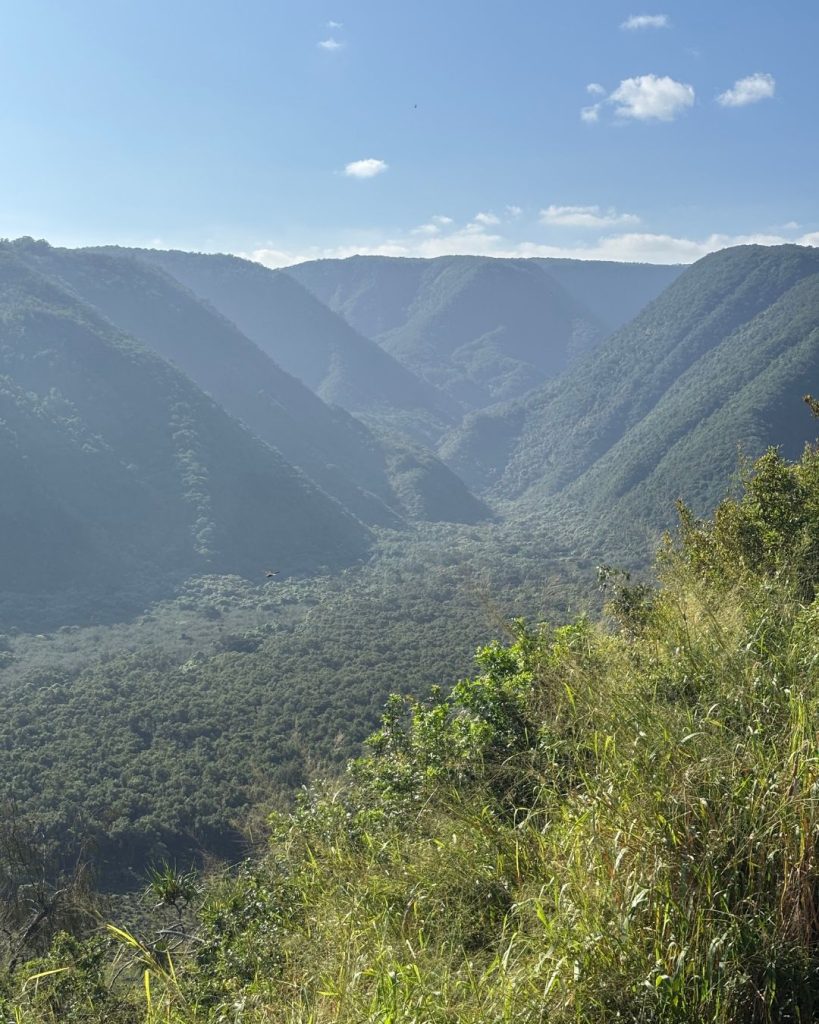
It’s short, and it’s steeper than short makes it sound, and it gets slippery after rain. Wear proper shoes. Do not swim at the bottom, the surf and rip currents there are serious and there’s no lifeguard. Parking at the top is limited, so aim to be there before 9am. Fun fact, they ask you to go to the toilet before doing the hike.
Papakolea Green Sand Beach
About 5 miles round trip, flat, 2 to 3 hours plus beach time, zero shade.
One of very few green sand beaches on the planet, sitting in a collapsed cinder cone at the southern tip of the island. The sand really is green, from olivine crystals in the old lava.
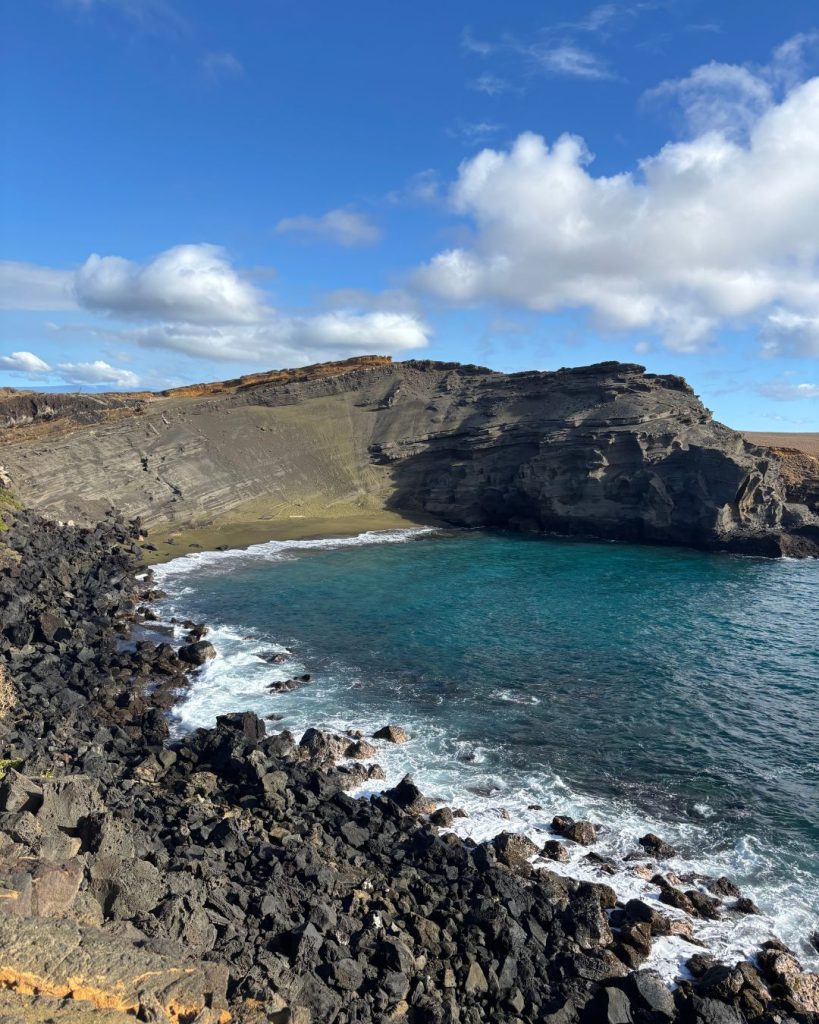
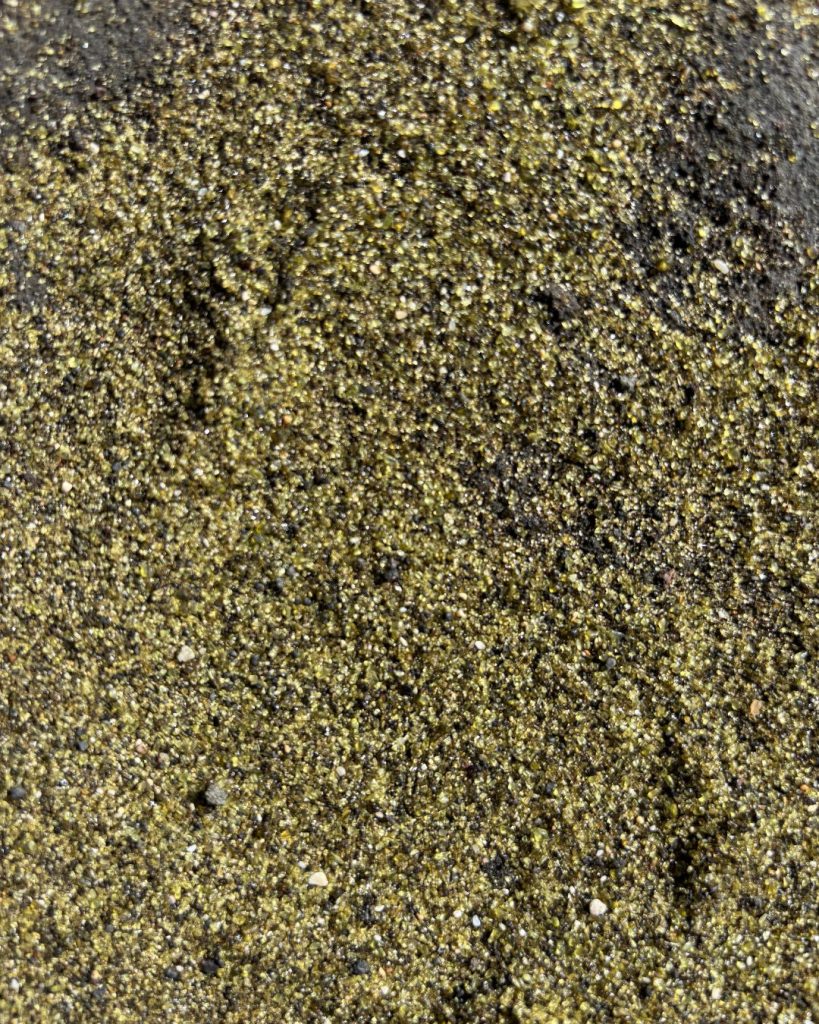
The walk is not technically hard, it’s just a rutted dirt track, but it’s completely exposed and the wind down there is relentless.
You will be offered a lift in the back of a truck by locals at the car park. Those rides are not authorised, the route crosses Hawaiian Home Lands where vehicles aren’t allowed, and every major rental company forbids driving it in your contract. Walk it.
The best beaches on the Big Island
Punaluu Black Sand Beach, for turtles
This was my favourite thing on the island.
It’s a black sand beach on the south coast with lifeguards, restrooms, a shower and picnic tables under palm trees. And about 20 metres out from the shore there are dozens of turtles and hundreds of fish. I put a mask on and swam with turtles, alone, right at the edge of the water.
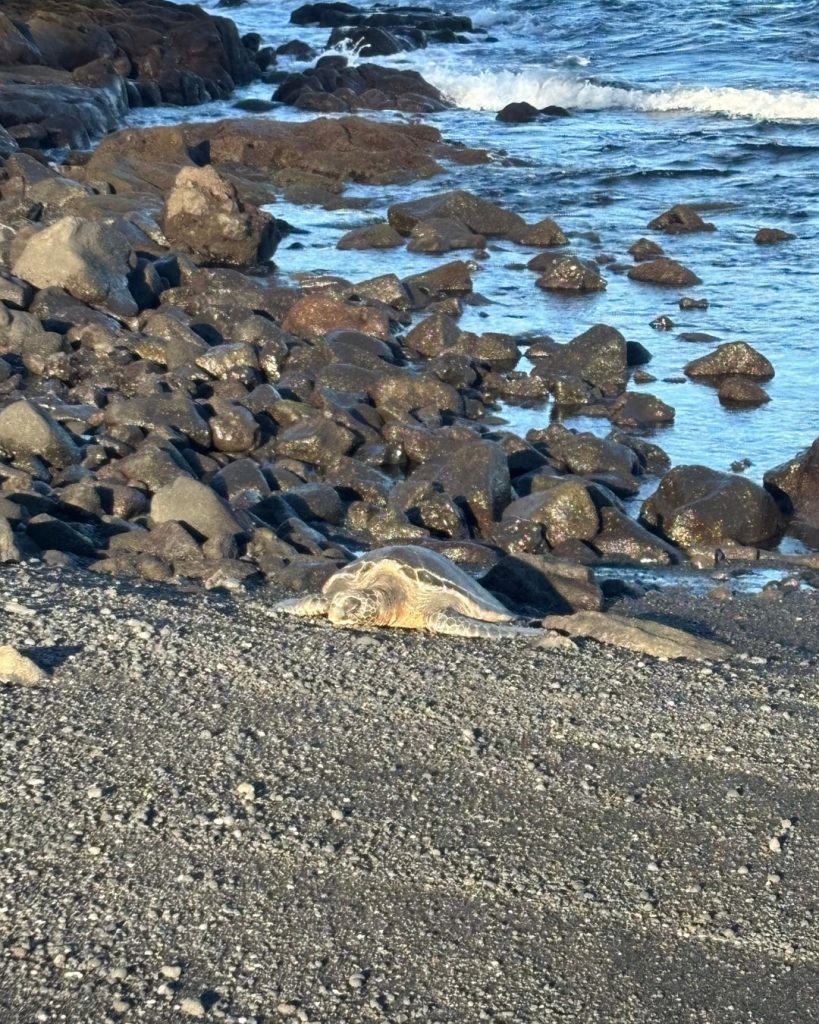
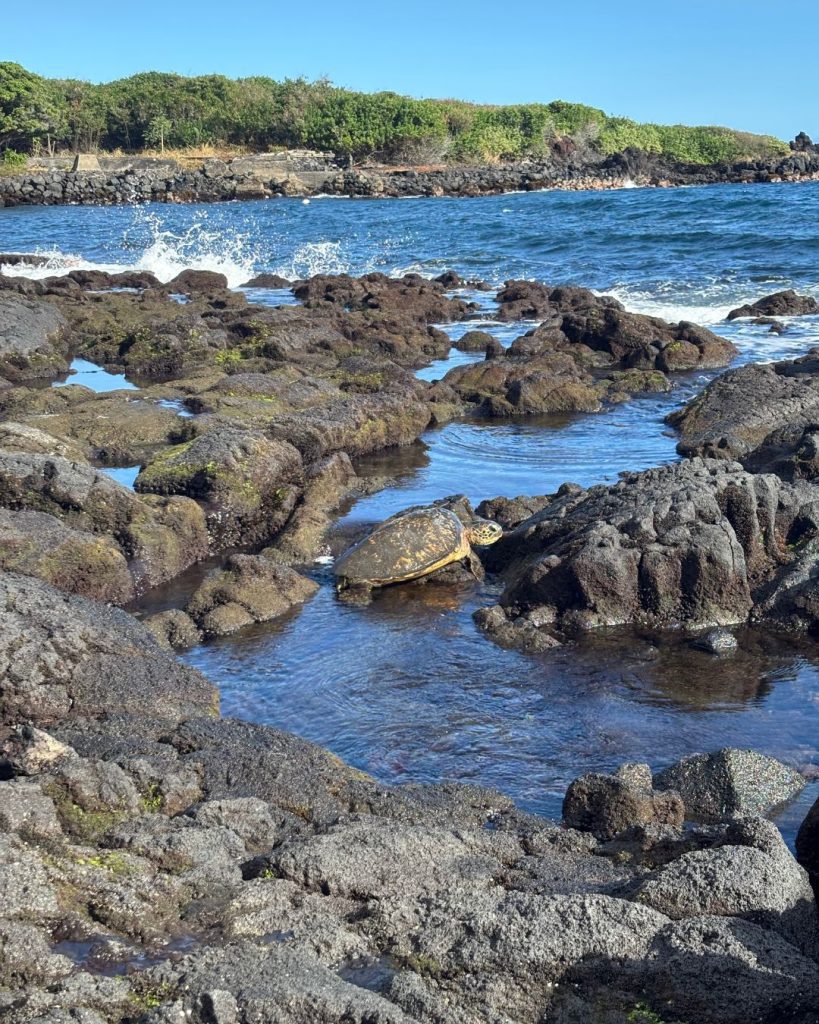
Alone, because every single other person on that beach was crowded around the one turtle that had hauled itself out onto the sand, taking photos of it. Meanwhile the entire sea behind them was full of turtles. Americans, I love you, but what the fuck.
Come early, both for calm water and because the black sand gets genuinely too hot to walk on by the middle of the day. Visibility is moderate rather than spectacular, so pick a calm day. And the rule on turtles is 10 feet minimum, no touching, no feeding, back away if one comes to you. They’re federally protected and the fines are not a joke.
La’aloa Beach Park, also known as Magic Sands, for sunrise
We had to get up extremely early so nobody would clock that we’d slept in the car, which is how we ended up being the first people on this beach at 6am. Best accident of the trip.
I put the drone up, and there were pods of dolphins and manta rays right there in the bay.
It’s on Ali’i Drive just south of Kailua-Kona, easy to find, and it’s called Magic Sands because the sand genuinely disappears in winter swells and comes back later. If you turn up and it’s all rock, that’s why.
Kehena Black Sand Beach
Down in Puna, at mile marker 19 on Highway 137. The sand here is an unreal colour, properly black, and the whole place feels like nowhere else.
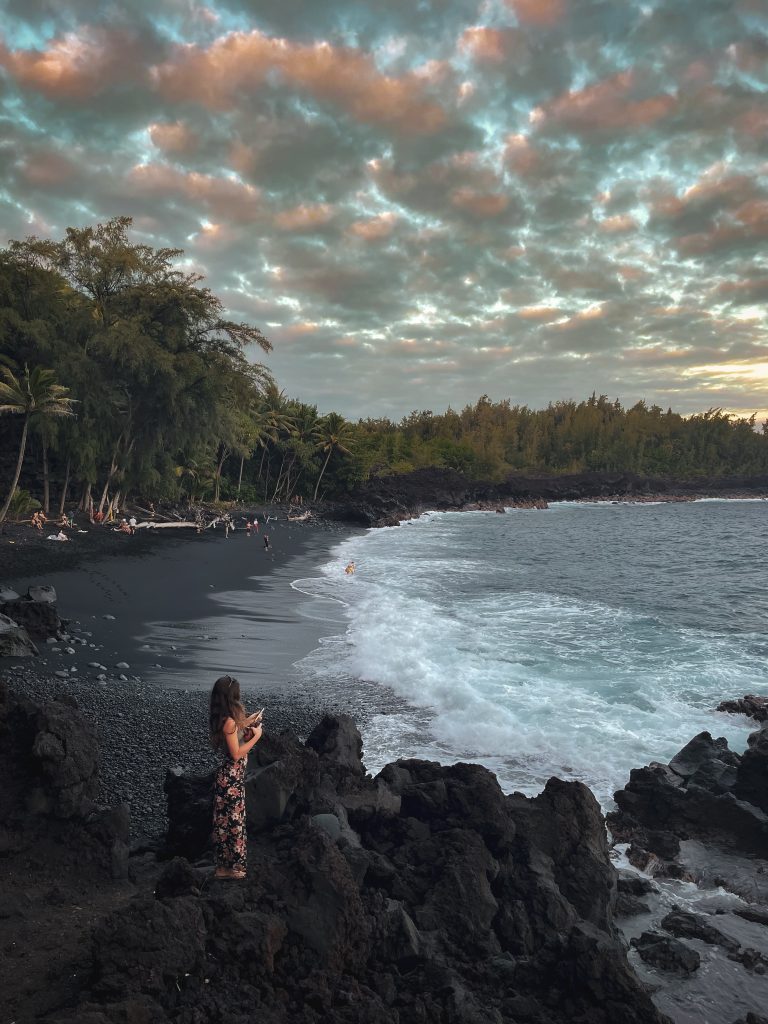
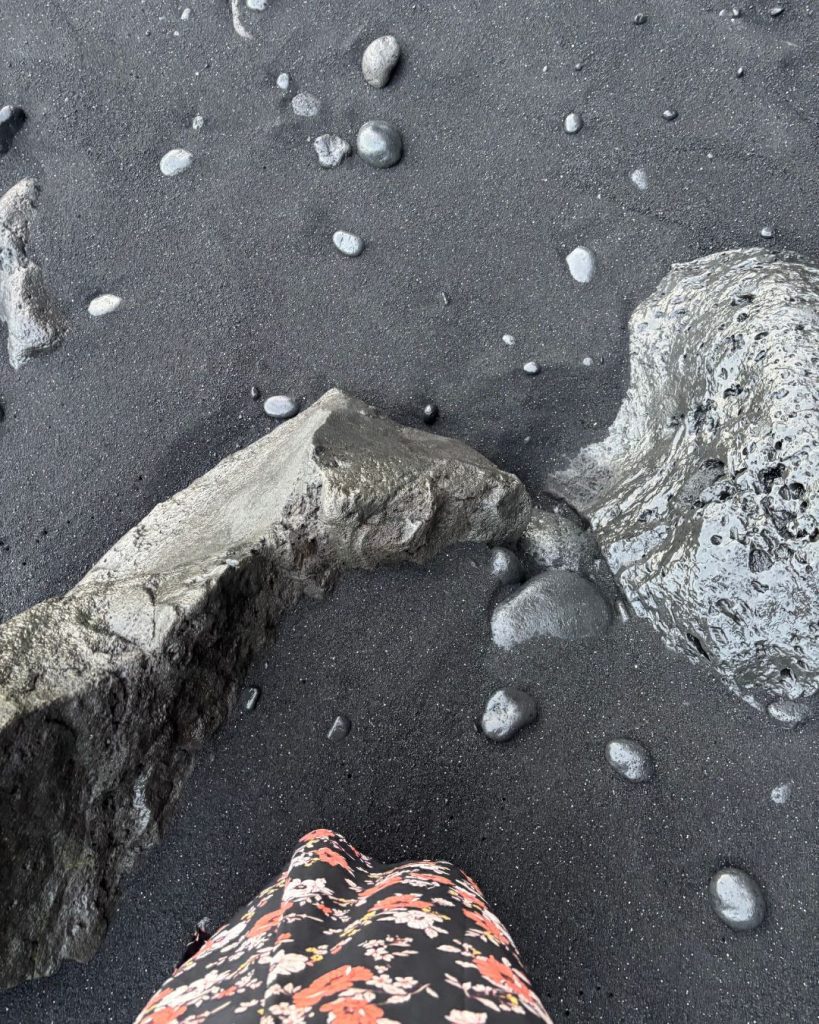
There was too much swell for me the day we went so I stayed out of the water, and having read up on it since, that was the right call. Kehena has a strong rip and no lifeguard, and it’s not a casual swimming beach. You park at the lookout and take a steep, narrow path down, which is slippery when wet.
One heads up, and I’m telling you because I’d want to be told. It’s widely used as a clothing optional beach. I saw a lot of nude sunbathers and I wasn’t sure at the time whether it was just that day, but no, that’s its reputation. It’s not a problem, it’s just surprising if you’re not expecting it.
Manini Beach, for dolphins
A small park on Kealakekua Bay, and one of the spots where you’ll see spinner dolphins.
Go and watch them, from a paddleboard rather than swimming, because the current here is far too strong to be out there under your own steam anyway. Keep your distance and let them be.
Scenic drives and the best sunset spot
The Four Mile Scenic Drive
North of Hilo, signposted off Highway 19 around mile marker 7. It’s a four mile detour off the main road that drops you into a tunnel of jungle, hala trees and ferns closing over the road, one lane bridges over streams, and then Onomea Bay opening up on your right.
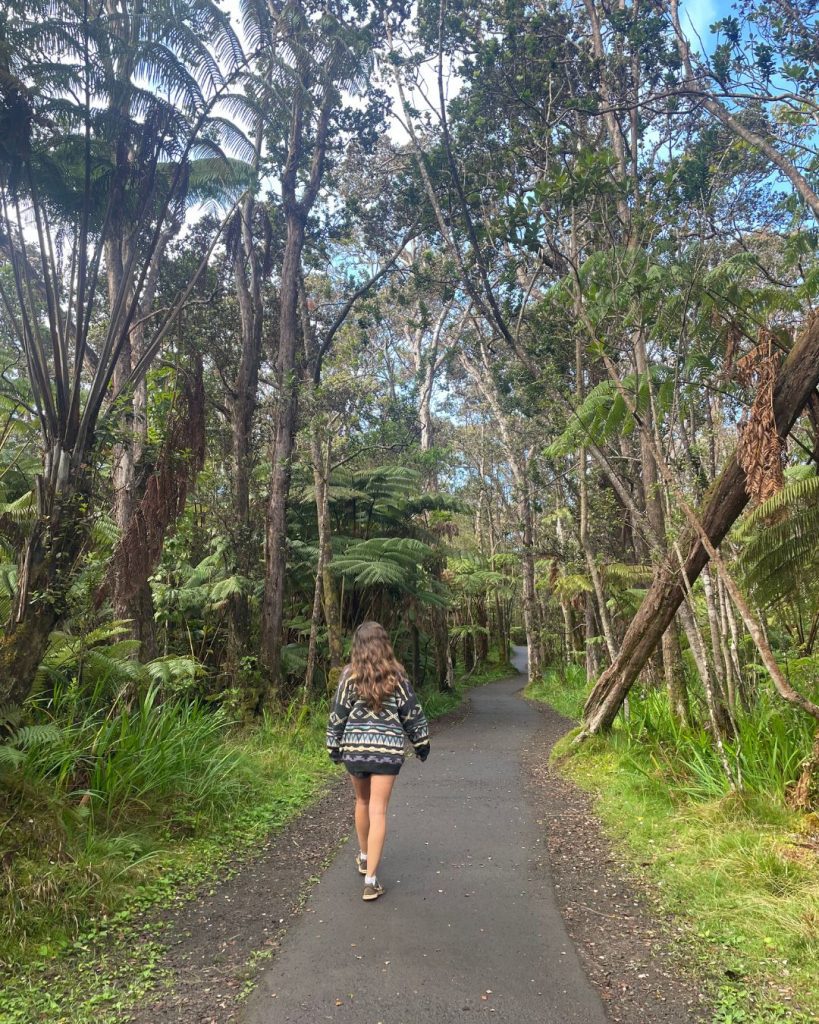
It’s narrow and winding with blind corners, so go slowly and be ready to give way. Take mosquito repellent. And there’s the Hawaii Tropical Bioreserve and Garden along the way if you want to make a morning of it.
Akaka Falls
We paid for parking and went in, and the waterfall itself is spectacular, 442 feet dropping straight down in one go. The loop trail is only 0.4 miles.
I’ll be honest though, I came away a bit deflated. You can only see it from a long way off. You don’t get anywhere near the bottom of it, there’s no getting closer, and after Kauai I was expecting more. It’s beautiful, it’s just distant.
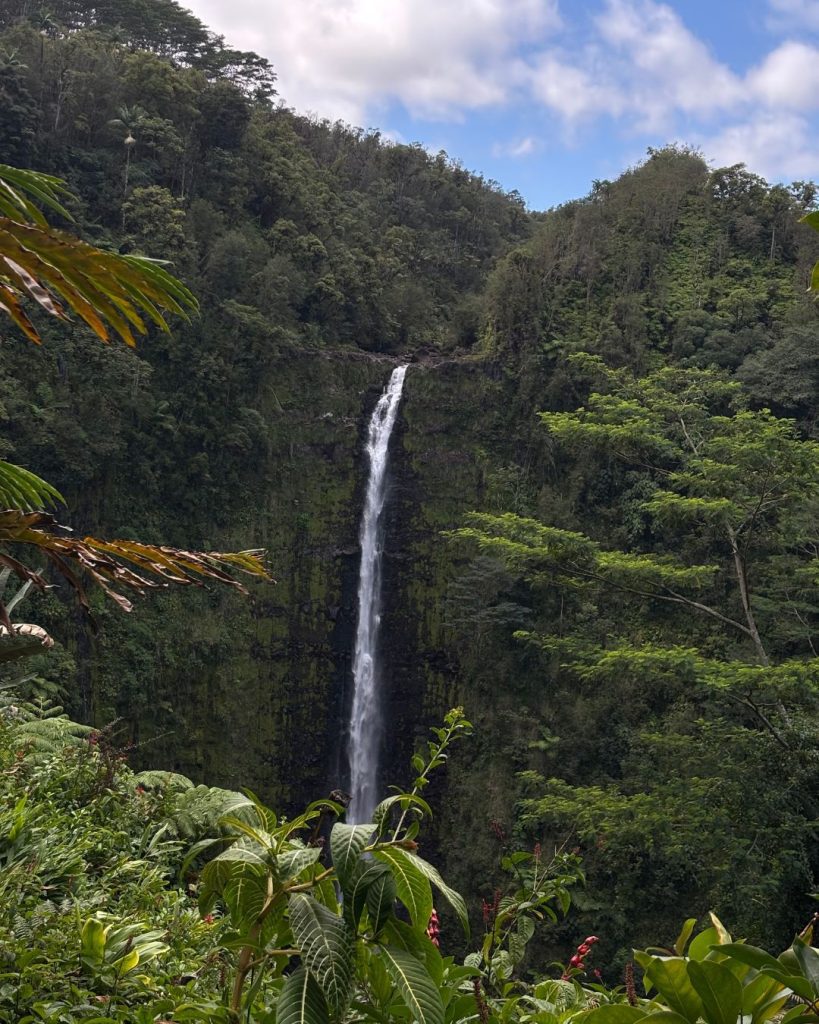
Non residents pay 5 dollars each to enter plus 10 dollars for parking, and the park is open 8:30am to 5pm.
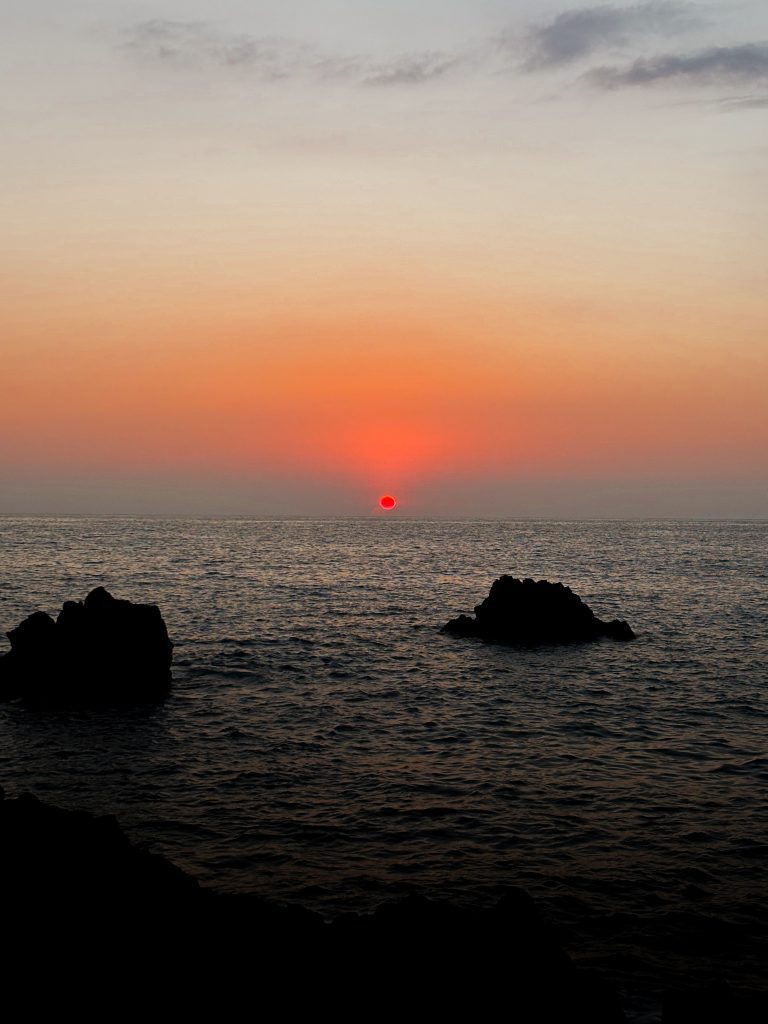
Sunset at Honaunau and Napo’opo’o
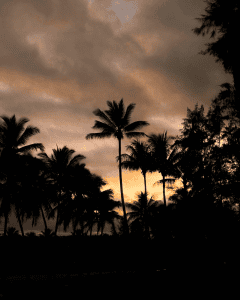
If you do one sunset on this island, do it down here on the south Kona coast. The road drops the whole way down to the water and the light comes in flat across the bay.
What I’d do differently
Book the two national park campgrounds in advance. At 10 and 15 dollars a night they’re the cheapest legal beds on the island, they’re right where you want to be for the volcano, and having them locked in would have removed every single accommodation problem we had.
Check the eruption forecast before booking flights, not after landing. We got episode timing by pure luck. The USGS publishes when episodes start and roughly when the next one is expected. If lava is the reason you’re going, and it should be, build the trip around that.
Read the Airbnb reviews properly. Twenty units on one property is not a home, it’s a hotel with no front desk and no accountability. That was visible in the listing and I didn’t look hard enough.
The Big Island didn’t charm me the way Kauai did. It’s rougher, it’s bigger, the driving is relentless and our week there included the worst accommodation experience I’ve had anywhere. But it’s also the only place I’ve stood in the dark and watched the planet turn itself inside out, and then gone to sleep 20 minutes away from it. Nothing else on this trip came close.
The other Hawaiian islands
If you’re island hopping, I’ve written the same kind of honest breakdown for the other two we did.