Kauai on a Budget: The Ultimate 9 Day Road Trip Itinerary
Here’s exactly how we spent 9 days exploring Kauai on a budget for just €446 per person, including camping, hikes, food, and transport.
We flew to Kauai straight from Napa, right after wrapping up the harvest in December. Keep in mind that December falls in Hawaii’s wet season and is also peak tourist season, so prices were higher than what you’d normally find on the island. If you have flexibility, it’s worth knowing when the better windows are.
When to Go
Kauai has two real seasons. April to October is the dry season, with the calmest ocean, the most reliable sunshine, and the best hiking conditions since the trails aren’t turned into mud slides. November to March is the rainy season, more frequent showers especially on the North Shore, but also whale watching season if you’re there between December and April. Hurricane season technically runs June through November, though direct hits are rare. If price is your main concern, aim for the shoulder months, late April, May, September, or October, when the crowds thin out and rates drop from their winter and summer peaks.
We went in December anyway, since that’s when the harvest ended and the flight lined up. It worked out fine, just wetter and pricier than it would have been in spring.
The Budget
We spent 9 days, camping the whole way, flight not included since that depends too much on where you’re flying from. Our own budget below is tracked in euros, since that’s how I keep my accounts. Any other prices mentioned further down, tours, hostels, hotels, are in US dollars, since that’s the local currency in Hawaii. All these prices were tracked through my Wise account, genuinely the easiest way to manage money on a trip like this, here’s why.
| Category | Total (2 people) | Per Person | Notes |
|---|---|---|---|
| Accommodation | €55 | €27.5 | Camping on the beach |
| Rental car | €244 | €122 | |
| Gas | €51 | €25.5 | 2024 prices |
| Food | €419.5 | €209.75 | Supermarket and food trucks, no restaurants |
| Drinks | €43 | €21.5 | Beers and coffees |
| Activities | €80 | €40 | Napali Coast entrance |
| Total | €892.5 | €446.25 |
The Road Trip Plan
Here’s how we actually moved around the island. We used three campgrounds total, and looped the island counter clockwise from Lihue, starting in the north.
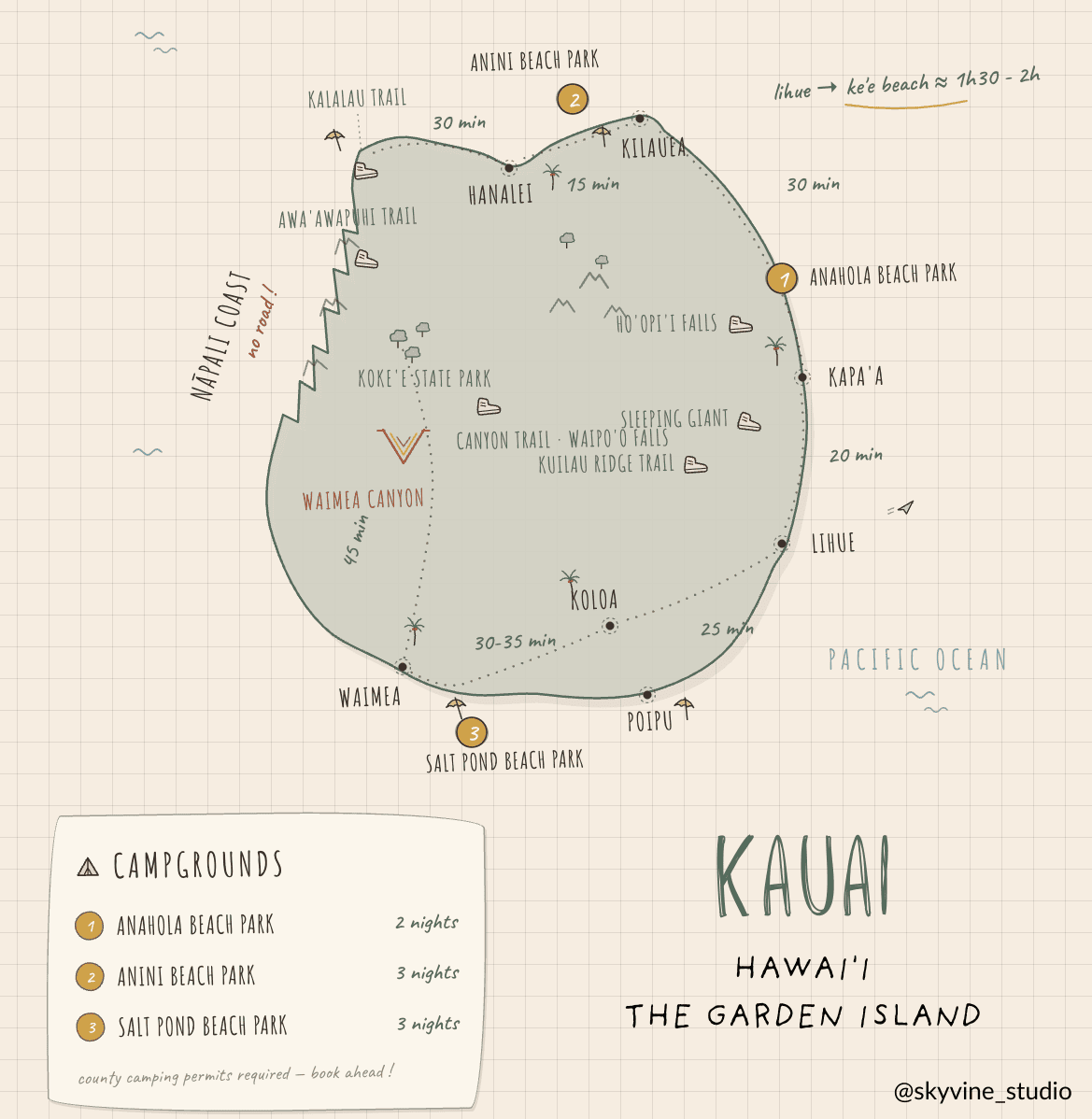
Small clarification: you can’t actually loop around the island by car, since no road crosses the Na Pali Coast. The northern road ends at Ke’e Beach, past Hanalei, and you then have to drive back the way you came to reach the south and west, passing through Lihue again.
On drive times: Lihue to Anahola, about 20 minutes. Anahola to Hanalei, 30 to 35 minutes. Hanalei to Ke’e Beach, another 15 to 20 minutes. From there, to reach Salt Pond or Waimea, plan on more like 1.5 to 2 hours, since you pass back through Lihue before picking up Highway 50 heading west. Then Waimea to Waimea Canyon, about 45 minutes on a road that climbs the whole way. And to loop back through Koloa and Poipu, another 30 to 40 minutes from Salt Pond.
Day 1: Arrival, Anahola Beach Park
We landed in Lihue, picked up the rental car, and drove straight to Anahola Beach Park for the first night. It’s one of the closest campgrounds to the airport, so it made sense both on arrival and later for our last night before the flight home.
Days 2 to 4: North Shore, based at Anini Beach Park
From Anahola we drove up to the North Shore and set up camp at Anini Beach Park for three nights. This is your base for the Kalalau Trail, Kee Beach, the wet caves, and a driveby of Hanalei and Kilauea.
Book your Kalalau Trail permit and your Haena State Park reservation before you leave home, not after you land. We didn’t, and had to come back three days later once a slot opened up. It’s around $40 per person, and reservations are required for all non residents.
Day 5: East Side, then on to Salt Pond
Pack up Anini and head south along the coast through Kapa’a. This is your day to knock out Sleeping Giant, Ho’opi’i Falls, and Kuilau Ridge, plus a stop in Kapa’a town itself. From there, continue west and set up camp at Salt Pond Beach Park for the next three nights.
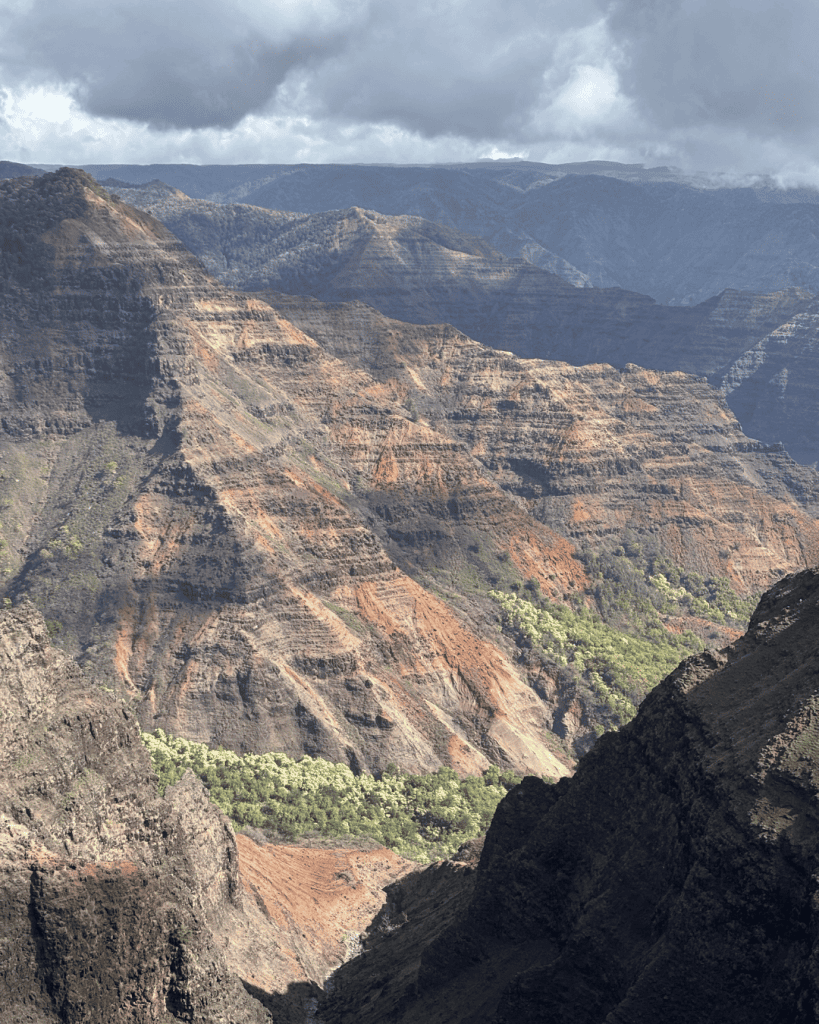
Day 6: Waimea Canyon, Canyon Trail to Waipoo Falls
A full day up in Koke’e State Park. The Canyon Trail to Waipoo Falls is the highlight here, red canyon views the whole way.
Day 7: Awa’awapuhi Trail
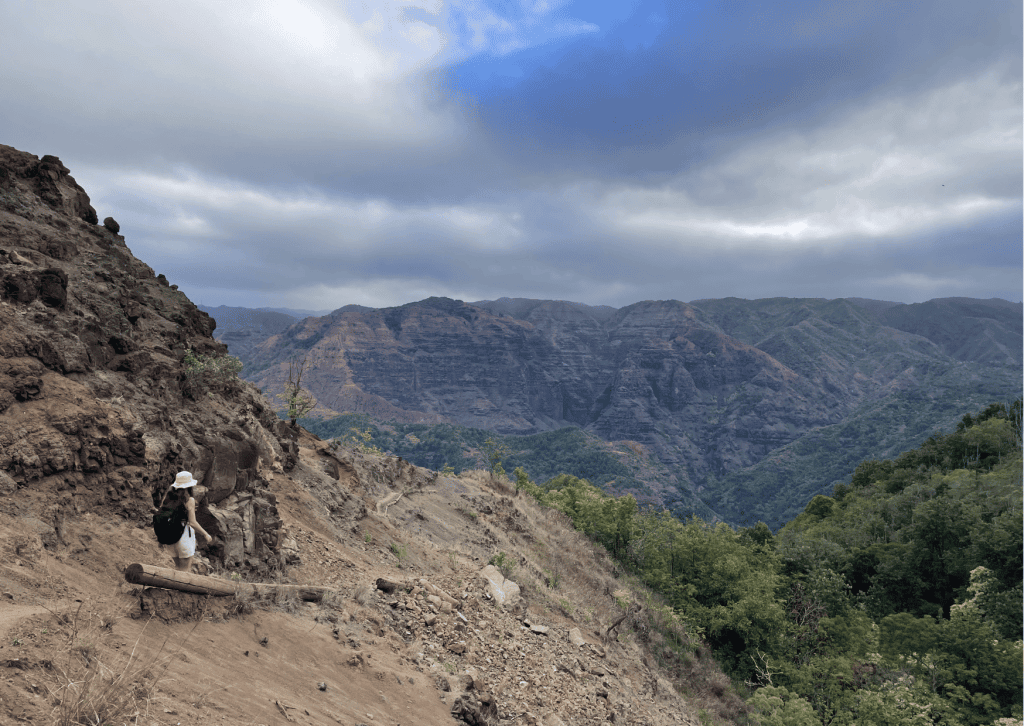
Back up to Koke’e for the longer one. Awa’awapuhi is a bigger day, budget 4 to 4.5 hours, but the payoff at the lookout is worth it.
Day 8: Koloa and Poipu, then back to Anahola
A slower day. Wander Koloa town, spend the afternoon at Poipu Beach, then drive back to Anahola Beach Park for the last night, close to the airport again for an easy departure.
Day 9: Departure
Fly out of Lihue.
Where We Slept
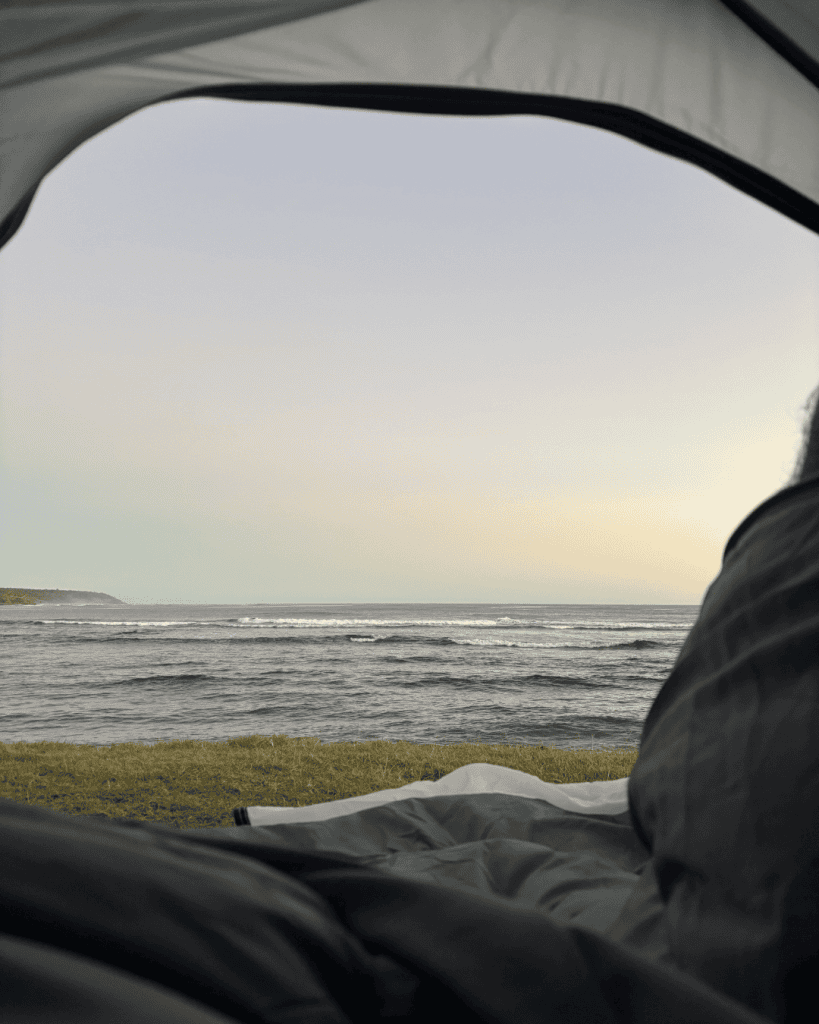
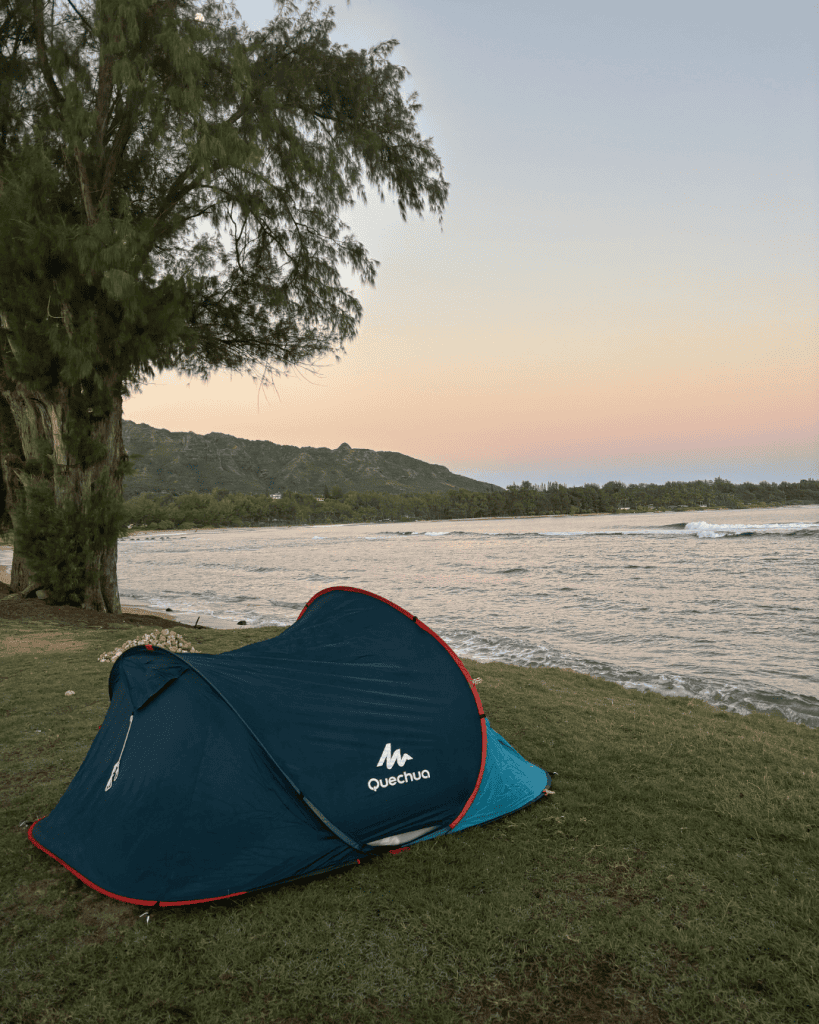
We camped the whole trip, in Kauai’s county beach parks. Two nights at Anahola Beach Park, three nights at Salt Pond Beach Park, three nights at Anini Beach Park.
 ANAHOLA BEACH PARK
 ANAHOLA BEACH PARK
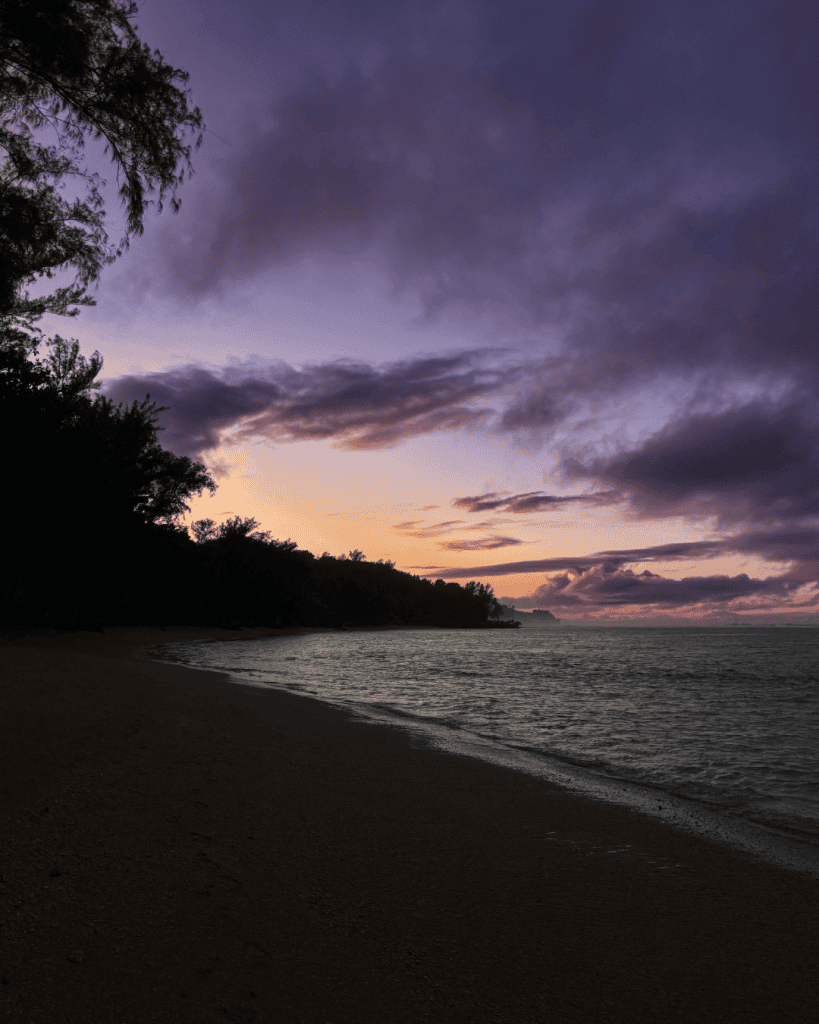 ANINI BEACH PARK
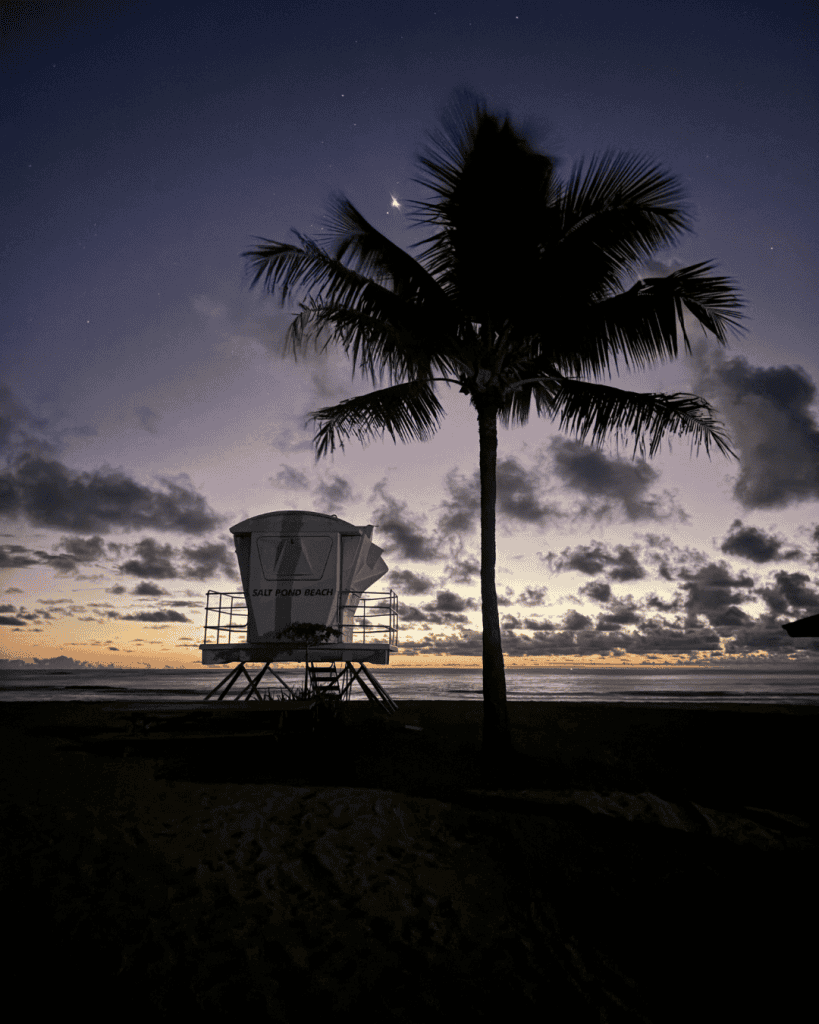 SALT POND BEACH PARK
To put that €55 total in perspective, a hostel dorm bed on Kauai runs around $40 to $50 a night, per person. A basic hotel room, nothing fancy, easily starts around $300 a night in high season, and averages have been reported well above that. We paid €55 for two people for the entire 9 days. It’s genuinely the cheapest way to see the island.
And here’s the thing nobody tells you, waking up in a tent on the beach gives you a view that even a $500 a night hotel can’t match. You fall asleep to the sound of waves and open your tent to the ocean right there.
I’ll be honest, the first nights we were a little on edge. We’d read that a lot of unhoused people camp in these same beach parks, and we had no idea what to expect. Turns out it was a total non issue. People do use the campground bathrooms and showers, that’s normal, but their tents were always set up outside the official park boundaries, and we never once had a problem. We stuck to a few basic rules ourselves, no campfires, and we packed our tent into the car every single day before heading out, just to be safe rather than sorry.
The Hikes
| Trail | Distance (RT) | Elevation Gain | Difficulty | Time |
|---|---|---|---|---|
| Hanakapiai Beach via Kalalau Trail | ~3.9 mi | ~1,180 ft | Hard | 2-3h |
| Sleeping Giant (Nounou Mountain) East Trail | ~3.5 mi | ~950 ft | Moderate to hard | ~2h |
| Canyon Trail to Waipoo Falls | ~3.2 mi | ~1,090 ft | Moderate | 2-2.5h |
| Ho’opi’i Falls Trail | ~2.6 mi | ~210 ft | Moderate | 1.5-2h |
| Hanakapiai Falls Trail (extension past the beach) | ~8 mi total | ~2,300 ft total | Hard | 5-6h |
| Awa’awapuhi Trail | ~6.4 mi | ~1,920 ft | Hard | 4-4.5h |
| Kuilau Ridge Trail | ~3.7 mi | ~660 ft | Moderate | 1.5-2h |
Best Hike to Do
If you only have time for one, make it the Canyon Trail to Waipoo Falls. It’s the one that surprised us the most, and it doesn’t demand a full day like Kalalau or Awa’awapuhi do.
Kalalau Trail
This is the famous one, and it’s paid, around $40 per person, plus a permit to access Haena State Park where the trailhead is. We didn’t know that going in, so we had to come back three days later once spots opened up. Lesson learned, book ahead.
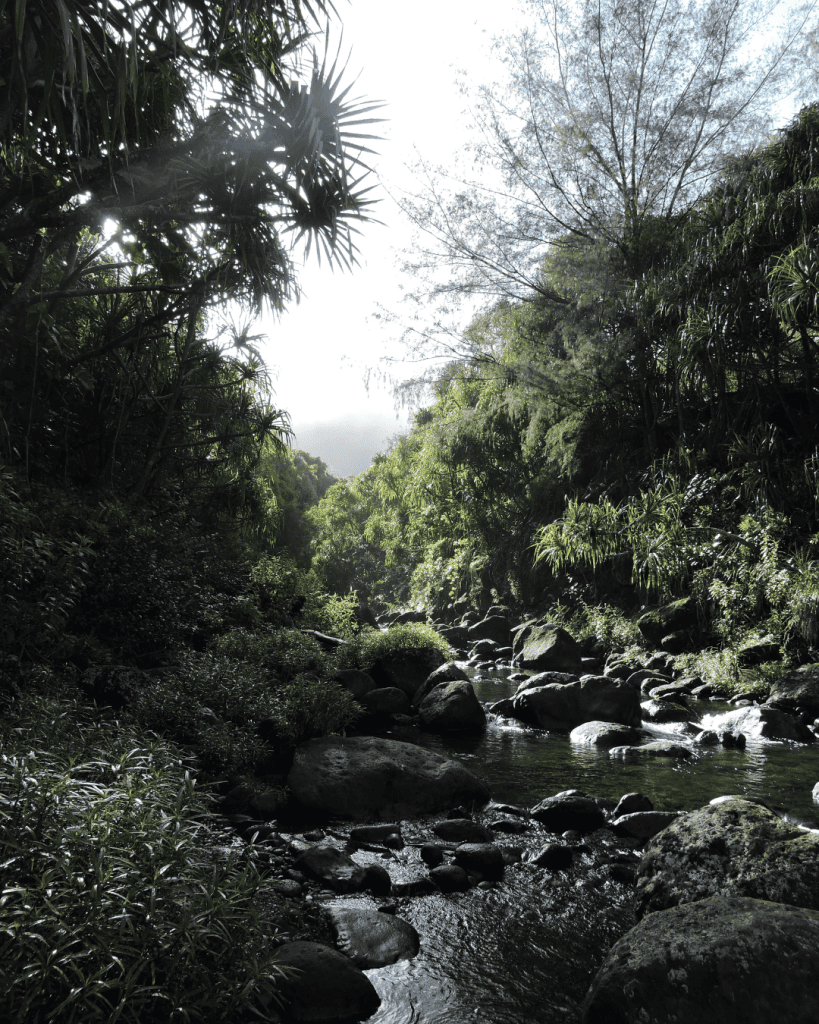
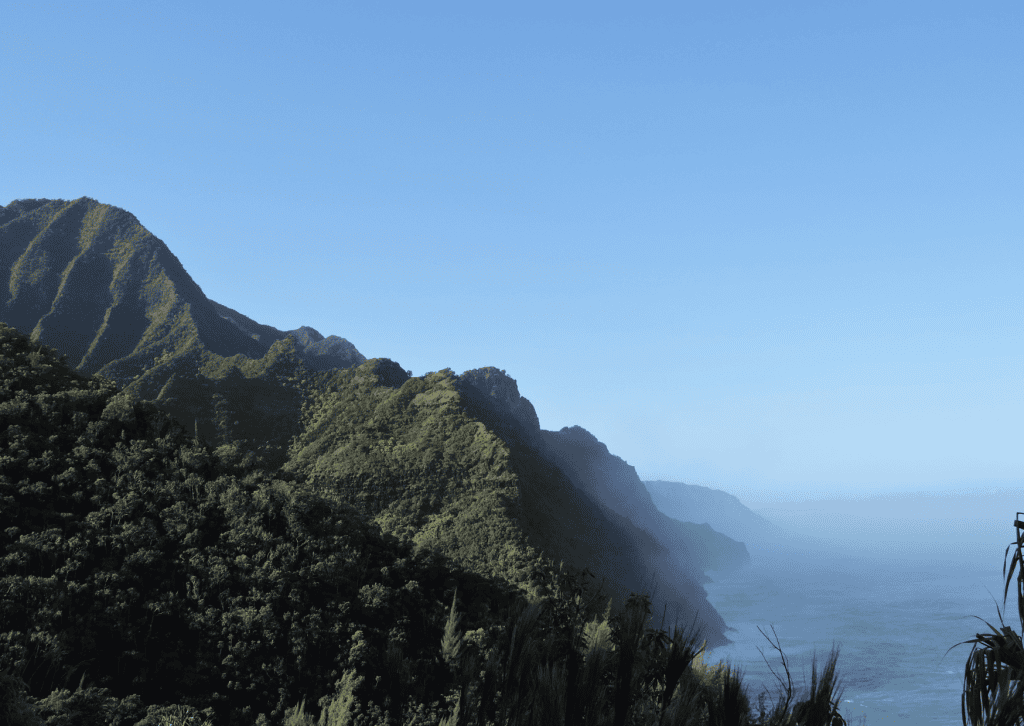
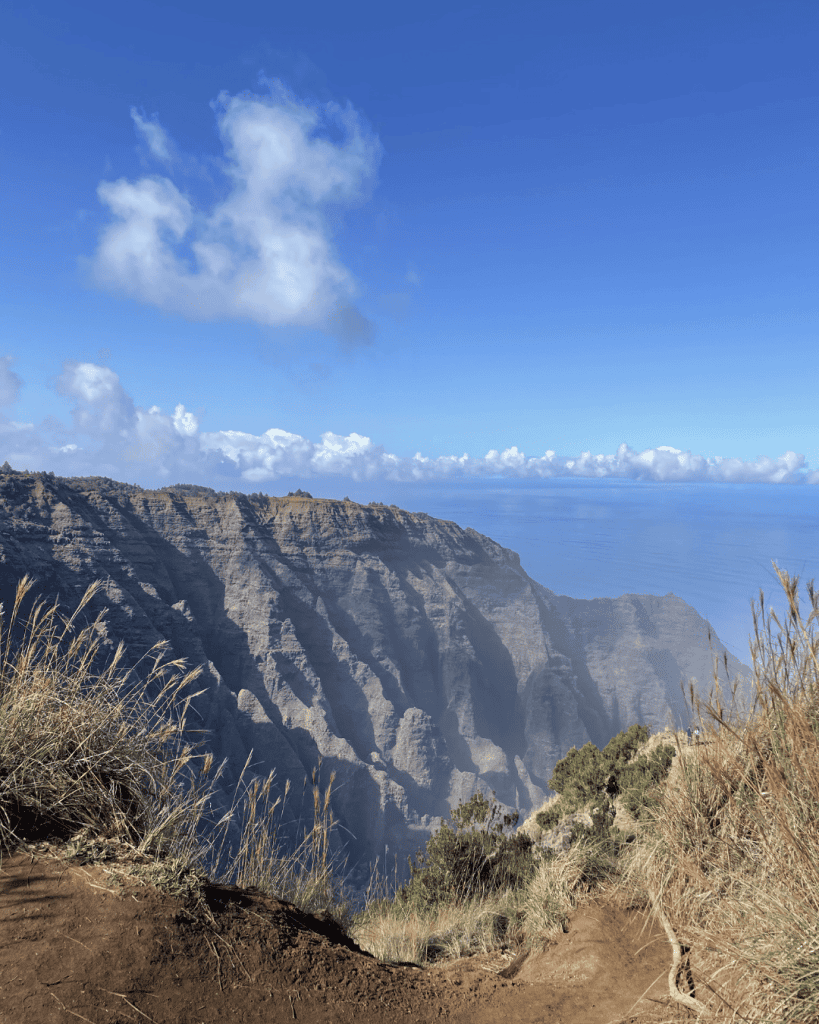
The trail follows the Na Pali Coast, and without an overnight permit further in, you’re limited to a day hike. We made it to Hanakapiai Beach, then kept going toward the falls as far as we reasonably could before turning back, since we had nowhere to sleep past that point. Even the first stretch alone is worth it for the coastline views. With that much hiking and snorkeling packed into 9 days, this is exactly the kind of trip I wouldn’t do without proper travel insurance.
Sleeping Giant
Short, sweaty, and the view at the top is genuinely gorgeous. One of those hikes where the effort to payoff ratio is really in your favor.
Canyon Trail to Waipoo Falls
This one blew us away. Genuinely felt like a mini Grand Canyon, red dirt, huge drops, totally different landscape from the rest of the island. Funny enough, it sits close to the driest, hottest spot on Kauai, while also being right next to one of the wettest places on Earth. The island really does contain everything.
The Towns
Koloa
Koloa sits on the South Shore and was home to Hawaii’s first successful sugar mill, built in 1835. The old plantation buildings along Koloa Road now house shops, galleries, and small eateries, and you can still see the ruins of the old sugar mill itself with its tall smokestack, which ran for over 160 years before finally closing in 1996. The Koloa Heritage Trail links 14 historic and cultural sites between Koloa and Poipu if you want to dig deeper into the area’s past.
Kapa’a
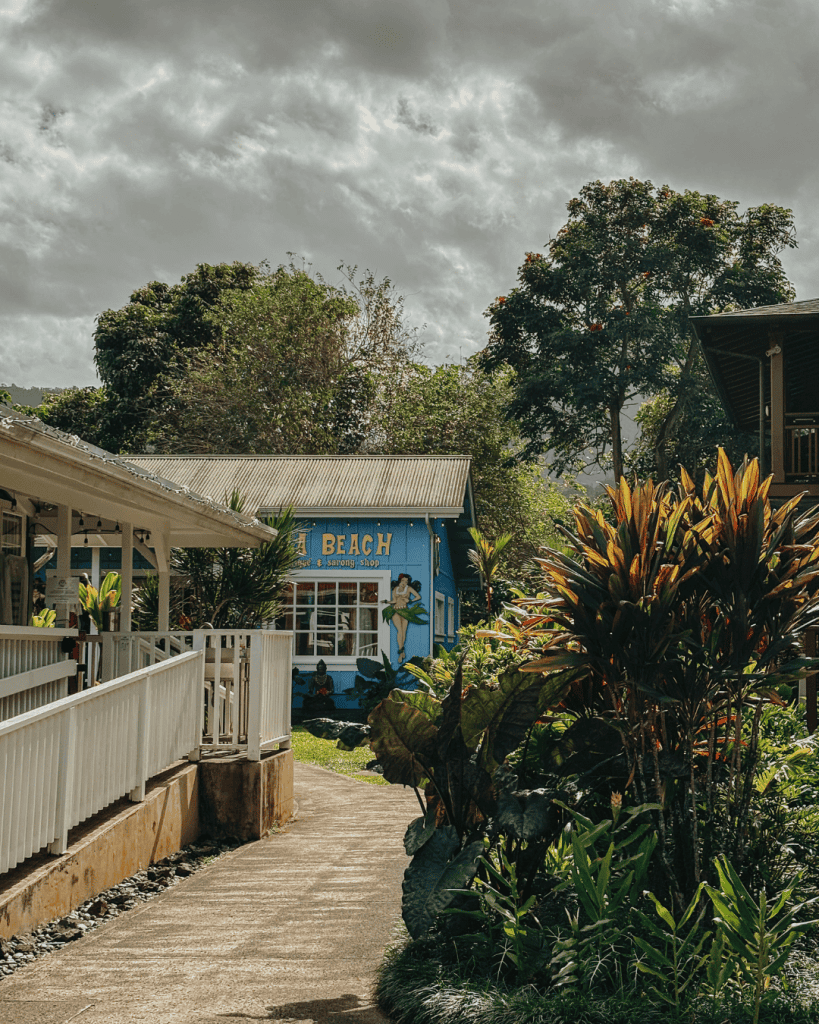
Kapa’a is the largest town on Kauai’s East Side, just a short drive north of Lihue, and it still has a genuine small town feel despite its size. The old plantation buildings downtown now hold surf shops, art galleries, and food trucks. The town also sits along Ke Ala Hele Makalae, “the path that goes by the sea,” an 8 mile paved coastal bike and walking path with almost no cars, great for a bike ride or an evening stroll with a shave ice in hand.
Kilauea
A quiet North Shore town with deep plantation roots, Kilauea grew up around the Kilauea Sugar Plantation in the late 1800s and still has several original stone buildings standing, including the Kong Lung Store. Its biggest draw today is the Kilauea Point Lighthouse and Wildlife Refuge, perched on cliffs at the very northern tip of the island, home to nesting seabirds and a solid vantage point for whale watching in winter.
The Beaches
Ke’e Beach
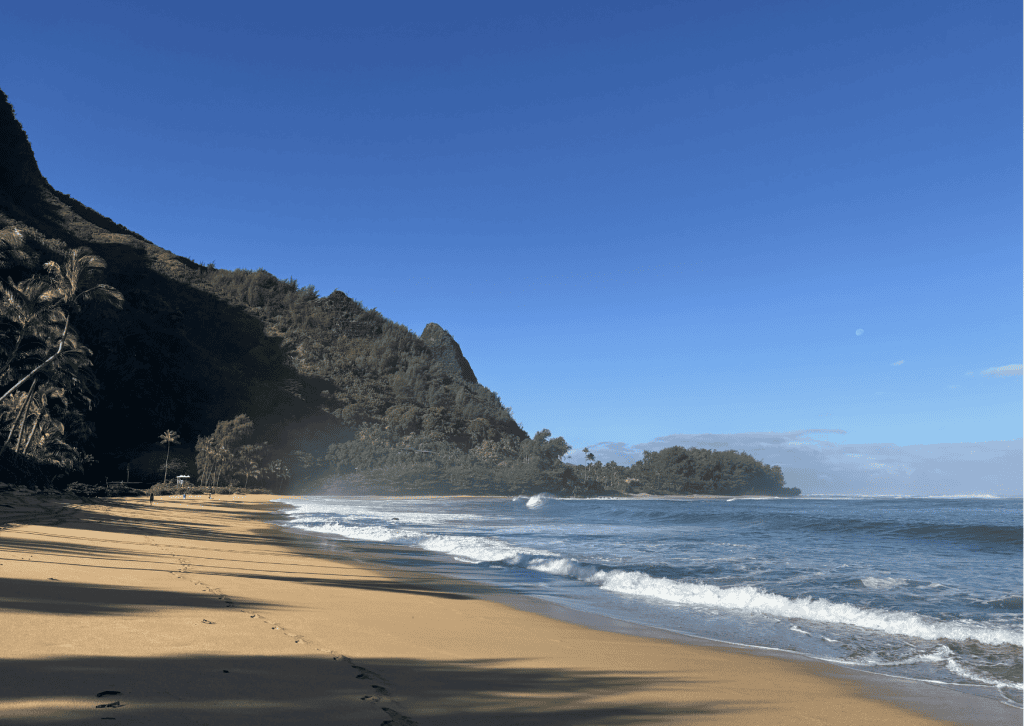
Our favorite was the beach right at the very end of the road on the North Shore, at the start of the Kalalau Trail. This is Ke’e Beach, protected by an outer reef that keeps the water calm enough for good snorkeling, and it’s known for sea turtles that nest and feed around the reef. We spotted them swimming right in the waves. Just down the road, near Haena Beach Park, you’ll find the Maniniholo Dry Cave, an easy walk in cave right off the highway, and a little further along, the wet caves of Waikanaloa and Waikapala’e, the second of which is sometimes called the Blue Room.
Salt Pond Beach Park
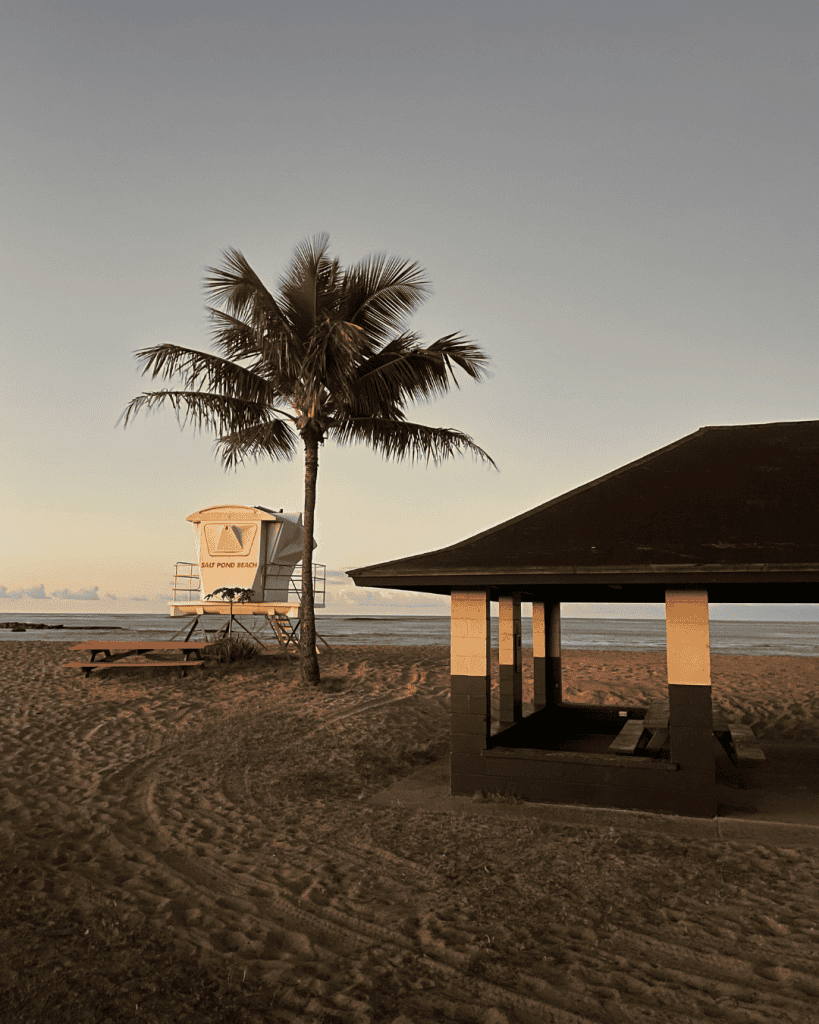
On the South Shore near Hanapepe, Salt Pond is named for the natural salt ponds next to it, still hand harvested by a small number of Hawaiian families every summer using traditions passed down for generations. The beach itself sits inside a natural rock lagoon that keeps the water calm, with tide pools on one side for exploring at low tide. We saw a monk seal resting right on the sand, a fairly common sight here.
Anini Beach
On the North Shore between Princeville and Kilauea, Anini has the longest and widest fringing reef in Hawaii, which means flat, lake like water most of the year. Great for swimming, paddleboarding, or just walking the long stretch of sand at sunset. We also saw turtles resting on the beach here.
Poipu Beach Park
On the South Shore near Koloa, Poipu is actually two crescent shaped beaches split by a sandbar, one calmer for swimming, one better for snorkeling. It’s one of the more reliable spots on the island to see a Hawaiian monk seal napping on the sand.
Food Trucks You Definitely Need to Try
No restaurants this trip, just supermarkets and food trucks. Our favorites:
Tony’s Catch
4-1602 Kuhio Hwy, Kapaʻa, HI 96746.
Right on the beach in Kapa’a, along the coastal bike path, so you can grab your food and walk it straight to the sand. Go for the fish tacos or the poke bowl, both come up again and again as the standouts, and if you want something heartier, the ahi tostada with beans and jalapeno cream is worth ordering too.
Taco Libre
5371 Koloa Rd, Koloa, HI 96756
A tiny truck in the middle of Old Koloa Town with a genuinely big reputation, it’s been voted a top spot on Yelp more than once. Tacos run about $8 each, carne asada, al pastor, fish, and shrimp are all on offer, and the carne asada fries and burrito bowls are worth the extra appetite. Just check their hours before you go, they’re closed several days a week.
Kilauea Fish Market
4270 Kilauea Rd, Kilauea, HI 96754
Tucked behind one of Kilauea’s old stone plantation buildings, this one’s a real fish market first, restaurant second. The catch rotates daily, ahi, ono, mahi mahi, whatever came in that morning, and it shows up in poke bowls, wraps, and fish tacos. The ahi wrap is the one locals keep mentioning. It’s also BYOB with no corkage fee, so if you’ve got a cold beer left in the cooler, bring it along.
About Drones
If you’re planning to bring a drone, know this before you pack it. Drones are prohibited inside Hawaii’s state parks unless you have a special use permit from the DLNR, and that includes Koke’e State Park, Haena State Park, and most of the scenic spots covered in this itinerary. The application goes through DLNR’s online services, and it’s not a same day process, so if drone footage matters to your trip, apply well in advance. Otherwise, leave it in the car for those specific stops.
If you’re curious about the drone I use while traveling, along with the rest of my photography setup, I’ve listed everything in My Travel Photography Gear . It’s the exact gear I bring on every trip, from my drone and camera to the accessories that have earned a permanent place in my backpack.
An Activity I Wish I’d Done
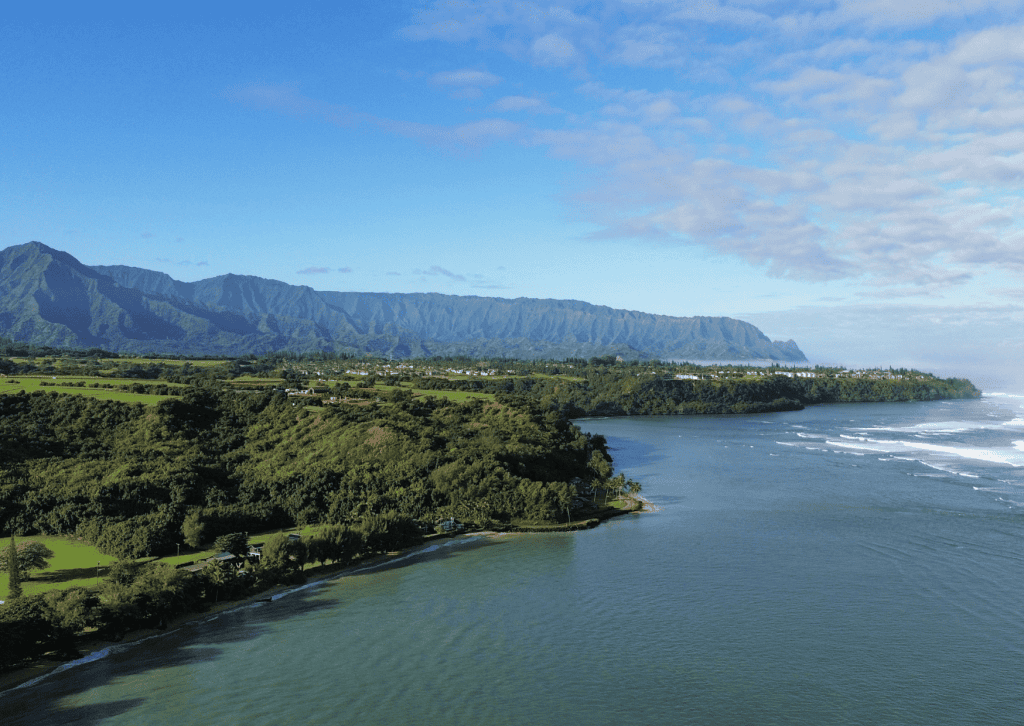
We saw the Na Pali Coast from land, on foot, from the Kalalau Trail, and that was already incredible. But the coast is so massive that you only really get a sliver of it from the trail. If I go back to Kauai one day, I’d like to see it from a completely different angle, either from a helicopter or from a boat, just to grasp how huge it actually is.

A 60 minute doors-off helicopter tour over the island, flying past Waimea Canyon, Waipoo Falls, and the Na Pali Coast, prices generally start around $359 to $414 per person. It’s not cheap, but it’s consistently described as a once in a lifetime experience, and doors-off means nothing between you and the view for photos.

A more affordable option, a 4.5 to 5 hour catamaran tour along the Na Pali Coast, departing from Port Allen, which is conveniently right by Salt Pond Beach Park where we camped. Prices run around $214 to $226 per person, and it usually includes lunch, snacks, and either snorkeling or whale watching depending on the season.
The Tips That Actually Saved Us Money
We bought all our camping gear before landing on Kauai, tent, sleeping bags, pillow, an inflatable mattress and pump, for around €110 total in California. Flights between the islands, or from the mainland, almost always include two free checked bags, so traveling with all our gear cost us nothing extra.
For the rental car, I used discounthawaiicarrental.com. It’s a great site because you don’t have to prepay, and cancellation is free right up until the last minute. So what I did was check prices every week, and every time they dropped, I’d book the new lower rate and cancel the old one. That’s how we ended up paying just €244 for 9 days, way less than what we expected going in.
We’d originally planned on renting a campervan instead. Turns out it’s not really free campsite friendly here. You still have to pay for the van itself, plus a campsite, since sleeping inside your vehicle isn’t allowed in the state parks we’d reserved. Camping fees run around $40 a night on top of the van rental. At that point, a van just means paying more to feel more cramped, since you’re all piled on top of each other in one specific spot. It loses its appeal pretty fast.