The J1 Visa: How I Actually Got to Work the US Harvest
Everything you need to know to get your J1 visa fast and actually make it to a US harvest, from someone who’s done it twice, the expensive way and the smart way.
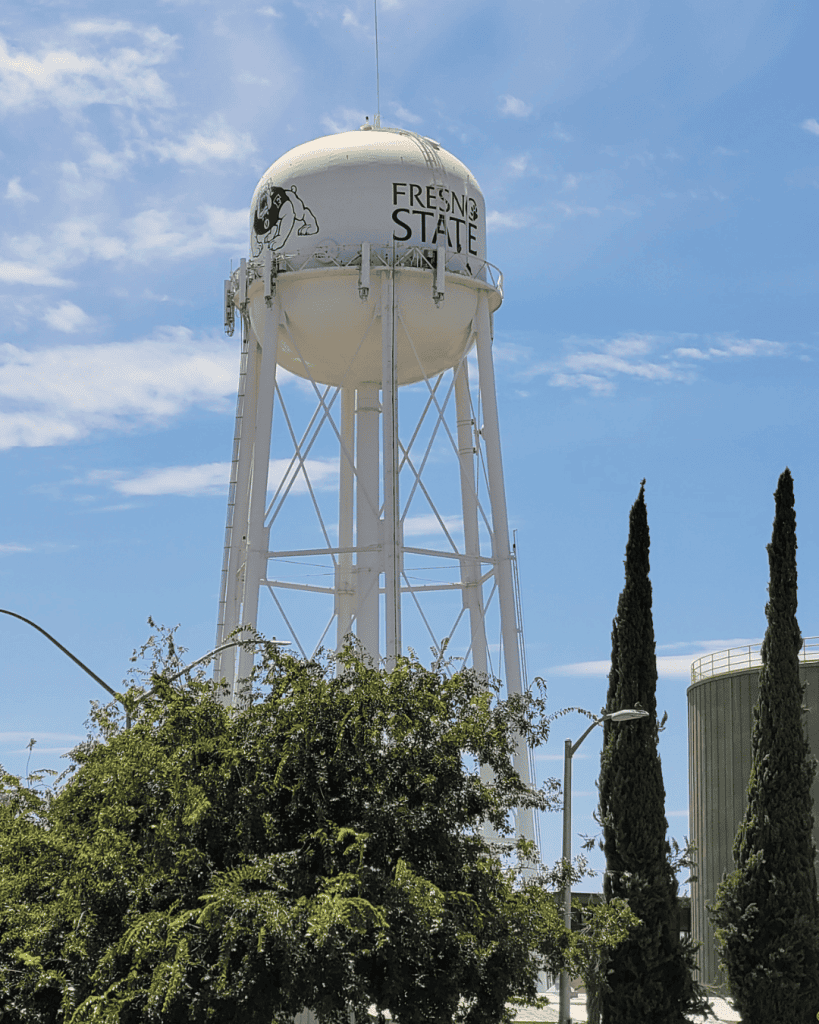
A quick bit of context before we get into it. California and I go way back, in a weirdly repetitive way. My first solo trip abroad, ever, was during my engineering degree, when I spent six months in the oenology labs at Fresno State, deep in the Central Valley, in a corner of California so unglamorous even Californians don’t go there.
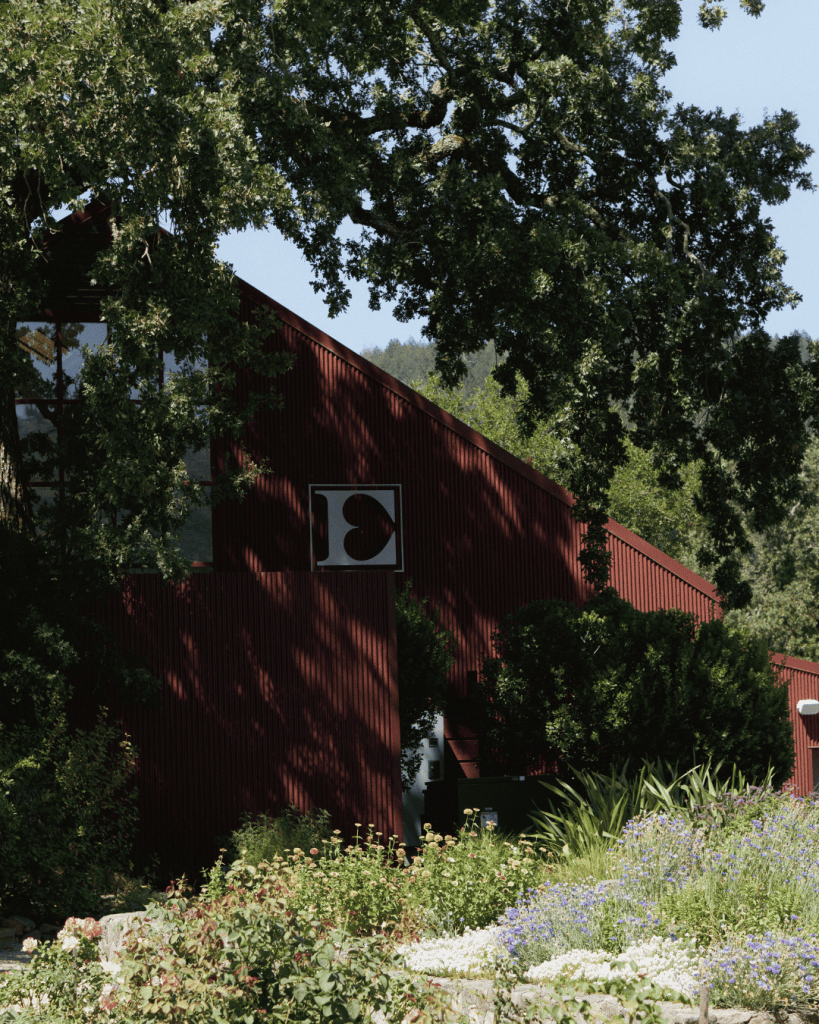
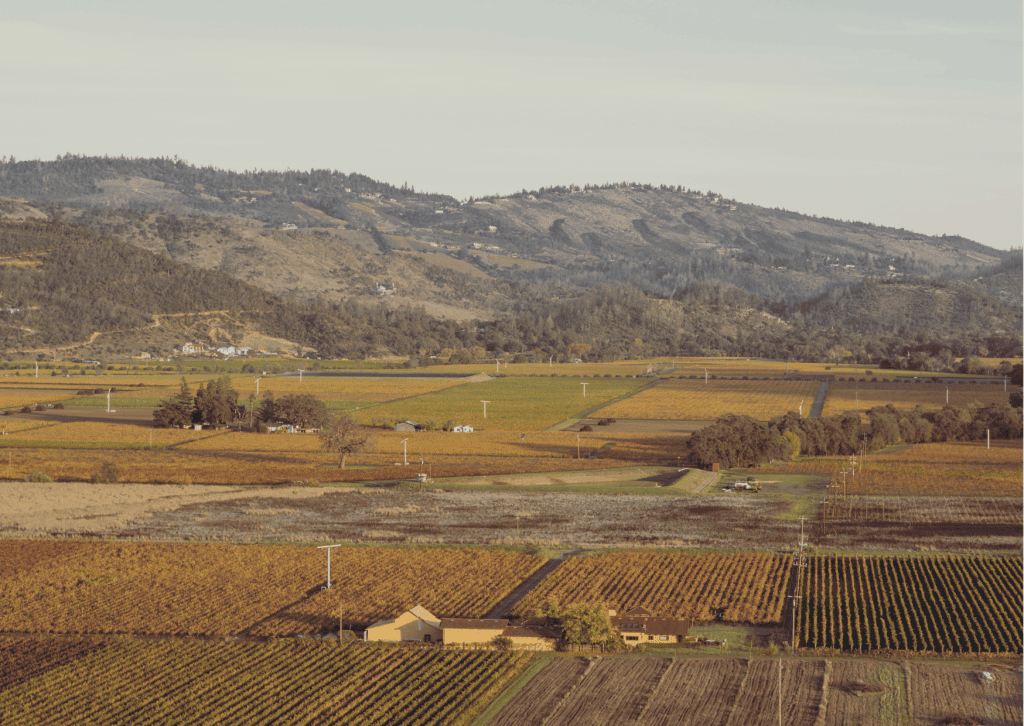
Four years later, my very first harvest abroad happened in a winery near Calistoga, in the famous Napa Valley. Since then I’ve gone back once for another harvest, still in Napa, still up north, this time in St Helena. Not the most original choice, I know, but I’m too much of a Napa fangirl to even consider Oregon or another wine region right now. If you ever get a free weekend during harvest, it’s worth the drive up to the Redwoods, here’s my full guide to the south entrance of the park.
So yes, three trips, three visas, and a whole lot of paperwork lessons I wish I’d had before the first one. Here’s the breakdown.
Which Visa to Work in the US as a Foreigner
Before you even think about sponsors and paperwork, you need to know which visa actually applies to your situation. Here’s a quick comparison to help you figure out where you land.
| Visa | Who it’s for | Can you work? | Typical length |
|---|---|---|---|
| ESTA / B1-B2 | Tourists, short business trips | No | Up to 90 days |
| F1 | Full time students enrolled in a US school or university | Only on campus, or via OPT/CPT | Length of studies |
| J1 (Intern /Trainee) | Students, recent grads, and young professionals doing paid training in their field | Yes, with a host company and a sponsor | 3 to 18 months |
| H2A | Seasonal agricultural workers, employer-sponsored | Yes | Up to 10 months, renewable |
| H2B | Seasonal non-agricultural workers | Yes | Up to 9 months |
For seasonal harvest work specifically, whether that’s cellar work, vineyard work, or a cellar door position, the visa you want is the J1. That’s the one this whole article is about.
What Is the J1 Visa
The J1 is a cultural exchange visa. It’s not technically a “work visa” in the traditional sense, it’s built around the idea of training, learning, and cultural exchange, which is why everything runs through a sponsor and a training plan rather than a straightforward job offer.
There are two categories that matter for harvest work.
Intern is for people who are currently studying, or who graduated less than 12 months ago. If you’re doing a WSET certification, for instance, that can count too, more on that later because it saved me once.
Trainee is for people who already have at least a year of relevant work experience in the field, even without a diploma tied to it.
The maximum length depends on your category, generally up to 12 months for Interns and up to 18 months for Trainees, though most harvest placements run 3 to 5 months, which lines up nicely with an actual harvest season.
Getting the Visa, Step by Step
Step 1: Find a Winery
The first move is finding an employer, in our case a winery. Once you’ve got a signed offer or a contract in hand, you can move on to the part that actually costs money, finding a sponsor.
Step 2: Find a Sponsor
A sponsor is a US Department of State designated organization that issues your DS-2019 form, the document that makes you eligible to apply for the J1 at the consulate. They vet your eligibility, build your training plan with the winery, and are supposed to support you throughout the program.
The question that comes up constantly on forums and Facebook groups is whether you can skip the sponsor altogether, since it’s by far the most expensive part of the whole process. I get why people ask, once you see what some of them actually do for that price, it’s a fair question. But no, unfortunately, there’s no way around it. The sponsor is a legal requirement of the J1 program, not an optional service.
Sponsor Comparison
Prices and inclusions change from year to year and aren’t always published, so treat this as a starting point rather than gospel. Always confirm directly with the sponsor before committing.
| Sponsor | Website | Price | Duration | Insurance Included | |
|---|---|---|---|---|---|
| Intrax | sksleveland@intraxinc.com | globalinternships.com | Not published, quote on request | — | — |
| Parenthèse Paris | mina@parenthese-paris.com | parenthese-paris.com | 3960 EUR | 18 months | Yes |
| CAEP | caep@caep.org | caep.org | 1,900 USD (per my own experience, see below) | 5 months | Yes |
| Spirit Cultural Exchange | intern@spiritexchange.com | spiritexchange.com | Not published, quote on request | — | — |
| Cultural Vistas | train@culturalvistas.org | culturalvistas.org | 1,600 USD | — | — |
| CHI | chiedinson@chinet.org | chinet.org | 1,250 USD | 6 months | No 65USD/month |
| Odyssey | cmonter@odcinternational.com | odc-exchange.com | 1850 USD | 8 months | Yes |
| Life Traveled | interntrainee@lifetraveled.org | lifetraveled.org | 2640 USD | 3-5 months | Yes |
| MAST International | mast@umn.edu | mast.cfans.umn.edu | 700 USD | 5 months | No 91 USD/month |
| Worldwide Farmers Exchange | ashley@worldwidefarmers.org | worldwidefarmers.org | 2,700 USD (per my own experience, see below) | 6 months | Yes |
My first time going through this process, I was on a university exchange, so Fresno State was my sponsor and my visa was covered by my school. The second time, when I found my own placement for harvest, the winery told me to go through CAEP. I had no idea other sponsors existed at that point, so I just went with it.
I do not recommend CAEP. It’s expensive, over 2,000 USD all in, they make you go through extra steps that don’t seem necessary, like a video where you answer questions in English, and their emails are long and don’t change much year to year while explaining something fairly simple in the most complicated way possible.
I really didn’t enjoy the experience and I wouldn’t go with them again if I had a choice. They basically have a monopoly in Napa Valley, most wineries there will point you straight to CAEP, but if you can avoid it, do. They’re also not very responsive when something goes wrong, and they don’t help at all with your tax return at the end.
My second return to the US was its own kind of exceptional, since I had to come back as an Intern through my WSET student status, a little trick I’ll explain properly at the end of this article, because it lets you get around the two year rule. The only sponsor willing to work with that setup was Worldwide Farmers Exchange. It’s more expensive than CAEP, but the follow up is on a completely different level.
That said, next time I’ll probably go with MAST, which is much cheaper, though the support is also a lot more hands off than my previous two. After three rounds of this, I figure I can fill out the paperwork without much hand holding by now.
What’s the Budget for a J1 Visa
The J1 is genuinely one of the most expensive visas out there for going to work in another country. When you think about it, it sounds a bit insane to spend that much just to go work, but honestly, the return on investment is almost immediate once you’re actually earning US harvest wages.
I don’t have the full breakdown for every sponsor since they don’t all include the same things in their packages, but here’s what I actually paid with the two I’ve used. Prices have almost certainly shifted since, this is just to give you a sense of the numbers involved.
CAEP (J1 visa, 2023)
- 1,764 USD CAEP invoice (registration fee plus 4 months of insurance)
- 166 USD insurance for the additional 5th month
- 220 USD SEVIS I-901 fee
- On top of that, the visa fee paid at the US consulate in Paris in 2023 was around 152 EUR, plus 23 EUR in courier fees. Roughly 200 USD to add.
Total CAEP: 2,350 USD
Worldwide Farmers Exchange / WFE (J1 visa, 2025)
- 1,700 USD first part of the program fee (already includes the $220 SEVIS fee)
- 1,000 USD second part of the program fee
- 205 USD visa fee paid to VFS Global
Total WFE: 2,905 USD

The Steps Once You’ve Picked a Sponsor
- Contact the sponsor with your situation and your job offer.
- The sponsor checks your eligibility, Intern or Trainee category, diploma, any required certifications.
- Put together and send your application file, CV, a letter of recommendation or job offer from the winery, a copy of your passport, proof of your diploma or student status, a medical statement, and a photo. CAEP also asks for an extra online form and a Skype interview.
- Wait for the winery to confirm your placement and for the agreement between the sponsor and the host company to be signed.
- Sign the DS-7002, the Training or Internship Placement Plan sent by your sponsor.
- Pay the program fee invoice. This payment is what triggers the DS-2019, the document that actually makes you eligible for the visa.
- Receive your full visa document package, DS-2019, DS-7002, SEVIS payment receipt, a support letter for the consulate, an insurance summary, and information brochures.
- Pay the SEVIS I-901 fee, around $220, usually through the dedicated online portal. Depending on the sponsor, you either pay this yourself or it’s included in their fees.
- Fill out the DS-160, the online non-immigrant visa application. Your sponsor can help with a few tricky questions, like your main occupation. This is by far the longest and most brain melting step, you get logged off every 15 minutes and have to start over from wherever you were, or from scratch if you forgot to save. Budget a solid three hours for this one.
- Pay the MRV visa fee and book your appointment at the US embassy or consulate. My first two times were in Paris, in my home country, and the third time I did it in New Zealand, which worked fine back then. As of this year though, it seems the interview has to happen in your country of origin, so double check the current rule before you plan around it.
- Attend your visa interview and get your approval. It’s usually quick, they typically ask two questions, sometimes in English, sometimes in your native language depending on the officer, things like why you’re going and where you’ll be working.
- Book your flight and send your travel dates to your sponsor, this is what activates your medical insurance. Booking early makes a real difference here, so it’s worth checking my 10 tips for finding a cheap flight before you lock in your dates.
- Fly out and arrive in the US, then get in touch with your sponsor’s local coordinator once you’re there.
- Stay in touch during the program, there’s usually a mid program check in, help with insurance if needed, and at the end, a program completion report plus your tax return through Sprintax.
The Two Year Rule
Once you leave the country after a J1 program, there’s a two year rule that kicks in before you can come back on another one, which in practice means about three harvests’ worth of waiting if you’re going every year.
The only way around it, to come back sooner, is to requalify as a student. That’s where WSET comes in, it can get you back into the Intern category without needing to go back to school in any traditional sense.
Health Insurance
Health insurance is mandatory to get the visa, and it’s generally included in the sponsor’s price. And it’s genuinely comprehensive. I once had to go to the ER on a Sunday night, and the bill came out to 24,000 USD. The kind of number that makes you break into a cold sweat the second you see it. The insurance covered almost all of it, I only had to pay 100 USD out of pocket, which was for the hospital bed. If you want to compare providers before you commit to one, I put together a full breakdown of travel insurance options here.
A Few Things I Wish I’d Known Sooner
Always negotiate your salary. The first time, I didn’t dare, I felt like I wasn’t experienced enough to ask for more. But you should always ask, because in most cases you can get 1 or 2 extra dollars an hour, and over a season that adds up to several thousand dollars.
Ask your winery if they’ll cover the visa, or part of it. It’s always worth asking, you’ve got nothing to lose and you might be surprised.
CAEP isn’t your only option, and plenty of cheaper sponsors will get you the exact same visa.
Start early, really early. Looking for a job in January for a July start is already reasonable, and honestly you can start even sooner than that. Visa processing can take a while, and you’re never fully safe from a government shutdown closing embassies for weeks, which happens more often than people think. It happened to me in 2023, I got my visa 5 days before my flight, and last year there was a shutdown a week after my embassy appointment. Lucky both times, but I wouldn’t count on it a third.
Make sure you’re going to a good winery. Your whole experience is going to depend heavily on the company you end up with.
Don’t take a contract under 3 months. It’s a lot of paperwork and money for very little time on the ground. Above 4 months, you’re pretty much guaranteed to earn more than you spend, visa, flights, housing, everyday costs. Below that, it’s a lot less certain, and you can’t count on overtime to make up the difference, since that depends heavily on the vintage and on each company’s policy. Some wineries even shorten contracts if the harvest turns out smaller or faster than planned, so don’t jump at the first offer you get. I did that once and learned the hard way.
Don’t hesitate to see a doctor if you’re sick. Sponsor insurance is genuinely thorough, and given what it costs, you might as well use it. If you’re unwell, go to urgent care, you won’t have to pay upfront, so really, don’t wait until you’re back in France like I did my first year.